Shulph Ink
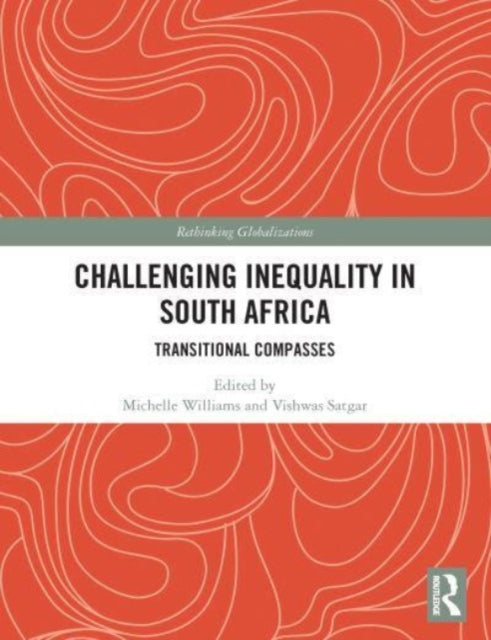
Challenging Inequality in South Africa: Transitional Compasses
Challenging Inequality in South Africa: Transitional Compasses
💎 Earn 235 Points (£2.35) on this item.
- Condition: Brand new
- UK Delivery times: Usually arrives within 2 - 3 working days
- UK Shipping: Fee starts at £2.39. Subject to product weight & dimension
Bulk ordering. Want 15 or more copies? Get a personalised quote and bigger discounts. Learn more about bulk orders.
Couldn't load pickup availability
- More about Challenging Inequality in South Africa: Transitional Compasses
Scholars from South Africa explore innovative ways to challenge economic, social, and political power structures that perpetuate inequality. They introduce 'transitional compasses' that move beyond protest politics to a 'generative politics' of building alternatives within the interstitial spaces of capitalism. The book highlights resistance against dominant power through counter-hegemonic projects and alternative everyday practices, emphasizing the emancipatory potential of a universal basic income, law enforcement in health and education, food sovereignty, precarious worker organizing, democratic local state delivery, and reconceptualizing the good life through happiness and ecosocialism.
Format: Paperback / softback
Length: 138 pages
Publication date: 25 September 2023
Publisher: Taylor & Francis Ltd
In South Africa, a country grappling with profound inequality, a group of esteemed scholars have come together to explore innovative approaches to challenge the dominant structures of economic, social, and political power that perpetuate this injustice. Through a series of concrete empirical examples, the authors illustrate "transitional compasses" that transcend traditional protest politics and embrace a "generative politics" aimed at building alternative solutions within the interstitial spaces of capitalism.
The conceptual framework revolves around the intricate ways in which power is generated and reproduced through the interplay between hegemonic projects and everyday life. While power is a fundamental aspect of all social relations, it often goes unnoticed due to its subtle presence behind other social dynamics. However, resistance to power emerges when counter-hegemonic projects are intertwined with alternative everyday practices.
The authors highlight the sources of alternative forms of power that can be found in the resistance against dominant power structures through real-life experiences. By drawing upon these experiences, they aim to create transformative alternatives that challenge the status quo.
To concretize the conceptual framing, the authors examine various emancipatory possibilities. They explore the potential of a universal basic income to alleviate poverty and promote social mobility. They also discuss the role of law in addressing inequality in health and education, highlighting the importance of legal frameworks that protect the rights of marginalized communities.
Furthermore, the book showcases creative initiatives aimed at establishing a people-centered food system through food sovereignty. It emphasizes the need to reclaim control over food production and distribution systems, ensuring that nutritious and sustainable food is accessible to all.
Additionally, the authors highlight new forms of organizing led by precarious workers, who have been historically marginalized and exploited. They advocate for the recognition and empowerment of these workers, recognizing their valuable contributions to society and the need for fair labor practices.
Democratic possibilities in local state delivery are also explored, emphasizing the importance of inclusive and accountable governance at the grassroots level. The authors discuss the potential of community-based organizations and social movements to mobilize citizens and hold elected officials accountable for their actions.
Finally, the book attempts to reconceptualize the good life by examining issues of happiness and ecosocialism. It advocates for a holistic approach to well-being that encompasses social, economic, and environmental dimensions, recognizing the interdependence of these factors in shaping a fulfilling and sustainable life.
In conclusion, this book offers a valuable contribution to the ongoing debate on inequality in South Africa. By presenting innovative ideas and practical solutions, the authors inspire hope and provide a roadmap for building a more equitable and inclusive society. Their work highlights the importance of challenging the dominant structures of power, embracing alternative forms of power, and fostering a generative politics that aims to create a better future for all.
Weight: 453g
Dimension: 246 x 189 (mm)
ISBN-13: 9780367551643
UK and International shipping information
UK and International shipping information
UK Delivery and returns information:
- Delivery within 2 - 3 days when ordering in the UK.
- Shipping fee for UK customers from £2.39. Fully tracked shipping service available.
- Returns policy: Return within 30 days of receipt for full refund.
International deliveries:
Shulph Ink now ships to Australia, Belgium, Canada, France, Germany, Ireland, Italy, India, Luxembourg Saudi Arabia, Singapore, Spain, Netherlands, New Zealand, United Arab Emirates, United States of America.
- Delivery times: within 5 - 10 days for international orders.
- Shipping fee: charges vary for overseas orders. Only tracked services are available for most international orders. Some countries have untracked shipping options.
- Customs charges: If ordering to addresses outside the United Kingdom, you may or may not incur additional customs and duties fees during local delivery.