ChristinaHartmann
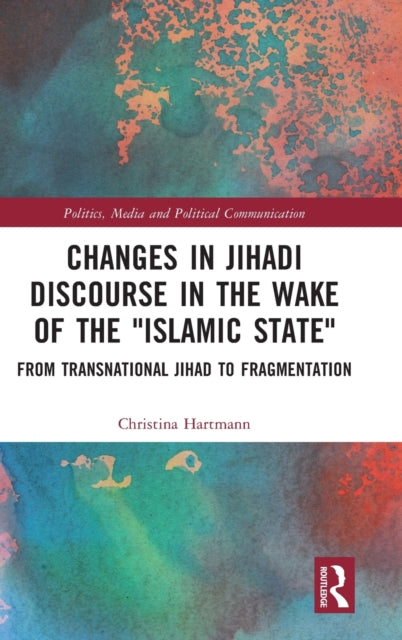
Changes in Jihadi Discourse in the Wake of the "Islamic State": From Transnational Jihad to Fragmentation
Changes in Jihadi Discourse in the Wake of the "Islamic State": From Transnational Jihad to Fragmentation
💎 Earn 689 Points (£6.89) on this item.
We can order this item for you. Delivery usually takes about 4 to 6 weeks.
This item is not held in our immediate stock. We will order it for you after checkout.
Estimated delivery: About 4 to 6 weeks
YOU SAVE £8.18
- Condition: Brand new
- UK Delivery times: Usually arrives within 2 - 3 working days
- UK Shipping: Fee starts at £2.39. Subject to product weight & dimension
Bulk ordering. Want 15 or more copies? Get a personalised quote and bigger discounts. Learn more about bulk orders.
Couldn't load pickup availability
- More about Changes in Jihadi Discourse in the Wake of the "Islamic State": From Transnational Jihad to Fragmentation
This book provides valuable insights into the ideological infighting between al-Qaida and Islamic State, and its impact on the jihadi movement's fragmentation and glocalization. It offers translated primary source material that is otherwise unavailable to readers.
Format: Hardback
Length: 236 pages
Publication date: 10 November 2022
Publisher: Taylor & Francis Ltd
An in-depth examination of the ideological conflict between al-Qaeda and the Islamic State, from its inception, provides valuable insights into the current state of fragmentation and globalization within the jihadi movement. This comprehensive analysis delves into the intricate dynamics, ideologies, and strategic objectives of these two influential organizations, shedding light on the complex web of relationships and rivalries that have shaped their trajectory. By analyzing the primary source material, which is exclusively available in Arabic, this book offers a unique perspective to readers who would otherwise be limited in their access to this critical information.
The ideological conflict between al-Qaeda and the Islamic State, which began in the early 2000s, has had a profound impact on the jihadi movement. This conflict has led to the fragmentation of the movement into various factions, each with its own set of beliefs and objectives. One of the key factors contributing to this fragmentation is the ideological differences between al-Qaeda and the Islamic State. Al-Qaeda, founded by Osama bin Laden, emphasizes a global jihad against Western powers and seeks to establish a caliphate in the Middle East. In contrast, the Islamic State, led by Abu Bakr al-Baghdadi, has a more localized vision and seeks to establish a caliphate in the territories it controls.
Another factor contributing to the fragmentation of the jihadi movement is the strategic differences between al-Qaeda and the Islamic State. Al-Qaeda has historically been more decentralized, with its affiliates operating independently and often engaging in conflict with each other. In contrast, the Islamic State has sought to establish a more centralized and hierarchical structure, with a strict command and control system. This has led to tensions between different branches of the movement, particularly those that do not conform to the Islamic State's vision.
The ideological and strategic differences between al-Qaeda and the Islamic State have also had a significant impact on the globalization of the jihadi movement. The Islamic State has used social media and other forms of communication to spread its message and recruit followers from around the world. This has allowed the movement to expand beyond its traditional boundaries and reach new audiences. In contrast, al-Qaeda has been more cautious in its use of social media, preferring to rely on traditional means of communication such as encrypted messaging and secret meetings.
Despite the fragmentation and globalization of the jihadi movement, there are still some common themes that unite these organizations. One of these is the belief in the establishment of a caliphate, which is a state ruled by a caliph, who is the spiritual successor of the Prophet Muhammad. This belief is shared by both al-Qaeda and the Islamic State and is a key motivator for their followers.
Another common theme is the opposition to Western powers and their influence in the Middle East. Both al-Qaeda and the Islamic State view the West as an enemy and seek to undermine its influence in the region. This opposition has led to a range of attacks and operations against Western targets, including the 9/11 attacks in the United States and the recent attacks in France and Belgium.
Despite these common themes, there are also significant differences between al-Qaeda and the Islamic State. One of these is the approach to violence. Al-Qaeda has historically been more cautious in its use of violence, preferring to use targeted strikes and propaganda campaigns to achieve its objectives. In contrast, the Islamic State has been more willing to use brutal and indiscriminate violence, including mass executions and suicide bombings.
Another difference is the geographic scope of the jihadi movement. Al-Qaeda has historically focused on operations in the Middle East and South Asia, while the Islamic State has expanded its operations to include Africa, the Caucasus, and Central Asia. This expansion has led to new challenges for the movement, including the need to adapt to different cultural and political contexts.
In conclusion, the ideological conflict between al-Qaeda and the Islamic State has had a profound impact on the jihadi movement. This conflict has led to the fragmentation of the movement into various factions, each with its own set of beliefs and objectives. The ideological and strategic differences between al-Qaeda and the Islamic State have also had a significant impact on the globalization of the jihadi movement, allowing it to expand beyond its traditional boundaries and reach new audiences. Despite these differences, there are still some common themes that unite these organizations, including the belief in the establishment of a caliphate and the opposition to Western powers. However, the approach to violence and the geographic scope of the jihadi movement have also led to significant differences between these organizations.
Weight: 620g
Dimension: 234 x 156 (mm)
ISBN-13: 9781032279473
This item can be found in:
UK and International shipping information
UK and International shipping information
UK Delivery and returns information:
- Delivery within 2 - 3 days when ordering in the UK.
- Shipping fee for UK customers from £2.39. Fully tracked shipping service available.
- Returns policy: Return within 30 days of receipt for full refund.
International deliveries:
Shulph Ink now ships to Australia, Belgium, Canada, France, Germany, Ireland, Italy, India, Luxembourg Saudi Arabia, Singapore, Spain, Netherlands, New Zealand, United Arab Emirates, United States of America.
- Delivery times: within 5 - 10 days for international orders.
- Shipping fee: charges vary for overseas orders. Only tracked services are available for most international orders. Some countries have untracked shipping options.
- Customs charges: If ordering to addresses outside the United Kingdom, you may or may not incur additional customs and duties fees during local delivery.