Anna Hickey-Moody,Linda Knight,Eloise Florence
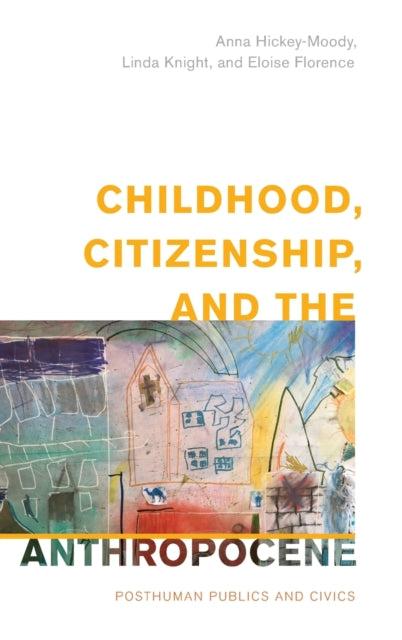
Childhood, Citizenship, and the Anthropocene: Posthuman Publics and Civics
Childhood, Citizenship, and the Anthropocene: Posthuman Publics and Civics
💎 Earn 477 Points (£4.77) on this item.
We can order this item for you. Delivery usually takes about 4 to 6 weeks.
This item is not held in our immediate stock. We will order it for you after checkout.
Estimated delivery: About 4 to 6 weeks
- Condition: Brand new
- UK Delivery times: Usually arrives within 2 - 3 working days
- UK Shipping: Fee starts at £2.39. Subject to product weight & dimension
Bulk ordering. Want 15 or more copies? Get a personalised quote and bigger discounts. Learn more about bulk orders.
Couldn't load pickup availability
- More about Childhood, Citizenship, and the Anthropocene: Posthuman Publics and Civics
The book explores how children develop a sense of responsibility for the more-than-human world and teaches them a posthuman civics that can care for the environment. It uses experimental methodologies to develop original and robust ways of understanding children's subcultural civic practices.
Format: Hardback
Length: 228 pages
Publication date: 17 November 2021
Publisher: Rowman & Littlefield
The planet is in a state of decline, with the Earth's climate reaching a critical point where it can no longer maintain equilibrium. Fires, floods, and natural disasters are ravaging countries worldwide, causing widespread devastation and loss of life. In the midst of this global crisis, the question arises: what does it mean to be a child citizen in the Anthropocene era? Can we impart to children a posthuman civics that will enable them to care for the broader non-human world?
Extending the concepts of 'little publics' and 'posthuman citizenships,' this book aims to model and better understand posthuman publics and civics. Through experimental methodologies, the authors develop innovative approaches to understanding children's subcultural civic practices, which are rooted in care for the more-than-human.
The book begins by exploring the concept of 'little publics,' which refers to the diverse groups of children who engage in informal and often marginalized civic practices. These practices are often overlooked by mainstream institutions and policymakers, yet they play a crucial role in shaping children's understanding of the world and their place in it. The authors argue that by recognizing and valuing these little publics, we can better understand the complex dynamics of posthuman citizenship and develop more effective strategies for promoting children's well-being and social justice.
In the next chapter, the authors delve into the concept of 'posthuman citizenships.' They argue that in the Anthropocene era, children are not just passive recipients of information and resources but active contributors to the shaping of the world. They suggest that we need to develop a new curriculum that teaches children about the complexities of the non-human world and equips them with the skills and knowledge necessary to care for it. The authors propose a range of experimental methodologies, such as participatory design, ethnography, and visual storytelling, to facilitate children's engagement with these concepts and promote their understanding of the more-than-human world.
Throughout the book, the authors draw on a wealth of empirical evidence to support their arguments. They examine case studies from around the world, including examples of children's participation in environmental activism, community organizing, and cultural practices that emphasize care for the more-than-human. These case studies provide valuable insights into the ways in which children are already engaging with posthuman issues and offer potential models for promoting their civic engagement in the future.
In conclusion, this book offers a timely and important contribution to the field of childhood studies and posthumanism. By exploring the relationship between children, citizenship, and the non-human world, it provides a framework for understanding the complex challenges and opportunities that we face in the Anthropocene era. The authors' innovative methodologies and empirical evidence offer valuable insights into the ways in which we can promote children's well-being and social justice while also fostering their active participation in shaping the world. As we navigate the uncertain waters of the 21st century, this book provides a roadmap for building a more inclusive and sustainable future for all.
Weight: 599g
Dimension: 227 x 162 x 22 (mm)
ISBN-13: 9781538153604
This item can be found in:
UK and International shipping information
UK and International shipping information
UK Delivery and returns information:
- Delivery within 2 - 3 days when ordering in the UK.
- Shipping fee for UK customers from £2.39. Fully tracked shipping service available.
- Returns policy: Return within 30 days of receipt for full refund.
International deliveries:
Shulph Ink now ships to Australia, Belgium, Canada, France, Germany, Ireland, Italy, India, Luxembourg Saudi Arabia, Singapore, Spain, Netherlands, New Zealand, United Arab Emirates, United States of America.
- Delivery times: within 5 - 10 days for international orders.
- Shipping fee: charges vary for overseas orders. Only tracked services are available for most international orders. Some countries have untracked shipping options.
- Customs charges: If ordering to addresses outside the United Kingdom, you may or may not incur additional customs and duties fees during local delivery.