Shulph Ink
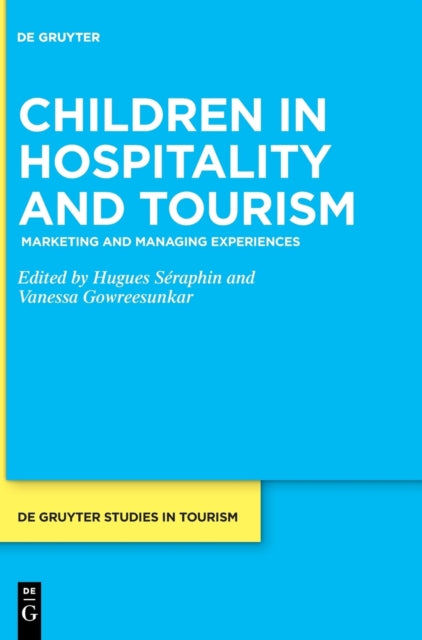
Children in Hospitality and Tourism: Marketing and Managing Experiences
Children in Hospitality and Tourism: Marketing and Managing Experiences
💎 Earn 415 Points (£4.15) on this item.
YOU SAVE £13.41
- Condition: Brand new
- UK Delivery times: Usually arrives within 2 - 3 working days
- UK Shipping: Fee starts at £2.39. Subject to product weight & dimension
Bulk ordering. Want 15 or more copies? Get a personalised quote and bigger discounts. Learn more about bulk orders.
Couldn't load pickup availability
- More about Children in Hospitality and Tourism: Marketing and Managing Experiences
This book emphasizes the importance of children as future consumers in the tourism and hospitality industry and calls for their empowerment as decision-makers. It offers diverse perspectives and innovative recommendations to practitioners.
Format: Hardback
Length: 189 pages
Publication date: 07 September 2020
Publisher: De Gruyter
This groundbreaking book addresses a critical gap in tourism and hospitality research, focusing on the significant role of children as future consumers. For decades, researchers and industry practitioners have overlooked and undervalued the invaluable perspectives and influence of children in decision-making processes. However, the United Nations Convention on the Rights of the Child (1989) emphasizes that children have the right to participate in matters that affect them. Recognizing this, the contributors to this edited collection draw attention to children as active thinkers, actors, and agents of change in shaping the future of the tourism and hospitality industry.
The book is organized into a series of conceptual and empirical chapters, each contributing to an overarching theme: the empowerment of children as present and future consumers should be a central pillar of any sustainable tourism initiative. Through a diverse range of perspectives, the chapters offer innovative recommendations and insights to industry practitioners.
One of the key findings of the book is that children possess unique insights and perspectives that can contribute to the development of more inclusive and child-friendly tourism practices. Children have a natural curiosity and openness to new experiences, which can be harnessed to create engaging and educational tourism products and services. By involving children in the design and delivery of tourism experiences, the industry can foster a sense of ownership and responsibility towards the environment and local communities.
Furthermore, the book highlights the importance of empowering children as consumers through education and awareness-raising initiatives. Children need to be taught about the environmental and social impacts of tourism, as well as their rights and responsibilities as consumers. This can be achieved through school programs, community outreach, and digital media campaigns. By empowering children with the knowledge and skills to make informed decisions about tourism, the industry can build a more sustainable and responsible future.
Another important aspect of the book is the recognition of the diverse needs and experiences of children across different age groups and cultural backgrounds. Children have unique preferences and requirements, and the industry must adapt its products and services to meet these needs. This includes providing child-friendly accommodations, activities, and dining options, as well as addressing the specific concerns of children with disabilities or special needs.
The book also emphasizes the importance of collaboration between the tourism and hospitality industry, government agencies, and non-profit organizations to promote sustainable tourism practices. By working together, these stakeholders can develop policies, programs, and initiatives that support the empowerment of children as consumers and protect the environment and local communities.
In conclusion, this groundbreaking book serves as a timely and important contribution to the field of tourism and hospitality research. By highlighting the role of children as future consumers and agents of change, the book provides a valuable framework for promoting sustainable tourism practices and building a more inclusive and child-friendly industry. The innovative recommendations and insights offered by the contributors will be of great interest to researchers, industry practitioners, policymakers, and educators alike, as they work towards creating a more sustainable and responsible future for tourism and hospitality.
Introduction:
The tourism and hospitality industry has long been recognized as a significant contributor to economic growth and development, providing employment opportunities and generating revenue for local communities. However, the industry has also faced significant challenges, including environmental degradation, social inequality, and the impact of climate change. In recent years, there has been a growing recognition of the importance of sustainable tourism practices, which aim to balance economic growth with environmental protection and social responsibility.
One area that has received relatively little attention in the context of sustainable tourism is the role of children as future consumers and agents of change. Children are a vital part of society and have the potential to shape the future of the tourism and hospitality industry in significant ways. However, their perspectives and experiences have often been overlooked and undervalued by researchers and industry practitioners.
This book aims to address this gap by bringing together a collection of internationally diverse perspectives and innovative recommendations to the industry's practitioners. Through a mix of conceptual and empirical chapters, the book collectively supports an overarching theme: the empowerment of children as present and future consumers should be a core component of any sustainable tourism initiative.
Children as Future Consumers:
Children are active thinkers, actors, and transformers of the future, and their perspectives and experiences should be valued and included in the development of sustainable tourism practices. According to the United Nations Convention on the Rights of the Child (1989), children have the right to participate in matters that affect them, and this includes decisions related to tourism and hospitality.
The book highlights the importance of involving children in the design and delivery of tourism experiences. Children have unique insights and perspectives that can contribute to the development of more inclusive and child-friendly tourism products and services. By engaging children in the process, the industry can create experiences that are not only enjoyable for children but also educational and meaningful for their development.
One example of this is the use of storytelling and interactive activities to engage children in the history, culture, and environment of a destination. Children are often more receptive to learning through storytelling and interactive activities, and these experiences can help to foster a sense of pride and ownership in a destination.
Furthermore, children are increasingly becoming more aware of the environmental and social impacts of tourism. They are more likely to prioritize sustainable tourism practices and products that align with their values and interests. By providing children with information about the environmental and social impacts of tourism, the industry can help to build a more sustainable and responsible future.
Empowering Children as Consumers:
Empowering children as consumers is another critical aspect of sustainable tourism. Children need to be taught about their rights and responsibilities as consumers, as well as the environmental and social impacts of tourism. By providing children with education and awareness-raising initiatives, the industry can help to build a more responsible and sustainable consumer base.
One example of this is the use of digital media and social media platforms to reach children and promote sustainable tourism practices. Children are increasingly using digital media and social media platforms, and these platforms can be used to provide them with information about sustainable tourism practices, as well as to engage them in discussions and debates about the industry.
Furthermore, the industry can also provide children with opportunities to participate in decision-making processes related to tourism and hospitality. This can include involving children in surveys, focus groups, and other forms of consultation to gather their perspectives and feedback on tourism products and services.
Conclusion:
In conclusion, this book serves as a timely and important contribution to the field of sustainable tourism. By highlighting the role of children as future consumers and agents of change, the book provides a valuable framework for promoting sustainable tourism practices and building a more inclusive and child-friendly industry. The innovative recommendations and insights offered by the contributors will be of great interest to researchers, industry practitioners, policymakers, and educators alike, as they work towards creating a more sustainable and responsible future for tourism and hospitality.
Weight: 462g
Dimension: 178 x 249 x 19 (mm)
ISBN-13: 9783110644586
This item can be found in:
UK and International shipping information
UK and International shipping information
UK Delivery and returns information:
- Delivery within 2 - 3 days when ordering in the UK.
- Shipping fee for UK customers from £2.39. Fully tracked shipping service available.
- Returns policy: Return within 30 days of receipt for full refund.
International deliveries:
Shulph Ink now ships to Australia, Belgium, Canada, France, Germany, Ireland, Italy, India, Luxembourg Saudi Arabia, Singapore, Spain, Netherlands, New Zealand, United Arab Emirates, United States of America.
- Delivery times: within 5 - 10 days for international orders.
- Shipping fee: charges vary for overseas orders. Only tracked services are available for most international orders. Some countries have untracked shipping options.
- Customs charges: If ordering to addresses outside the United Kingdom, you may or may not incur additional customs and duties fees during local delivery.