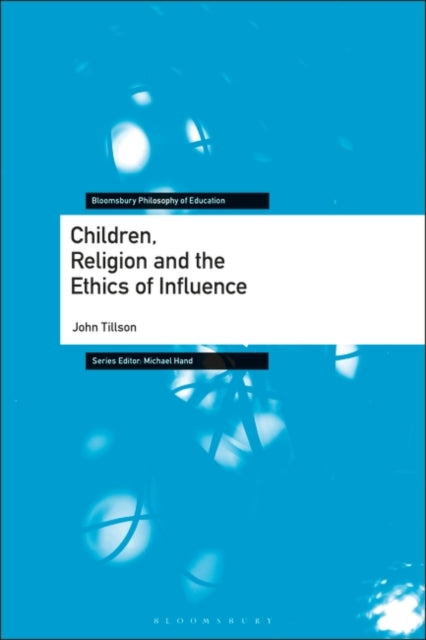
JohnTillson
Children, Religion and the Ethics of Influence
Children, Religion and the Ethics of Influence
💎 Earn 175 Points (£1.75) on this item.
We can order this item for you. Delivery usually takes about 4 to 6 weeks.
This item is not held in our immediate stock. We will order it for you after checkout.
Estimated delivery: About 4 to 6 weeks
- Condition: Brand new
- UK Delivery times: Usually arrives within 2 - 3 working days
- UK Shipping: Fee starts at £2.39. Subject to product weight & dimension
Bulk ordering. Want 15 or more copies? Get a personalised quote and bigger discounts. Learn more about bulk orders.
Couldn't load pickup availability
- More about Children, Religion and the Ethics of Influence
John Tillson develops a theory concerning the morally permissible,impermissible or obligatory types of formative influence. He argues that religious initiation in childhood is morally impermissible and addresses questions such as how we come to have ethical responsibilities, how we understand religion, how ethical and religious commitments can be justified, and what makes children ethically special.
\n Format: Paperback / softback
\n Length: 208 pages
\n Publication date: 24 December 2020
\n Publisher: Bloomsbury Publishing PLC
\n
In his groundbreaking work, "Children, Religion, and the Ethics of Influence," John Tillson delves into a comprehensive theory that explores the moral permissibility, impermissibility, and obligatory nature of different forms of formative influence. Applying this theory to the realm of religion, Tillson makes a compelling argument that religious initiation in childhood, regardless of whether it is conducted by parents, teachers, or others, is morally impermissible. He raises thought-provoking questions such as: How do we acquire the ethical responsibilities that guide our actions? How do we understand the complexities of religion? How can ethical and religious commitments be justified? What makes children ethically unique in their development?
Tillson's theory is rooted in the belief that formative influence plays a crucial role in shaping individuals' ethical and moral development. He distinguishes between three categories of influence: Permissible influence, which is morally acceptable and can contribute to positive growth; Impermissible influence, which is morally unacceptable and can lead to harm; and Obligatory influence, which is morally obligatory and must be undertaken to fulfill one's ethical responsibilities.
In the case of religion, Tillson argues that religious initiation in childhood falls under the category of impermissible influence. He bases this argument on several key points. Firstly, children are not yet capable of fully understanding the complex doctrines and beliefs of religion, which can lead to misinterpretation and false convictions. Secondly, religious initiation can impose unwanted pressure on children, forcing them to conform to a particular religious tradition against their will. Thirdly, children's developing minds are vulnerable to manipulation and coercion, which can be used to influence their religious beliefs and practices.
Despite these concerns, Tillson recognizes that religion can play a positive role in children's lives. He suggests that parents and teachers can provide children with an ethical and religious education that helps them develop a sense of morality and values. This education should be based on respect for diversity, tolerance, and the importance of critical thinking. It should also include exposure to different religious traditions and the opportunity for children to explore their own beliefs and values.
In conclusion, "Children, Religion, and the Ethics of Influence" is a thought-provoking work that challenges our assumptions about the moral permissibility of formative influence. Tillson's theory provides a valuable framework for understanding the ethical responsibilities of parents, teachers, and other adults in shaping children's ethical and moral development. By applying this theory to the realm of religion, Tillson highlights the importance of providing children with an education that is based on respect for diversity, tolerance, and critical thinking. This education can help children develop a sense of morality and values that will guide them throughout their lives.
\n Weight: 332g\n
Dimension: 155 x 233 x 15 (mm)\n
ISBN-13: 9781350201347\n \n
UK and International shipping information
UK and International shipping information
UK Delivery and returns information:
- Delivery within 2 - 3 days when ordering in the UK.
- Shipping fee for UK customers from £2.39. Fully tracked shipping service available.
- Returns policy: Return within 30 days of receipt for full refund.
International deliveries:
Shulph Ink now ships to Australia, Belgium, Canada, France, Germany, Ireland, Italy, India, Luxembourg Saudi Arabia, Singapore, Spain, Netherlands, New Zealand, United Arab Emirates, United States of America.
- Delivery times: within 5 - 10 days for international orders.
- Shipping fee: charges vary for overseas orders. Only tracked services are available for most international orders. Some countries have untracked shipping options.
- Customs charges: If ordering to addresses outside the United Kingdom, you may or may not incur additional customs and duties fees during local delivery.