Ben H Gagnon
Church of Birds: An Eco-History of Myth and Religion
Church of Birds: An Eco-History of Myth and Religion
💎 Earn 72 Points (£0.72) on this item.
YOU SAVE £4.43
- Condition: Brand new
- UK Delivery times: Usually arrives within 2 - 3 working days
- UK Shipping: Fee starts at £2.39. Subject to product weight & dimension
Bulk ordering. Want 15 or more copies? Get a personalised quote and bigger discounts. Learn more about bulk orders.
Couldn't load pickup availability
- More about Church of Birds: An Eco-History of Myth and Religion
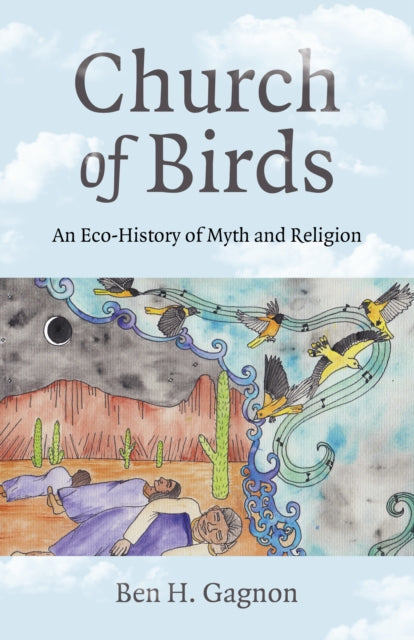
Birds have been more important to human evolution than primates, with our distant ancestors imitating birdsong to develop language and following bird migration flyways. Migratory birds were seen as divine agents of a benevolent sun, delivering seeds and guiding souls to a heavenly paradise.
Format: Paperback / softback
Length: 248 pages
Publication date: 31 March 2023
Publisher: John Hunt Publishing
Birds, long considered our closest evolutionary relatives, may have had a more significant impact on human evolution than previously thought. As human activities continue to decimate bird populations worldwide, scientists and scholars are uncovering evidence that birds played a crucial role in shaping our development.
Our distant ancestors, some millions of years ago, began to imitate the songs of birds, a crucial step in the evolution of language. They followed the migratory patterns of birds across vast continents, settling in areas that were rich in bird habitat. This interaction with birds not only facilitated the development of language but also influenced our behavior and cultural beliefs.
One remarkable aspect of this relationship is the reverence and symbolism that birds have held across dozens of cultures throughout history. Migratory birds were often seen as divine agents, carrying seeds and guiding souls to a heavenly paradise. These mythic roles were eventually incorporated into the religious beliefs of Judaism, Christianity, and Islam.
In recent years, scientific discoveries have further supported the role of birds in human evolution. Studies have shown that birds have a unique cognitive ability, including the ability to solve complex problems and communicate using sophisticated tools. This cognitive capacity may have played a role in the development of human intelligence and creativity.
Furthermore, birds have influenced our diet and agriculture throughout history. Many species of birds, such as migratory birds, play a critical role in seed dispersal, which helps plant species to reproduce and thrive. This, in turn, has contributed to the abundance of food resources available to humans.
Despite these significant contributions, bird populations are declining at an alarming rate. Habitat loss, climate change, and human activities such as hunting and pollution are all contributing to the decline of bird species worldwide. This has serious implications for the health of ecosystems and the biodiversity of our planet.
To address this issue, scientists and conservationists are working tirelessly to protect bird habitats and promote sustainable practices. They are also studying the behavior and ecology of birds to better understand their role in human evolution and how we can preserve their populations for future generations.
In conclusion, birds have played a more significant role in shaping human evolution than previously thought. Their interaction with our ancestors, their cognitive abilities, and their influence on our diet and agriculture have all contributed to our development as a species. However, we must recognize the threats posed by human activities and take action to protect bird populations and preserve their habitats for future generations.
Birds, long considered our closest evolutionary relatives, may have had a more significant impact on human evolution than previously thought. As human activities continue to decimate bird populations worldwide, scientists and scholars are uncovering evidence that birds played a crucial role in shaping our development.
Our distant ancestors, some millions of years ago, began to imitate the songs of birds, a crucial step in the evolution of language. They followed the migratory patterns of birds across vast continents, settling in areas that were rich in bird habitat. This interaction with birds not only facilitated the development of language but also influenced our behavior and cultural beliefs.
One remarkable aspect of this relationship is the reverence and symbolism that birds have held across dozens of cultures throughout history. Migratory birds were often seen as divine agents, carrying seeds and guiding souls to a heavenly paradise. These mythic roles were eventually incorporated into the religious beliefs of Judaism, Christianity, and Islam.
In recent years, scientific discoveries have further supported the role of birds in human evolution. Studies have shown that birds have a unique cognitive ability, including the ability to solve complex problems and communicate using sophisticated tools. This cognitive capacity may have played a role in the development of human intelligence and creativity.
Furthermore, birds have influenced our diet and agriculture throughout history. Many species of birds, such as migratory birds, play a critical role in seed dispersal, which helps plant species to reproduce and thrive. This, in turn, has contributed to the abundance of food resources available to humans.
Despite these significant contributions, bird populations are declining at an alarming rate. Habitat loss, climate change, and human activities such as hunting and pollution are all contributing to the decline of bird species worldwide. This has serious implications for the health of ecosystems and the biodiversity of our planet.
To address this issue, scientists and conservationists are working tirelessly to protect bird habitats and promote sustainable practices. They are also studying the behavior and ecology of birds to better understand their role in human evolution and how we can preserve their populations for future generations.
In conclusion, birds have played a more significant role in shaping human evolution than previously thought. Their interaction with our ancestors, their cognitive abilities, and their influence on our diet and agriculture have all contributed to our development as a species. However, we must recognize the threats posed by human activities and take action to protect bird populations and preserve their habitats for future generations.
Weight: 254g
Dimension: 141 x 217 x 20 (mm)
ISBN-13: 9781803411224
UK and International shipping information
UK and International shipping information
UK Delivery and returns information:
- Delivery within 2 - 3 days when ordering in the UK.
- Shipping fee for UK customers from £2.39. Fully tracked shipping service available.
- Returns policy: Return within 30 days of receipt for full refund.
International deliveries:
Shulph Ink now ships to Australia, Belgium, Canada, France, Germany, Ireland, Italy, India, Luxembourg Saudi Arabia, Singapore, Spain, Netherlands, New Zealand, United Arab Emirates, United States of America.
- Delivery times: within 5 - 10 days for international orders.
- Shipping fee: charges vary for overseas orders. Only tracked services are available for most international orders. Some countries have untracked shipping options.
- Customs charges: If ordering to addresses outside the United Kingdom, you may or may not incur additional customs and duties fees during local delivery.