Shulph Ink
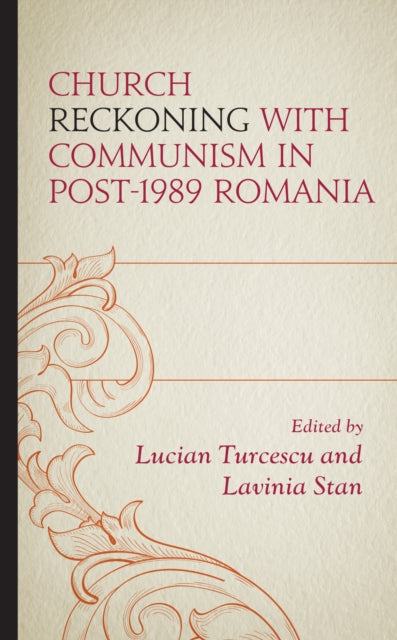
Church Reckoning with Communism in Post-1989 Romania
Church Reckoning with Communism in Post-1989 Romania
💎 Earn 451 Points (£4.51) on this item.
We can order this item for you. Delivery usually takes about 4 to 6 weeks.
This item is not held in our immediate stock. We will order it for you after checkout.
Estimated delivery: About 4 to 6 weeks
- Condition: Brand new
- UK Delivery times: Usually arrives within 2 - 3 working days
- UK Shipping: Fee starts at £2.39. Subject to product weight & dimension
Bulk ordering. Want 15 or more copies? Get a personalised quote and bigger discounts. Learn more about bulk orders.
Couldn't load pickup availability
- More about Church Reckoning with Communism in Post-1989 Romania
This volume examines the relationship between Romania's major religious denominations and their attempt to cope with their difficult past, including collaboration with the communists after 1989. It argues that no religious group escaped collaboration, but most denominations had little desire to tackle their tainted past due to deficient legislation and a lack of elite renewal.
Format: Hardback
Length: 236 pages
Publication date: 07 July 2021
Publisher: Lexington Books
The present volume delves into the intricate relationship between Romania's most prominent religious denominations and their ongoing efforts to navigate a challenging past that continues to exert a significant influence on their present. For the first time, this comprehensive study explores both the majority Romanian Orthodox Church and significant minority denominations, including the Roman and Greek Catholic Churches, the Reformed Church, the Hungarian Unitarian Church, and the Pentecostal Christian Denomination. It makes a compelling argument that no religious group, with the exception of the Greek Catholic Church, which was banned from 1948 to 1989, managed to evade collaboration with the communists during the communist era. However, after the fall of communism in 1989, most denominations exhibited a limited inclination to confront their tainted past and embark on a fresh start. This reluctance was partly influenced by the country's inadequate legislation, which did not foster the pursuit of lustration, thereby hindering the emergence of a significant movement of elite renewal within the religious sphere. Instead, the post-communist period has witnessed a dominant process of the reproduction of the old elites and their adaptation to democratic norms.
The Romanian Orthodox Church, as the largest and most influential religious body in the country, played a pivotal role in the country's historical relationship with communism. The church's close ties with the Soviet Union and its support for the communist regime during the 1950s and 1960s led to widespread persecution and repression of religious minorities. Despite this, the church maintained its influence and continued to serve as a symbol of national identity for many Romanians.
The Roman and Greek Catholic Churches, on the other hand, faced significant challenges during the communist era. The churches were banned from operating and their clergy were persecuted, leading to a decline in religious practice and a loss of faith among many Catholics. However, the churches continued to operate underground and maintain their loyal congregations, who saw their faith as a source of strength and resilience in the face of adversity.
The Reformed Church, a smaller denomination with roots in the 16th century, also experienced difficulties during the communist era. The church's emphasis on individual freedom and religious liberty was seen as a threat to the communist regime, and its members were subjected to surveillance and persecution. However, the Reformed Church managed to survive and even thrive in some areas, particularly in rural areas where it was less likely to be detected by the authorities.
The Hungarian Unitarian Church, a liberal Protestant denomination, faced similar challenges to the Reformed Church. The church's emphasis on human rights and social justice was seen as a threat to the communist regime, and its members were subjected to surveillance and persecution. However, the Unitarian Church managed to maintain its presence and even grow in some areas, particularly among intellectuals and artists who were seeking a more open and democratic religious expression.
The Pentecostal Christian Denomination, a relatively new religious movement that emerged in the 20th century, also faced challenges during the communist era. The church's emphasis on the power of the Holy Spirit and its emphasis on personal experience and spiritual growth were seen as a threat to the communist regime, and its members were subjected to surveillance and persecution. However, the Pentecostal Church managed to grow and spread throughout Romania, particularly among young people and urban populations who were seeking a more dynamic and expressive form of Christianity.
In conclusion, the present volume provides a valuable insight into the complex relationship between Romania's most important religious denominations and their attempt to cope with a difficult past that continues to cast a significant shadow over their present. While no religious group escaped collaboration with the communists during the communist era, most denominations had limited desire to confront their tainted past and make a clean start after the fall of communism. This reluctance was partly influenced by the country's inadequate legislation, which did not encourage the pursuit of lustration and the renewal of elite religious figures. Instead, the post-communist period has witnessed a dominant process of the reproduction of the old elites and their adaptation to democratic norms, with the Romanian Orthodox Church playing a pivotal role in this process.
Weight: 540g
Dimension: 227 x 163 x 24 (mm)
ISBN-13: 9781498580274
This item can be found in:
UK and International shipping information
UK and International shipping information
UK Delivery and returns information:
- Delivery within 2 - 3 days when ordering in the UK.
- Shipping fee for UK customers from £2.39. Fully tracked shipping service available.
- Returns policy: Return within 30 days of receipt for full refund.
International deliveries:
Shulph Ink now ships to Australia, Belgium, Canada, France, Germany, Ireland, Italy, India, Luxembourg Saudi Arabia, Singapore, Spain, Netherlands, New Zealand, United Arab Emirates, United States of America.
- Delivery times: within 5 - 10 days for international orders.
- Shipping fee: charges vary for overseas orders. Only tracked services are available for most international orders. Some countries have untracked shipping options.
- Customs charges: If ordering to addresses outside the United Kingdom, you may or may not incur additional customs and duties fees during local delivery.