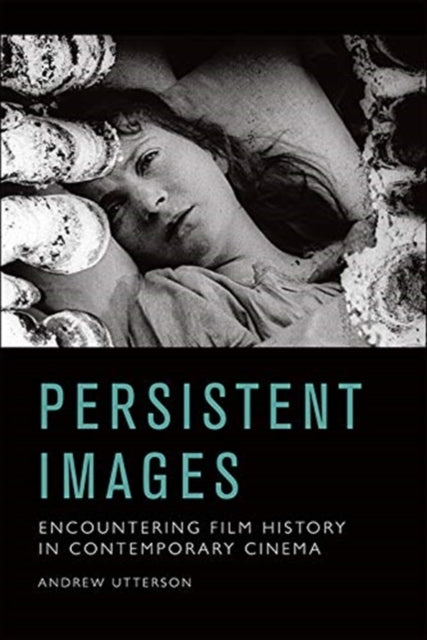
Andrew Utterson
Cinematic-Mnemonic Encounters: Contemporary Cinema and the Memory of Medium
Cinematic-Mnemonic Encounters: Contemporary Cinema and the Memory of Medium
💎 Earn 383 Points (£3.83) on this item.
YOU SAVE £23.30
- Condition: Brand new
- UK Delivery times: Usually arrives within 2 - 3 working days
- UK Shipping: Fee starts at £2.39. Subject to product weight & dimension
Bulk ordering. Want 15 or more copies? Get a personalised quote and bigger discounts. Learn more about bulk orders.
Couldn't load pickup availability
- More about Cinematic-Mnemonic Encounters: Contemporary Cinema and the Memory of Medium
Persistent Images: Encountering Film History in Contemporary Cinema explores the continuing resonance of cinema's memory in experimental practices, using case studies of films that reflect and reimagine the past, offering new ways of thinking about film history and contemporary cinema.
Format: Hardback
Length: 208 pages
Publication date: 31 May 2020
Publisher: Edinburgh University Press
Contemporary cinema is a complex and dynamic field that has undergone significant technological advancements over the years. This has led to a series of technological reflections on its past, which have helped to shape our understanding of the medium. In this essay, I will argue that a progressive historiography that looks forward, moving beyond the sense of anxiety and loss that has dominated accounts of cinema's postulated demise, is necessary to fully appreciate the nature and status of contemporary cinema.
One of the key challenges facing contemporary cinema is the increasing digitization of the medium. With the rise of streaming services and online platforms, more and more films are being made available to a global audience, and this has had a significant impact on the way that films are produced, distributed, and consumed. While this has led to greater accessibility and diversity, it has also raised concerns about the potential for the medium to be commodified and devalued.
To address these concerns, I will draw on the latest thinking on evolving screen technologies and media archaeology. Screen technologies have evolved rapidly in recent years, with the introduction of new formats, resolutions, and technologies such as 3D, 4K, and virtual reality. These technologies have had a significant impact on the way that films are made and experienced, and they have opened up new possibilities for storytelling and expression.
Media archaeology, on the other hand, is a field that examines the history of media and technology. It looks at the ways in which media have been used to shape society and culture, and it explores the ways in which media technologies have evolved over time. Media archaeology has been particularly important in the study of cinema, as it has helped to reveal the historical memory of cinema and to understand how the medium has been shaped by social, political, and economic forces.
One of the key findings of media archaeology is that cinema has a long and complex history that is shaped by a range of technological and aesthetic factors. Cinema has been used to tell stories, to entertain, to educate, and to challenge social norms and values. It has also been used to promote and celebrate cultural diversity, and it has played a significant role in the development of global cinema.
However, cinema has also faced a number of challenges over the years. One of the most significant challenges is the decline of the cinema industry. The rise of streaming services and online platforms has led to a decline in the number of people who go to the cinema, and this has had a significant impact on the financial viability of the industry. This has led to a number of closures and layoffs, and it has also led to a decline in the quality of films being made.
Despite these challenges, contemporary cinema is still a vibrant and dynamic field. There are a number of experimental practices that are being developed that are looking to reimagine the past and to offer new ways of thinking about film history and contemporary cinema alike. These practices include the use of archival footage, the use of new technologies, and the use of experimental narrative techniques.
One of the most notable examples of experimental practices in contemporary cinema is the use of archival footage. Archival footage is footage that has been preserved for a long time and that has been used in films to tell stories about the past. This footage can be used to create a sense of nostalgia and to explore the ways in which the past has shaped the present. For example, the film "Shirin" (2008) uses archival footage to tell the story of a young woman who is forced to leave her home in Iran and to travel to Europe. The film uses the footage to create a sense of longing and loss, and it also explores the ways in which the past has shaped the present.
Another example of experimental practices in contemporary cinema is the use of new technologies. New technologies such as 3D, 4K, and virtual reality have opened up new possibilities for storytelling and expression. For example, the film "Goodbye to Language" (2014) uses 3D to create a sense of depth and immersion, and it also uses 4K to create a sense of clarity and detail. The film also uses virtual reality to create a sense of presence and to explore the ways in which the past has shaped the present.
Experimental practices in contemporary cinema have also been used to challenge social norms and values. For example, the film "Francofonia" (2015) uses the story of a French museum to explore the ways in which the past has been used to promote and celebrate cultural diversity. The film uses a range of experimental techniques, including the use of archival footage, the use of new technologies, and the use of experimental narrative techniques, to create a sense of wonder and awe.
In conclusion, contemporary cinema is a complex and dynamic field that has undergone significant technological advancements over the years. While there are a number of challenges facing the industry, there are also a number of experimental practices that are being developed that are looking to reimagine the past and to offer new ways of thinking about film history and contemporary cinema alike. By drawing on the latest thinking on evolving screen technologies and media archaeology, we can better appreciate the nature and status of contemporary cinema and work towards a more positive future for the medium.
Weight: 402g
Dimension: 161 x 240 x 17 (mm)
ISBN-13: 9781474440721
UK and International shipping information
UK and International shipping information
UK Delivery and returns information:
- Delivery within 2 - 3 days when ordering in the UK.
- Shipping fee for UK customers from £2.39. Fully tracked shipping service available.
- Returns policy: Return within 30 days of receipt for full refund.
International deliveries:
Shulph Ink now ships to Australia, Belgium, Canada, France, Germany, Ireland, Italy, India, Luxembourg Saudi Arabia, Singapore, Spain, Netherlands, New Zealand, United Arab Emirates, United States of America.
- Delivery times: within 5 - 10 days for international orders.
- Shipping fee: charges vary for overseas orders. Only tracked services are available for most international orders. Some countries have untracked shipping options.
- Customs charges: If ordering to addresses outside the United Kingdom, you may or may not incur additional customs and duties fees during local delivery.