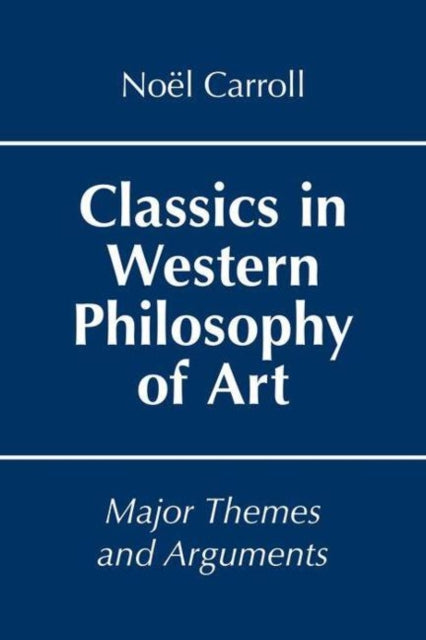
Prof. Noel Carroll
Classics in Western Philosophy of Art: Major Themes and Arguments
Classics in Western Philosophy of Art: Major Themes and Arguments
💎 Earn 86 Points (£0.86) on this item.
YOU SAVE £3.66
- Condition: Brand new
- UK Delivery times: Usually arrives within 2 - 3 working days
- UK Shipping: Fee starts at £2.39. Subject to product weight & dimension
Bulk ordering. Want 15 or more copies? Get a personalised quote and bigger discounts. Learn more about bulk orders.
Couldn't load pickup availability
- More about Classics in Western Philosophy of Art: Major Themes and Arguments
Noël Carroll's book Classics in Western Philosophy of Art provides an introduction to the history of the philosophy of art, tracing developments between major positions and setting the stage for ongoing debates. It is ideal for introductory courses in philosophy of art and aesthetics.
Format: Paperback / softback
Length: 344 pages
Publication date: 17 June 2022
Publisher: Hackett Publishing Co, Inc
In this comprehensive synthetic introduction to the history of the philosophy of art, Noël Carroll meticulously elucidates and analyzes a selection of influential writings on art by renowned philosophers such as Plato, Aristotle, Hutcheson, Hume, Kant, Hegel, Schopenhauer, Tolstoy, and Bell. Carroll's narrative skillfully traces the evolution of major positions in the philosophy of art, spanning from the notion that art is inherently intertwined with society to the emergence of the idea that art can exist autonomously, known as art for art's sake. This seminal work sets the stage for ongoing debates in the philosophy of art, making it an invaluable resource for introductory undergraduate and graduate courses in philosophy of art and aesthetics, as well as for anyone seeking to gain a deeper understanding of the origins of some of our most fundamental conceptions of art within the Western tradition.
Plato, a renowned Greek philosopher, profoundly influenced the development of the philosophy of art. In his dialogues, such as "The Republic," he argued that art is not merely a imitation of reality but a means of expressing the universal forms and ideas that govern the world. Plato believed that art should serve a moral purpose and be used to educate and uplift the soul. He also believed that art should be governed by strict rules and standards to ensure its quality and integrity.
Aristotle, another influential Greek philosopher, took a different approach to the philosophy of art. He believed that art is not merely a means of expressing the universal but also a means of achieving pleasure and enjoyment. Aristotle argued that art should be judged based on its aesthetic qualities, such as beauty, harmony, and balance. He also believed that art should be used to promote virtue and morality in society.
Hutcheson, a Scottish philosopher, was a key figure in the development of the aesthetic theory of art. He argued that art is not merely a subjective experience but a means of communicating emotions and ideas. Hutcheson believed that art should be judged based on its ability to evoke emotions and create a sense of beauty. He also believed that art should be used to promote social harmony and order.
Hume, another Scottish philosopher, was skeptical of the value of art. He argued that art is not a necessary component of human life and that it is merely a product of human imagination and desire. Hume believed that art is not a reliable source of knowledge or truth and that it is subject to personal interpretation and bias.
Kant, a German philosopher, was a major figure in the development of the aesthetic theory of art. He argued that art is not merely a subjective experience but a means of expressing the universal laws of nature. Kant believed that art should be judged based on its ability to convey a sense of beauty and harmony and to promote a sense of moral and ethical values.
Hegel, a German philosopher, was a key figure in the development of the dialectical theory of art. He argued that art is not merely a product of human imagination and desire but a reflection of the universal spirit of the world. Hegel believed that art should be judged based on its ability to express the dialectical relationship between different elements and to promote a sense of unity and completeness.
Schopenhauer, a German philosopher, was a key figure in the development of the aesthetic theory of art. He argued that art is not merely a means of expressing the universal but also a means of achieving spiritual enlightenment. Schopenhauer believed that art should be judged based on its ability to evoke a sense of transcendence and to promote a sense of inner peace and harmony.
Tolstoy, a Russian novelist and philosopher, was a key figure in the development of the aesthetic theory of art. He argued that art is not merely a means of expressing the universal but also a means of promoting social justice and equality. Tolstoy believed that art should be judged based on its ability to convey a sense of empathy and compassion and to promote a sense of social responsibility.
Bell, a Canadian philosopher, was a key figure in the development of the philosophical theory of art. He argued that art is not merely a means of expressing the universal but also a means of promoting social change and transformation. Bell believed that art should be judged based on its ability to challenge dominant ideologies and to promote a sense of political and social activism.
In conclusion, the philosophy of art has a rich and complex history, influenced by a wide range of philosophical thinkers from different cultures and traditions. From Plato's belief that art is a means of expressing the universal forms and ideas that govern the world to Tolstoy's belief that art is a means of promoting social justice and equality, the philosophy of art has evolved and diversified over time. As we continue to engage with the works of these philosophers and others, we can continue to expand our understanding of the role of art in our lives and in society as a whole.
Dimension: 228 x 6 x 152 (mm)
ISBN-13: 9781647920609
This item can be found in:
UK and International shipping information
UK and International shipping information
UK Delivery and returns information:
- Delivery within 2 - 3 days when ordering in the UK.
- Shipping fee for UK customers from £2.39. Fully tracked shipping service available.
- Returns policy: Return within 30 days of receipt for full refund.
International deliveries:
Shulph Ink now ships to Australia, Belgium, Canada, France, Germany, Ireland, Italy, India, Luxembourg Saudi Arabia, Singapore, Spain, Netherlands, New Zealand, United Arab Emirates, United States of America.
- Delivery times: within 5 - 10 days for international orders.
- Shipping fee: charges vary for overseas orders. Only tracked services are available for most international orders. Some countries have untracked shipping options.
- Customs charges: If ordering to addresses outside the United Kingdom, you may or may not incur additional customs and duties fees during local delivery.