Kai Matthes
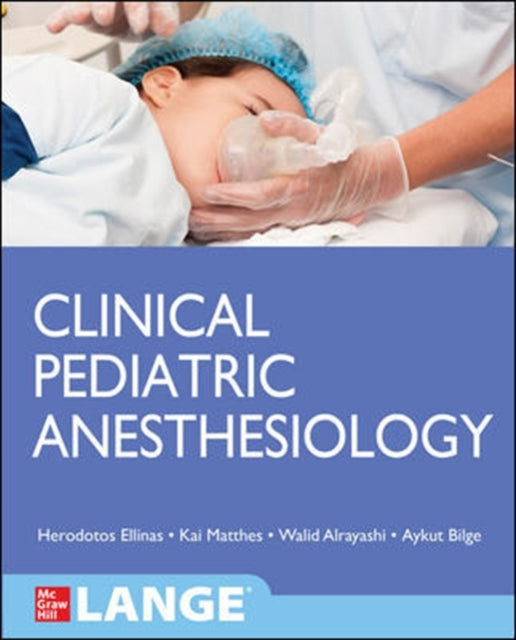
Clinical Pediatric Anesthesiology (Lange)
Clinical Pediatric Anesthesiology (Lange)
💎 Earn 505 Points (£5.05) on this item.
- Condition: Brand new
- UK Delivery times: Usually arrives within 2 - 3 working days
- UK Shipping: Fee starts at £2.39. Subject to product weight & dimension
Bulk ordering. Want 15 or more copies? Get a personalised quote and bigger discounts. Learn more about bulk orders.
Couldn't load pickup availability
- More about Clinical Pediatric Anesthesiology (Lange)
Clinical Pediatric Anesthesiology is a comprehensive textbook that provides essential tools for understanding and managing pediatric anesthesia cases, covering pre-operative evaluation, physiological and anatomical considerations, monitoring, breathing systems, advanced airway techniques, pharmacology, intraoperative complications, critical care medicine, and post-anesthesia care. It is an essential resource for trainees and practitioners.
Format: Paperback / softback
Length: 496 pages
Publication date: 28 January 2021
Publisher: McGraw-Hill Education
An invaluable new textbook of pediatric anesthesiology—modeled after the bestselling Morgan and Mikhails Clinical Anesthesiology—is now available! Filling a void in the anesthesiology literature, this new text delivers a streamlined yet comprehensive discussion of the unique aspects and considerations necessary to successfully manage pediatric patients. Forty concise chapters written by leading pediatric anesthesiologists cover pertinent issues practitioners face in and out of the operating room. For each procedure covered, there is a review of equipment, technique, alternatives, and ways to manage complications or troubleshoot errors. Helpful “Focus Points” summarize salient concepts in every chapter. Informative illustrations, tables, and graphs are featured throughout. Clinical Pediatric Anesthesiology provides the necessary tools to develop a solid understanding of pediatric anesthesia and effectively manage pediatric anesthesia cases. It is an essential resource for both trainees and practitioners.
Pre-operative Evaluation:
Pre-operative evaluation is essential for pediatric patients undergoing anesthesia. It includes a thorough medical history, physical examination, and laboratory tests. The medical history should include any previous surgeries, allergies, medications, and medical conditions. The physical examination should focus on the airway, breathing, circulation, and neurological status. Laboratory tests may include blood tests, urine tests, and imaging studies.
Physiological and Anatomical Considerations:
Pediatric patients have unique physiological and anatomical characteristics that can affect their response to anesthesia. These include a smaller body size, a higher metabolic rate, and a more sensitive nervous system. Pediatric patients may also have congenital anomalies, such as heart defects, lung defects, and neurological disorders.
Monitoring, Breathing Systems, and Machines:
Monitoring is essential for pediatric patients undergoing anesthesia. It includes monitoring of vital signs, such as heart rate, blood pressure, oxygen saturation, and temperature. Breathing systems include endotracheal tubes, masks, and ventilators. Machines include anesthesia machines, ventilators, and monitors.
Advanced Airway Techniques:
Advanced airway techniques are used to secure the airway during anesthesia. These techniques include intubation, laryngoscopy, and tracheostomy. Intubation is the most common airway technique used in pediatric patients. Laryngoscopy is used to visualize the airway and to perform procedures such as tracheostomy. Tracheostomy is used to create a permanent opening in the airway.
Pharmacology:
Pharmacology is used to manage anesthesia. It includes the use of anesthetic agents, analgesics, and sedatives. Anesthetic agents are used to induce anesthesia, while analgesics are used to relieve pain. Sedatives are used to induce sedation.
Intraoperative Complications:
Intraoperative complications can occur during anesthesia. These complications include bleeding, infection, and cardiac arrest. Bleeding can occur during surgery, while infection can occur after surgery. Cardiac arrest can occur during anesthesia.
Critical Care Medicine:
Critical care medicine is used to manage patients who have experienced complications during anesthesia. This includes the use of mechanical ventilation, intravenous fluids, and medications. Mechanical ventilation is used to support breathing, while intravenous fluids are used to maintain hydration. Medications are used to manage pain, anxiety, and other complications.
Post Anesthesia Care:
Post anesthesia care is essential for pediatric patients. It includes monitoring of vital signs, pain management, and discharge planning. Monitoring of vital signs includes monitoring of heart rate, blood pressure, oxygen saturation, and temperature. Pain management includes the use of analgesics and sedatives. Discharge planning includes the preparation of the patient for discharge from the hospital.
Advances in Pediatric Anesthesia:
Advances in pediatric anesthesia have led to improved safety and efficacy. These advances include the use of regional anesthesia, the use of minimally invasive techniques, and the use of new anesthetic agents. Regional anesthesia is used to block pain in a specific area of the body. Minimally invasive techniques are used to reduce the risk of complications. New anesthetic agents are used to provide more effective anesthesia.
Conclusion:
Clinical Pediatric Anesthesiology is an invaluable new textbook of pediatric anesthesiology that delivers a streamlined yet comprehensive discussion of the unique aspects and considerations necessary to successfully manage pediatric patients. Forty concise chapters written by leading pediatric anesthesiologists cover pertinent issues practitioners face in and out of the operating room. For each procedure covered, there is a review of equipment, technique, alternatives, and ways to manage complications or troubleshoot errors. Helpful “Focus Points” summarize salient concepts in every chapter. Informative illustrations, tables, and graphs are featured throughout. Clinical Pediatric Anesthesiology provides the necessary tools to develop a solid understanding of pediatric anesthesia and effectively manage pediatric anesthesia cases. It is an essential resource for both trainees and practitioners.
Weight: 996g
Dimension: 189 x 234 x 25 (mm)
ISBN-13: 9781259585746
This item can be found in:
UK and International shipping information
UK and International shipping information
UK Delivery and returns information:
- Delivery within 2 - 3 days when ordering in the UK.
- Shipping fee for UK customers from £2.39. Fully tracked shipping service available.
- Returns policy: Return within 30 days of receipt for full refund.
International deliveries:
Shulph Ink now ships to Australia, Belgium, Canada, France, Germany, Ireland, Italy, India, Luxembourg Saudi Arabia, Singapore, Spain, Netherlands, New Zealand, United Arab Emirates, United States of America.
- Delivery times: within 5 - 10 days for international orders.
- Shipping fee: charges vary for overseas orders. Only tracked services are available for most international orders. Some countries have untracked shipping options.
- Customs charges: If ordering to addresses outside the United Kingdom, you may or may not incur additional customs and duties fees during local delivery.