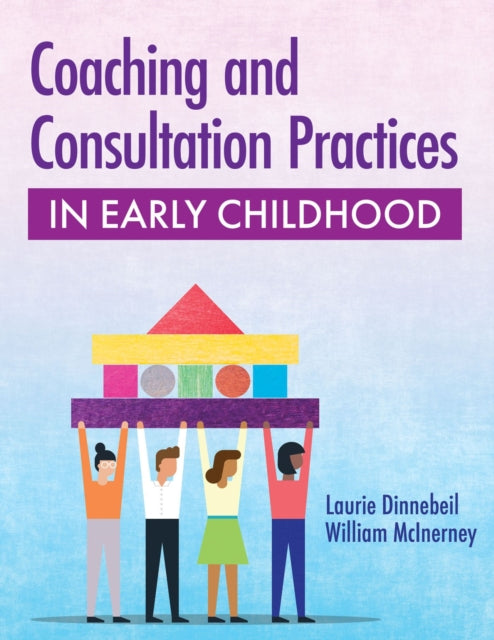
Laurie A. Dinnebeil,William McInerny
Coaching and Consultation Practices in Early Childhood
Coaching and Consultation Practices in Early Childhood
💎 Earn 243 Points (£2.43) on this item.
- Condition: Brand new
- UK Delivery times: Usually arrives within 2 - 3 working days
- UK Shipping: Fee starts at £2.39. Subject to product weight & dimension
Bulk ordering. Want 15 or more copies? Get a personalised quote and bigger discounts. Learn more about bulk orders.
Couldn't load pickup availability
- More about Coaching and Consultation Practices in Early Childhood
Coaching is an effective way to enhance the skills of early childhood practitioners and ensure high-quality learning experiences for young children with and without disabilities. This book provides step-by-step guidance on how to establish, maintain, and evaluate a successful coaching relationship, with practical materials such as data collection forms, action plans, and coaching session sample logs.
Format: Paperback / softback
Length: 216 pages
Publication date: 30 November 2022
Publisher: Brookes Publishing Co
Coaching is a highly effective approach to enhancing the skills and expertise of early childhood practitioners, ensuring that young children with and without disabilities receive high-quality learning experiences. This authoritative professional learning resource, authored by two esteemed experts in early childhood intervention and special education, provides educators and early interventionists with comprehensive guidance on utilizing coaching and consultation methods to promote inclusion and achieve optimal outcomes for children from birth to five.
The book introduces various models of professional collaboration and delves into detailed strategies for implementing an effective consultation/coaching model in early childhood settings. It covers a wide range of topics, from overarching considerations to intricate logistical details, empowering professionals to master the entire process of creating, sustaining, and evaluating successful coaching relationships.
Each chapter is accompanied by compelling case examples, thought-provoking discussion questions, chapter summaries, and engaging group activities that reinforce key concepts and foster reflection. This comprehensive guide serves as an essential professional resource and an ideal textbook for courses focused on consultation and coaching. By leveraging its insights, early childhood practitioners can collaborate effectively to improve educational and developmental outcomes for all young children.
One of the key advantages of coaching is its ability to establish clear ground rules and objectives for the coaching relationship. By setting clear expectations and goals, coaches can help practitioners focus their efforts and ensure that interventions are tailored to meet the unique needs of each child. Building strong rapport and effective communication skills within the coaching relationship is essential for fostering trust and collaboration. Coaches play a vital role in facilitating open and honest dialogue, allowing practitioners to share their perspectives and concerns while providing guidance and support.
Systematic information gathering is another critical aspect of coaching. Coaches work closely with practitioners to gather comprehensive data about the child, teacher, and learning environment. This information is used to inform coaching practices and develop targeted intervention goals. By understanding the child's strengths, weaknesses, learning preferences, and environmental factors, coaches can provide personalized recommendations and strategies to support the child's growth and development.
Collaborative goal setting is a hallmark of coaching. Coaches work closely with practitioners to set and prioritize intervention goals for children. These goals are based on the child's individual needs and are designed to address areas of concern or areas where the child may be struggling. By working together, coaches and practitioners can develop a comprehensive action plan that outlines specific steps and strategies to achieve these goals.
Implementing an effective action plan is crucial for the success of coaching. Coaches provide guidance and support to practitioners as they implement the action plan, offering feedback and guidance to ensure that interventions are delivered effectively. They help practitioners identify barriers to implementation and develop strategies to overcome them, fostering a culture of continuous improvement and growth.
Delivering effective performance feedback is another critical component of coaching. Coaches provide constructive and supportive feedback to practitioners, helping them identify areas of strength and areas for improvement. Feedback is delivered in a non-judgmental and compassionate manner, fostering a growth mindset and a commitment to continuous learning.
Evaluation of the success of both the coaching plan and the partnership is an essential aspect of coaching. Coaches work closely with practitioners to assess the impact of interventions and evaluate the overall effectiveness of the coaching relationship. This evaluation helps practitioners identify areas for improvement and refine their coaching practices, ensuring that they continue to deliver high-quality outcomes for children.
In today's digital age, technology plays a significant role in coaching. Coaches can use various tools and platforms to facilitate communication, collaboration, and information sharing. They can use video conferencing, online learning modules, and digital resources to provide remote support and guidance to practitioners, ensuring that they have access to the resources they need to succeed.
In conclusion, coaching is a transformative approach to enhancing the skills and expertise of early childhood practitioners, ensuring that young children with and without disabilities receive high-quality learning experiences. This authoritative professional learning resource, authored by two esteemed experts in the field, provides comprehensive guidance on utilizing coaching and consultation methods to promote inclusion and achieve optimal outcomes for children from birth to five. By leveraging its insights, early childhood practitioners can collaborate effectively to improve educational and developmental outcomes for all young children.
Dimension: 279 x 216 (mm)
ISBN-13: 9781681254692
This item can be found in:
UK and International shipping information
UK and International shipping information
UK Delivery and returns information:
- Delivery within 2 - 3 days when ordering in the UK.
- Shipping fee for UK customers from £2.39. Fully tracked shipping service available.
- Returns policy: Return within 30 days of receipt for full refund.
International deliveries:
Shulph Ink now ships to Australia, Belgium, Canada, France, Germany, Ireland, Italy, India, Luxembourg Saudi Arabia, Singapore, Spain, Netherlands, New Zealand, United Arab Emirates, United States of America.
- Delivery times: within 5 - 10 days for international orders.
- Shipping fee: charges vary for overseas orders. Only tracked services are available for most international orders. Some countries have untracked shipping options.
- Customs charges: If ordering to addresses outside the United Kingdom, you may or may not incur additional customs and duties fees during local delivery.