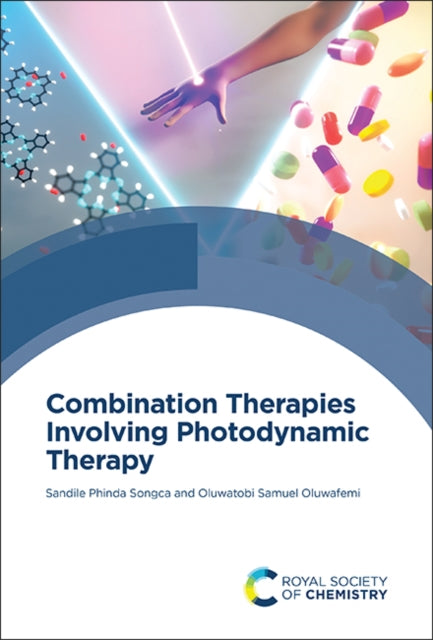
Oluwatobi SamuelOluwafemi,Sandile PhindaSongca
Combination Therapies Involving Photodynamic Therapy
Combination Therapies Involving Photodynamic Therapy
💎 Earn 787 Points (£7.87) on this item.
We can order this item for you. Delivery usually takes about 4 to 6 weeks.
This item is not held in our immediate stock. We will order it for you after checkout.
Estimated delivery: About 4 to 6 weeks
YOU SAVE £11.46
- Condition: Brand new
- UK Delivery times: Usually arrives within 2 - 3 working days
- UK Shipping: Fee starts at £2.39. Subject to product weight & dimension
Bulk ordering. Want 15 or more copies? Get a personalised quote and bigger discounts. Learn more about bulk orders.
Couldn't load pickup availability
- More about Combination Therapies Involving Photodynamic Therapy
Photodynamic therapy (PDT) is a promising treatment for various diseases, often combined with other therapies to enhance efficacy and reduce adverse reactions. Combination Therapies Involving Photodynamic Therapy explores the current state of development and future advancements of combination approaches to therapeutic strategies, including photodynamic therapy, photothermal hyperthermia therapy, magnetic hyperthermia therapy, chemotherapy, and cold atmospheric pressure plasma therapy.
Format: Hardback
Length: 344 pages
Publication date: 01 November 2023
Publisher: Royal Society of Chemistry
Photodynamic therapy (PDT) has gained widespread adoption among healthcare professionals in the fight against a diverse range of diseases, particularly cancer. It is frequently combined with other therapeutic modalities to enhance its effectiveness or mitigate adverse side effects. Combination Therapies Involving Photodynamic Therapy delves into the current state of development in PDT and explores the potential advancements of combination approaches to therapeutic strategies. This comprehensive book presents a novel approach to the therapeutic applications of five distinct technologies, including combinations of photodynamic therapy, photothermal hyperthermia therapy, magnetic hyperthermia therapy, chemotherapy, and cold atmospheric pressure plasma therapy. It serves as an invaluable resource for students, researchers, and practitioners in biological sciences, biotechnology, photobiological and photochemical sciences, as well as medicinal and pharmaceutical chemistry.
Photodynamic therapy (PDT) is a highly effective treatment modality for a wide range of diseases, including cancer. It involves the use of photosensitizers, which are compounds that absorb light energy and generate reactive oxygen species (ROS) upon exposure to specific wavelengths of light. ROS are highly toxic to cells, and can induce cell death and tissue damage. PDT is typically administered intravenously, and the photosensitizer is targeted to the cancer cells using a drug delivery system. The light energy is then absorbed by the photosensitizer, leading to the production of ROS. These ROS can damage the DNA and proteins of cancer cells, leading to their destruction and apoptosis (programmed cell death).
One of the key advantages of PDT is its ability to target cancer cells while sparing normal cells. This is due to the fact that normal cells do not absorb the specific wavelengths of light used in PDT, while cancer cells do. This selective targeting allows for higher doses of light to be administered to the cancer cells, while minimizing the damage to surrounding healthy tissue. PDT has been shown to be effective in treating a variety of cancer types, including lung cancer, skin cancer, and breast cancer. It is also being studied for its potential use in treating other diseases, such as Alzheimer's disease, Parkinson's disease, and stroke.
In addition to its effectiveness, PDT is also a relatively low-invasive treatment option. It does not require surgery or radiation therapy, and can be administered in a outpatient setting. This makes it an attractive treatment option for patients who may not be able to tolerate more intensive treatments. However, PDT is not without its limitations. One of the main challenges is the development of effective photosensitizers that can selectively target cancer cells while sparing normal cells. Additionally, the effectiveness of PDT can vary depending on the type and stage of the cancer, as well as the patient's overall health.
Despite these challenges, PDT is an active area of research and development. Researchers are exploring new photosensitizers and drug delivery systems, as well as developing combination therapies with other treatments such as chemotherapy and radiation therapy. There is also ongoing research into the use of PDT in the treatment of pediatric cancers, which are particularly difficult to treat.
In conclusion, PDT is a highly effective treatment modality for a wide range of diseases, including cancer. It offers several advantages over traditional treatments, including selective targeting of cancer cells, low invasiveness, and potential for combination therapies. While there are still challenges to be overcome, ongoing research and development in this area are likely to lead to further advancements in PDT and its potential use in treating a variety of diseases.
Weight: 658g
Dimension: 234 x 156 x 21 (mm)
ISBN-13: 9781837670550
This item can be found in:
UK and International shipping information
UK and International shipping information
UK Delivery and returns information:
- Delivery within 2 - 3 days when ordering in the UK.
- Shipping fee for UK customers from £2.39. Fully tracked shipping service available.
- Returns policy: Return within 30 days of receipt for full refund.
International deliveries:
Shulph Ink now ships to Australia, Belgium, Canada, France, Germany, Ireland, Italy, India, Luxembourg Saudi Arabia, Singapore, Spain, Netherlands, New Zealand, United Arab Emirates, United States of America.
- Delivery times: within 5 - 10 days for international orders.
- Shipping fee: charges vary for overseas orders. Only tracked services are available for most international orders. Some countries have untracked shipping options.
- Customs charges: If ordering to addresses outside the United Kingdom, you may or may not incur additional customs and duties fees during local delivery.