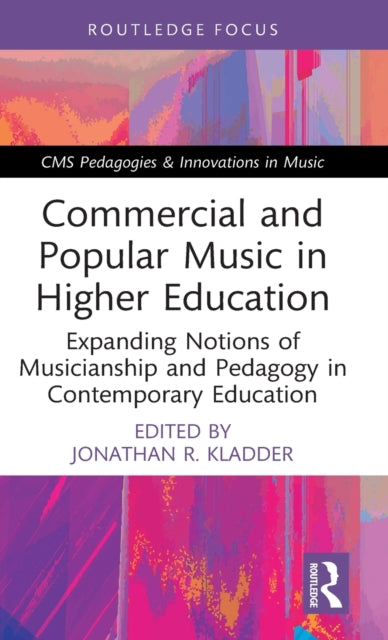
Jonathan R.Kladder
Commercial and Popular Music in Higher Education: Expanding Notions of Musicianship and Pedagogy in Contemporary Education
Commercial and Popular Music in Higher Education: Expanding Notions of Musicianship and Pedagogy in Contemporary Education
💎 Earn 259 Points (£2.59) on this item.
We can order this item for you. Delivery usually takes about 4 to 6 weeks.
This item is not held in our immediate stock. We will order it for you after checkout.
Estimated delivery: About 4 to 6 weeks
YOU SAVE £3.08
- Condition: Brand new
- UK Delivery times: Usually arrives within 2 - 3 working days
- UK Shipping: Fee starts at £2.39. Subject to product weight & dimension
Bulk ordering. Want 15 or more copies? Get a personalised quote and bigger discounts. Learn more about bulk orders.
Couldn't load pickup availability
- More about Commercial and Popular Music in Higher Education: Expanding Notions of Musicianship and Pedagogy in Contemporary Education
The book Commercial and Popular Music in Higher Education provides practical insights and a theoretical framework for music educators, exploring how integrating commercial and popular music can enhance student learning and consider diversity, equity, and inclusion in teaching performance.
Format: Hardback
Length: 122 pages
Publication date: 16 June 2022
Publisher: Taylor & Francis Ltd
The integration of commercial and popular music into higher education has gained significant attention in recent years, as educators recognize the potential benefits of these genres in enhancing student learning. This comprehensive book brings together a diverse group of experts from various fields, including music education, performance, and industry, to explore the pedagogy of emerging areas of popular and commercial music.
Chapter 1: Introduction
In this introductory chapter, the editors provide an overview of the book's purpose and scope. They highlight the importance of incorporating commercial and popular music into teaching, emphasizing their relevance to contemporary music practices and the diverse student population. The chapter also introduces the key themes that will be explored throughout the book.
Chapter 2: Digital Instrument Ensembles
Chapter 2 explores the pedagogy of digital instrument ensembles in higher education. The authors discuss the benefits of using digital instruments, such as their accessibility, versatility, and affordability, as well as the challenges associated with their use. They provide practical examples of teaching techniques, such as ensemble playing, improvisation, and composition, and discuss how these techniques can be applied to various genres of popular and commercial music.
Chapter 3: Digital Audio Workstations
Chapter 3 focuses on the pedagogy of digital audio workstations in higher education. The authors discuss the importance of digital audio technology in contemporary music production and the skills that students need to acquire to work effectively with these tools. They provide practical examples of recording and mixing techniques, as well as how these techniques can be applied to popular and commercial music genres.
Chapter 4: Hip Hop Courses
Chapter 4 examines the pedagogy of hip-hop courses in higher education. The authors discuss the history and cultural significance of hip-hop, as well as its role in shaping contemporary music practices. They provide practical examples of teaching techniques, such as beatboxing, rapping, and DJing, and discuss how these techniques can be integrated into various genres of popular and commercial music.
Chapter 5: Pop Vocal Performance
Chapter 5 explores the pedagogy of pop vocal performance in higher education. The authors discuss the challenges and opportunities that come with teaching pop music, including the importance of vocal technique, performance style, and audience engagement. They provide practical examples of teaching techniques, such as vocal warm-ups, repertoire selection, and stage presence, and discuss how these techniques can be applied to popular and commercial music genres.
Chapter 6: Rock Bands
Chapter 6 examines the pedagogy of rock bands in higher education. The authors discuss the challenges and rewards of working with student musicians in a collaborative setting, as well as the skills that students need to develop to be effective band members. They provide practical examples of teaching techniques, such as rehearsal strategies, song arrangement, and performance techniques, and discuss how these techniques can be applied to popular and commercial music genres.
Chapter 7: Studio Production
Chapter 7 focuses on the pedagogy of studio production in higher education. The authors discuss the importance of audio engineering and music technology in contemporary music production and the skills that students need to acquire to work effectively in a studio environment. They provide practical examples of recording and mixing techniques, as well as how these techniques can be applied to popular and commercial music genres.
Chapter 8: Conclusion
In the concluding chapter, the editors summarize the key findings and recommendations of the book. They emphasize the importance of a constructivist approach to music pedagogy, which enables student-led, real-world learning in higher education. They also consider how diversity, equity, and inclusion intersect with teaching popular music performance and provide insights into how educators.
The contributors to this book come from a wide range of backgrounds and expertise, including music educators, performers, producers, and industry professionals. Their experiences and insights provide valuable perspectives on the pedagogy of emerging areas of popular and commercial music, and their contributions to the field are invaluable.
In conclusion, the integration of commercial and popular music into higher education offers a wealth of benefits for students and educators alike. This comprehensive book provides a valuable framework for all instructors teaching commercial and popular music, offering practical insights and theoretical frameworks that can enhance student learning and promote diversity, equity, and inclusion in music education. By exploring the pedagogy of emerging areas of popular and commercial music, this book contributes to the ongoing dialogue about the role of music in higher education and its potential to shape the future of music practice and performance.
Weight: 290g
Dimension: 142 x 222 x 16 (mm)
ISBN-13: 9781032107196
UK and International shipping information
UK and International shipping information
UK Delivery and returns information:
- Delivery within 2 - 3 days when ordering in the UK.
- Shipping fee for UK customers from £2.39. Fully tracked shipping service available.
- Returns policy: Return within 30 days of receipt for full refund.
International deliveries:
Shulph Ink now ships to Australia, Belgium, Canada, France, Germany, Ireland, Italy, India, Luxembourg Saudi Arabia, Singapore, Spain, Netherlands, New Zealand, United Arab Emirates, United States of America.
- Delivery times: within 5 - 10 days for international orders.
- Shipping fee: charges vary for overseas orders. Only tracked services are available for most international orders. Some countries have untracked shipping options.
- Customs charges: If ordering to addresses outside the United Kingdom, you may or may not incur additional customs and duties fees during local delivery.