Shulph Ink
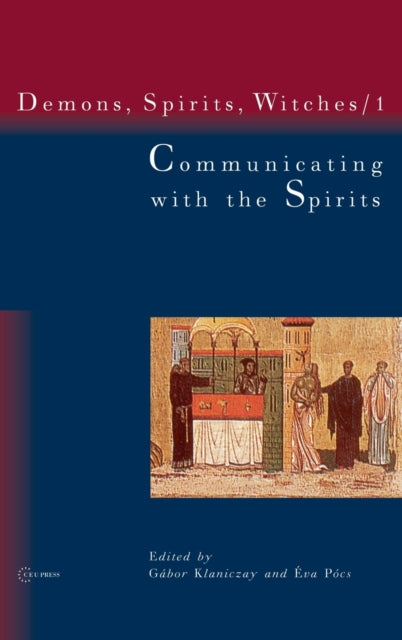
Communicating with the Spirits
Communicating with the Spirits
💎 Earn 344 Points (£3.44) on this item.
We can order this item for you. Delivery usually takes about 4 to 6 weeks.
This item is not held in our immediate stock. We will order it for you after checkout.
Estimated delivery: About 4 to 6 weeks
YOU SAVE £4.09
- Condition: Brand new
- UK Delivery times: Usually arrives within 2 - 3 working days
- UK Shipping: Fee starts at £2.39. Subject to product weight & dimension
Bulk ordering. Want 15 or more copies? Get a personalised quote and bigger discounts. Learn more about bulk orders.
Couldn't load pickup availability
- More about Communicating with the Spirits
The phenomenon of spirit possession and its changing historical interpretations, imaginary schemes for communicating with the dead, and historical archetypes of trance prophecy, divination, and shamanism are explored in the essays. They analyze the relationship, coexistence, and conflicts of popular belief systems, Judeo-Christian mythology, and demonology in medieval and modern Europe, as well as links between rites and beliefs, folklore and literature, and the legacy of various pre-Christian mythologies. Pure examples from religious-ethnological research outside Europe are also used to elucidate European problems.
Format: Hardback
Length: 304 pages
Publication date: 17 January 2025
Publisher: Central European University Press
Communication with the other world is a complex and multifaceted phenomenon that has been the subject of study for centuries. One of the most significant aspects of this communication is the phenomenon of spirit possession, which has been interpreted in various ways throughout history. In this essay, we will explore the historical interpretations of spirit possession, the imaginary schemes used to communicate with the dead, and the historical archetypes of this religious manifestation.
Recognized historians and ethnologists have analyzed the relationship, coexistence, and conflicts of popular belief systems, Judeo-Christian mythology, and demonology in medieval and modern Europe. These essays address links between rites and beliefs, folklore and literature, the legacy of various pre-Christian mythologies, the syncretic forms of ancient, medieval, and modern belief- and rite-systems, and pure examples from religious-ethnological research outside Europe to elucidate European problems.
One of the most significant aspects of spirit possession is the belief that spirits can possess the bodies of living individuals. This belief has been prevalent in many cultures throughout history and has been used to explain a wide range of phenomena, including illness, death, and supernatural events. In some cultures, spirit possession is seen as a form of divine intervention, while in others, it is seen as a form of demonic possession.
The imaginary schemes used to communicate with the dead have varied widely across different cultures. In some cultures, spirits are believed to communicate through dreams, while in others, they are believed to communicate through trance states or through the use of divination tools such as tarot cards or crystal balls. These schemes have been used to gain insight into the future, to communicate with loved ones who have passed away, and to perform rituals and ceremonies that are believed to bring good luck or to ward off evil spirits.
The historical archetypes of spirit possession include trance prophecy, divination, and shamanism. Trance prophecy involves the ability of a person to enter a trance state and receive messages from spirits. Divination involves the use of tools such as tarot cards or crystal balls to gain insight into the future. Shamanism involves the use of spiritual practices to heal, to communicate with spirits, and to perform rituals and ceremonies that are believed to bring good luck or to ward off evil spirits.
One of the challenges that historians and ethnologists face when studying spirit possession is the fact that it is a highly subjective experience. Different individuals may have different experiences of spirit possession, and these experiences may be influenced by a wide range of factors, including cultural background, personal beliefs, and social context. This can make it difficult to establish a clear and consistent understanding of the phenomenon.
Despite these challenges, historians and ethnologists have made significant progress in understanding the phenomenon of spirit possession. They have identified a number of common themes that are present in many different cultures, and they have developed a range of theories and models that can help to explain the phenomenon.
One of the most significant theories of spirit possession is the theory of possession by spirits. This theory suggests that spirits can possess the bodies of living individuals and that this possession can have a significant impact on their behavior and beliefs. According to this theory, spirits can be either positive or negative, and they can be associated with a wide range of supernatural phenomena.
Another theory of spirit possession is the theory of possession by demons. This theory suggests that demons can possess the bodies of living individuals and that this possession can be a form of demonic possession. According to this theory, demons can be either malevolent or benevolent, and they can be associated with a wide range of supernatural phenomena.
In addition to these theories, historians and ethnologists have also identified a number of cultural factors that can influence the phenomenon of spirit possession. These factors include social status, gender, age, and religion. For example, women may be more likely to be possessed by spirits than men, and children may be more likely to be possessed by spirits than adults.
Despite these challenges, historians and ethnologists have made significant progress in understanding the phenomenon of spirit possession. They have identified a number of common themes that are present in many different cultures, and they have developed a range of theories and models that can help to explain the phenomenon.
In conclusion, the phenomenon of spirit possession is a complex and multifaceted phenomenon that has been the subject of study for centuries. It has been interpreted in various ways throughout history, and it has been used to explain a wide range of phenomena, including illness, death, and supernatural events. Historians and ethnologists have made significant progress in understanding the phenomenon, and they have identified a number of common themes that are present in many different cultures. Despite these challenges, historians and ethnologists have made significant progress in understanding the phenomenon, and they have developed a range of theories and models that can help to explain the phenomenon.
Weight: 576g
Dimension: 163 x 229 x 23 (mm)
ISBN-13: 9789637326134
UK and International shipping information
UK and International shipping information
UK Delivery and returns information:
- Delivery within 2 - 3 days when ordering in the UK.
- Shipping fee for UK customers from £2.39. Fully tracked shipping service available.
- Returns policy: Return within 30 days of receipt for full refund.
International deliveries:
Shulph Ink now ships to Australia, Belgium, Canada, France, Germany, Ireland, Italy, India, Luxembourg Saudi Arabia, Singapore, Spain, Netherlands, New Zealand, United Arab Emirates, United States of America.
- Delivery times: within 5 - 10 days for international orders.
- Shipping fee: charges vary for overseas orders. Only tracked services are available for most international orders. Some countries have untracked shipping options.
- Customs charges: If ordering to addresses outside the United Kingdom, you may or may not incur additional customs and duties fees during local delivery.