Shulph Ink
Communication and Sport
Communication and Sport
💎 Earn 889 Points (£8.89) on this item.
YOU SAVE £28.70
- Condition: Brand new
- UK Delivery times: Usually arrives within 2 - 3 working days
- UK Shipping: Fee starts at £2.39. Subject to product weight & dimension
Bulk ordering. Want 15 or more copies? Get a personalised quote and bigger discounts. Learn more about bulk orders.
Couldn't load pickup availability
- More about Communication and Sport
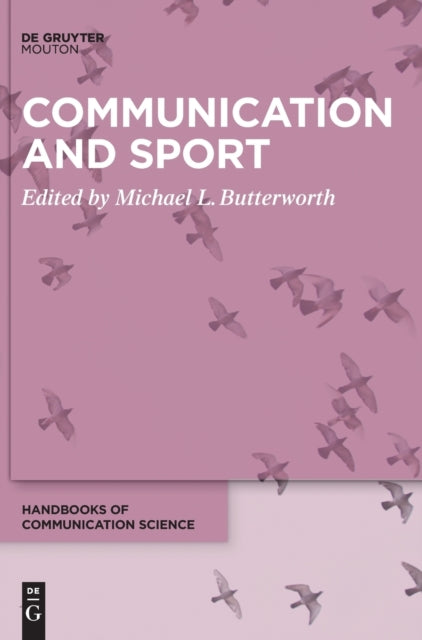
Sport is a universal feature of global popular culture that shapes our identities, affects our relationships, and defines our communities. The handbook of Communication and Sport emphasizes communication as central to the study of sport, presents an array of methods, theories, and topics, includes a broad range of scholars from around the world, and aims to account for both historical trajectories and contemporary areas of interest. It provides scholars and students with the most comprehensive assessment of the field available.
\n Format: Hardback
\n Length: 765 pages
\n Publication date: 19 July 2021
\n Publisher: De Gruyter
\n
Sport is a universal feature of global popular culture that shapes our identities, affects our relationships, and defines our communities. It also influences our consumption habits, represents our cultures, and dramatizes our politics. In other words, sport is one of the most prominent vehicles for communication available in daily life. Nevertheless, it has only recently begun to receive robust attention in the discipline of communication studies. The Handbook of Communication and Sport attends to the recent and rapid growth of scholarship in communication and media studies that features sport as a central site of inquiry. The book aims to capture a full range of methods, theories, and topics that have come to define the subfield of communication and sport or sports communication. It does so by emphasizing four primary features. First, it foregrounds communication as central to the study of sport, distinguishing the book from collections in related disciplines such as sociology and pointing readers beyond media as the primary or only context for understanding the relationship between communication and sport. Thus, in addition to studies of media effects, mediatization, media framing, and more, readers will also engage with studies in interpersonal, intercultural, organizational, and rhetorical communication. Second, the handbook presents an array of methods, theories, and topics to chart a comprehensive landscape of communication and sport scholarship. Readers will benefit from empirical, interpretive, and critical work, as well as studies drawing on varied texts and sites of inquiry. Third, the handbook includes a broad range of scholars from around the world, making it neither European nor American in its focus. This diversity of perspectives and approaches adds depth and richness to the book, ensuring that it is relevant to scholars and practitioners from a wide range of backgrounds and cultures.
In conclusion, the Handbook of Communication and Sport is a valuable resource for scholars and practitioners interested in the intersection of communication and sport. It provides a comprehensive overview of the field, highlighting the recent growth of scholarship and the diverse range of methods, theories, and topics that have come to define it. By emphasizing communication as central to the study of sport, the handbook encourages readers to think beyond media as the primary context for understanding the relationship between communication and sport. It also includes a broad range of scholars from around the world, ensuring that it is relevant to scholars and practitioners from a wide range of backgrounds and cultures. As the field continues to evolve and expand, the Handbook
The Handbook
Sport is a universal feature of global popular culture that shapes our identities
Sport is a universal feature of global popular culture that shapes our identities, affects our relationships, and defines our communities. It also influences our consumption habits, represents our cultures, and dramatizes our politics. In other words, sport is one of the most prominent vehicles for communication available in daily life. Nevertheless, it has only recently begun to receive robust attention in the discipline of communication studies. The Handbook of Communication and Sport attends to the recent and rapid growth of scholarship in communication and media studies that features sport as a central site of inquiry. The book aims to capture a full range of methods, theories, and topics that have come to define the subfield of communication and sport or sports communication. It does so by emphasizing four primary features. First, it foregrounds communication as central to the study of sport, distinguishing the book from collections in related disciplines such as sociology and pointing readers beyond media as the primary or only context for understanding the relationship between communication and sport. Thus, in addition to studies of media effects, mediatization, media framing, and more, readers will also engage with studies in interpersonal, intercultural, organizational, and rhetorical communication. Second, the handbook includes an array of methods, theories, and topics to chart a comprehensive landscape of communication and sport scholarship. Readers will benefit from empirical, interpretive, and critical work, as well as studies drawing on varied texts and sites of inquiry. Third, the handbook of Communication and Sport includes a broad range of scholars from around the world, making it neither European nor American in its focus. This diversity of perspectives and approaches adds depth and richness to the book, ensuring that it is relevant to scholars and practitioners from a wide range of backgrounds and cultures.
In conclusion, the Handbook of Communication and Sport is a valuable resource for scholars and practitioners interested in the intersection of communication and sport. It provides a comprehensive overview of the field, highlighting the recent growth of scholarship and the diverse range of methods, theories, and topics that have come to define it. By emphasizing communication as central to the study of sport, the handbook encourages readers to think beyond media as the primary context for understanding the relationship between communication and sport. It also includes a broad range of scholars from around the world, ensuring that it is relevant to scholars and practitioners from a wide range of backgrounds and cultures. As the field continues to evolve and expand, the Handbook
\n Weight: 1408g\n
Dimension: 182 x 252 x 46 (mm)\n
ISBN-13: 9783110657074\n \n
This item can be found in:
UK and International shipping information
UK and International shipping information
UK Delivery and returns information:
- Delivery within 2 - 3 days when ordering in the UK.
- Shipping fee for UK customers from £2.39. Fully tracked shipping service available.
- Returns policy: Return within 30 days of receipt for full refund.
International deliveries:
Shulph Ink now ships to Australia, Belgium, Canada, France, Germany, Ireland, Italy, India, Luxembourg Saudi Arabia, Singapore, Spain, Netherlands, New Zealand, United Arab Emirates, United States of America.
- Delivery times: within 5 - 10 days for international orders.
- Shipping fee: charges vary for overseas orders. Only tracked services are available for most international orders. Some countries have untracked shipping options.
- Customs charges: If ordering to addresses outside the United Kingdom, you may or may not incur additional customs and duties fees during local delivery.