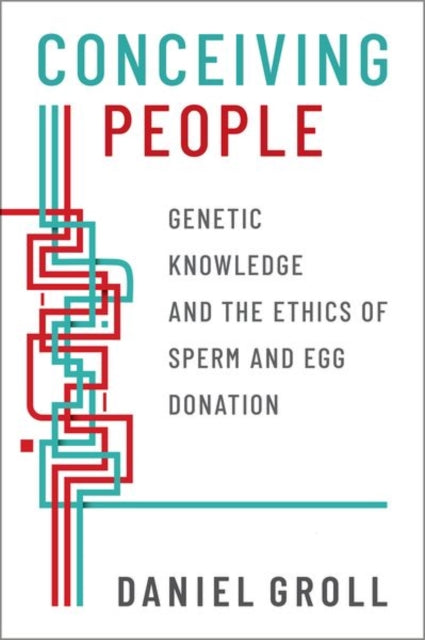
DanielGroll
Conceiving People: Genetic Knowledge and the Ethics of Sperm and Egg Donation
Conceiving People: Genetic Knowledge and the Ethics of Sperm and Egg Donation
💎 Earn 414 Points (£4.14) on this item.
- Condition: Brand new
- UK Delivery times: Usually arrives within 2 - 3 working days
- UK Shipping: Fee starts at £2.39. Subject to product weight & dimension
Bulk ordering. Want 15 or more copies? Get a personalised quote and bigger discounts. Learn more about bulk orders.
Couldn't load pickup availability
- More about Conceiving People: Genetic Knowledge and the Ethics of Sperm and Egg Donation
Tens of thousands of children are conceived with donated gametes, raising questions about what donor-conceived people should know about their genetic progenitors. Daniel Groll argues that people who plan to create a child with donated gametes should choose a donor whose identity will be made available to the resulting child, as it is likely to develop a significant interest in having genetic knowledge.
Format: Hardback
Length: 248 pages
Publication date: 30 November 2021
Publisher: Oxford University Press Inc
Each year, tens of thousands of children are conceived through the use of donated gametes, such as sperm or eggs. According to some estimates, there are over one million donor-conceived individuals in the United States alone, and countless more worldwide. While some individuals are aware of their donor-conception, others may not be. Some individuals even know the identity of their donors, while others may never find out.
These questions about what donor-conceived people should know about their genetic progenitors are of immense significance to millions of people, including donor-conceived individuals, their parents, and donors. However, the practice of gamete donation also presents an opportunity to contemplate broader questions that affect us all.
What is the value of knowing who our genetic progenitors are? How are our identities intertwined with our understanding of our origins? What responsibilities do parents have towards their children? And what defines a parent in the first place?
In his book, Conceiving People: Identity, Genetics, and Gamete Donation, Daniel Groll makes a compelling argument that individuals who intend to have a child through donated gametes should select a donor whose identity will be disclosed to the resulting child. Groll does not argue that having genetic knowledge is inherently important. Rather, he suggests that donor-conceived individuals are likely to develop a strong interest in acquiring genetic information, and it is the responsibility of parents to support their children's significant interests.
In other words, Groll contends that because donor-conceived individuals are likely to be curious about their genetic heritage, their parents should also care about this aspect of their lives. This perspective emphasizes the importance of open communication and transparency between parents and their children, particularly when it comes to matters of genetic identity.
By choosing a donor who is willing to disclose their identity, parents can help their children navigate the complexities of their genetic background and understand their place in the world. It can also foster a sense of belonging and self-identity, as children gain a deeper understanding of their origins and the contributions of their genetic donors.
However, the decision to disclose the identity of a donor is not without its challenges. There may be legal, ethical, and emotional considerations to navigate, and parents must carefully weigh the potential benefits and risks of sharing this information with their children.
In conclusion, the practice of gamete donation raises important questions about identity, genetics, and parental responsibility. By choosing a donor who is willing to disclose their identity, parents can help their children navigate their genetic heritage and foster a sense of belonging and self-identity. However, the decision to disclose the identity of a donor is complex and requires careful consideration of legal, ethical, and emotional factors.
Weight: 512g
Dimension: 164 x 243 x 23 (mm)
ISBN-13: 9780190063054
This item can be found in:
UK and International shipping information
UK and International shipping information
UK Delivery and returns information:
- Delivery within 2 - 3 days when ordering in the UK.
- Shipping fee for UK customers from £2.39. Fully tracked shipping service available.
- Returns policy: Return within 30 days of receipt for full refund.
International deliveries:
Shulph Ink now ships to Australia, Belgium, Canada, France, Germany, Ireland, Italy, India, Luxembourg Saudi Arabia, Singapore, Spain, Netherlands, New Zealand, United Arab Emirates, United States of America.
- Delivery times: within 5 - 10 days for international orders.
- Shipping fee: charges vary for overseas orders. Only tracked services are available for most international orders. Some countries have untracked shipping options.
- Customs charges: If ordering to addresses outside the United Kingdom, you may or may not incur additional customs and duties fees during local delivery.