C. William Vardy
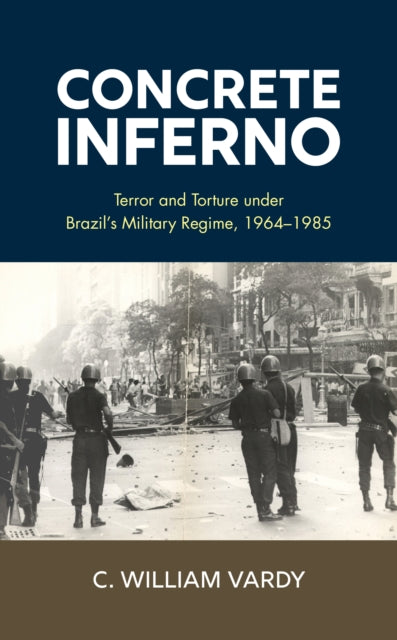
Concrete Inferno: Terror and Torture under Brazil's Military Regime, 1964-1985
Concrete Inferno: Terror and Torture under Brazil's Military Regime, 1964-1985
💎 Earn 531 Points (£5.31) on this item.
We can order this item for you. Delivery usually takes about 4 to 6 weeks.
This item is not held in our immediate stock. We will order it for you after checkout.
Estimated delivery: About 4 to 6 weeks
- Condition: Brand new
- UK Delivery times: Usually arrives within 2 - 3 working days
- UK Shipping: Fee starts at £2.39. Subject to product weight & dimension
Bulk ordering. Want 15 or more copies? Get a personalised quote and bigger discounts. Learn more about bulk orders.
Couldn't load pickup availability
- More about Concrete Inferno: Terror and Torture under Brazil's Military Regime, 1964-1985
Concrete Inferno is a book that examines the Brazilian Communist movement during the Cold War. It is a valuable contribution to English-language terrorism studies, filling a gap in the literature.
Format: Hardback
Length: 396 pages
Publication date: 17 May 2023
Publisher: Rowman & Littlefield
Concrete Inferno: A Comprehensive Examination of the Brazilian Communist Movement during the Cold War
Concrete Inferno is a groundbreaking and accessible case study that delves into the complex and tumultuous world of the Brazilian Communist movement during the Cold War. This book fills a significant gap in English-language terrorism studies, offering a comprehensive analysis of the political, social, and economic factors that shaped the movement's trajectory.
The Brazilian Communist Party (PCB) emerged in the early 20th century as a response to the country's economic and social inequalities. Led by figures such as Luís Carlos Prestes Soares and Carlos Araújo, the party sought to establish a socialist society based on the principles of Marxism-Leninism. However, their ideology and methods soon attracted the attention of the government and the military, leading to a series of violent conflicts and repression.
Concrete Inferno provides a detailed account of these conflicts, including the 1964 coup d'état that led to the installation of a military dictatorship. The book explores the role of the PCB in these events, as well as the impact of the dictatorship on the country's political and social landscape. It also examines the movement's attempts to regroup and rebuild after the dictatorship was overthrown in 1985.
One of the book's key strengths is its ability to bring to life the experiences of ordinary people who were caught up in the Communist movement. Through interviews and personal narratives, the author sheds light on the struggles, sacrifices, and hopes of those who believed in the party's vision of a better future. This humanizing approach adds depth and empathy to the narrative, making it accessible to a wide range of readers.
Concrete Inferno also offers valuable insights into the broader context of the Cold War, particularly the role of the United States and other Western powers in shaping the political and economic landscape of Latin America. The book explores the ways in which the US government and corporations exploited the region's resources and promoted authoritarianism and anti-communism to maintain their dominance. It also examines the ways in which the Communist movement responded to these challenges, both defensively and offensively.
In conclusion, Concrete Inferno is a must-read for anyone interested in understanding the complexities of the Brazilian Communist movement during the Cold War. This book provides a comprehensive and nuanced analysis of the movement's history, ideology, and impact, making it an essential resource for scholars, researchers, and anyone seeking to gain a deeper understanding of this important period in Brazilian history.
Abstract:
Concrete Inferno is a groundbreaking and accessible case study that delves into the complex and tumultuous world of the Brazilian Communist movement during the Cold War. This book fills a significant gap in English-language terrorism studies, offering a comprehensive analysis of the political, social, and economic factors that shaped the movement's trajectory.
The Brazilian Communist Party (PCB) emerged in the early 20th century as a response to the country's economic and social inequalities. Led by figures such as Luís Carlos Prestes Soares and Carlos Araújo, the party sought to establish a socialist society based on the principles of Marxism-Leninism. However, their ideology and methods soon attracted the attention of the government and the military, leading to a series of violent conflicts and repression.
Concrete Inferno provides a detailed account of these conflicts, including the 1964 coup d'état that led to the installation of a military dictatorship. The book explores the role of the PCB in these events, as well as the impact of the dictatorship on the country's political and social landscape. It also examines the movement's attempts to regroup and rebuild after the dictatorship was overthrown in 1985.
One of the book's key strengths is its ability to bring to life the experiences of ordinary people who were caught up in the Communist movement. Through interviews and personal narratives, the author sheds light on the struggles, sacrifices, and hopes of those who believed in the party's vision of a better future. This humanizing approach adds depth and empathy to the narrative, making it accessible to a wide range of readers.
Concrete Inferno also offers valuable insights into the broader context of the Cold War, particularly the role of the United States and other Western powers in shaping the political and economic landscape of Latin America. The book explores the ways in which the US government and corporations exploited the region's resources and promoted authoritarianism and anti-communism to maintain their dominance. It also examines the ways in which the Communist movement responded to these challenges, both defensively and offensively.
In conclusion, Concrete Inferno is a must-read for anyone interested in understanding the complexities of the Brazilian Communist movement during the Cold War. This book provides a comprehensive and nuanced analysis of the movement's history, ideology, and impact, making it an essential resource for scholars, researchers, and anyone seeking to gain a deeper understanding of this important period in Brazilian history.
Weight: 738g
Dimension: 236 x 410 x 33 (mm)
ISBN-13: 9781538178843
UK and International shipping information
UK and International shipping information
UK Delivery and returns information:
- Delivery within 2 - 3 days when ordering in the UK.
- Shipping fee for UK customers from £2.39. Fully tracked shipping service available.
- Returns policy: Return within 30 days of receipt for full refund.
International deliveries:
Shulph Ink now ships to Australia, Belgium, Canada, France, Germany, Ireland, Italy, India, Luxembourg Saudi Arabia, Singapore, Spain, Netherlands, New Zealand, United Arab Emirates, United States of America.
- Delivery times: within 5 - 10 days for international orders.
- Shipping fee: charges vary for overseas orders. Only tracked services are available for most international orders. Some countries have untracked shipping options.
- Customs charges: If ordering to addresses outside the United Kingdom, you may or may not incur additional customs and duties fees during local delivery.