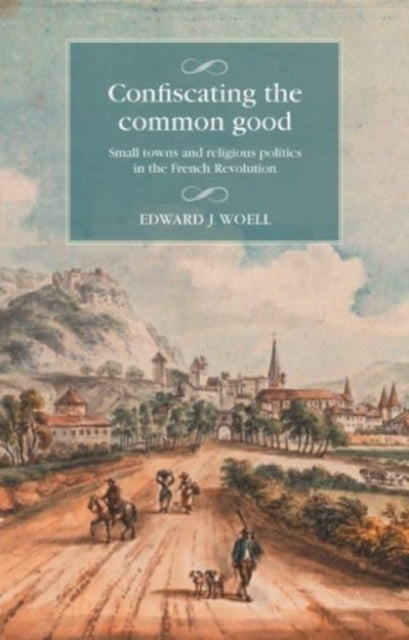
Edward Woell
Confiscating the Common Good: Small Towns and Religious Politics in the French Revolution
Confiscating the Common Good: Small Towns and Religious Politics in the French Revolution
💎 Earn 354 Points (£3.54) on this item.
We can order this item for you. Delivery usually takes about 4 to 6 weeks.
This item is not held in our immediate stock. We will order it for you after checkout.
Estimated delivery: About 4 to 6 weeks
YOU SAVE £9.20
- Condition: Brand new
- UK Delivery times: Usually arrives within 2 - 3 working days
- UK Shipping: Fee starts at £2.39. Subject to product weight & dimension
Bulk ordering. Want 15 or more copies? Get a personalised quote and bigger discounts. Learn more about bulk orders.
Couldn't load pickup availability
- More about Confiscating the Common Good: Small Towns and Religious Politics in the French Revolution
This book argues that the French Revolutions religious politics in small towns weakened democratic society, leading to social polarisation and the loss of local institutions, and that small-town religious politics extended far beyond the Ecclesiastical Oath of 1791.
Format: Hardback
Length: 304 pages
Publication date: 02 August 2022
Publisher: Manchester University Press
This book, comprising five microhistories, presents a compelling argument that the religious politics in small towns during the French Revolutions played a significant role in weakening democratic society to the point where political democracy was hindered. It delves into two revolutionary dynamics that significantly impacted the civic life of these towns: social polarisation and the loss of local institutions that served as pillars of social capital and a shared good. Through detailed narratives about Pont-à-Mousson, Gournay-en-Bray, Vienne, Haguenau, and Is-sur-Tille, the book challenges the prevailing view held by many scholars that small-town religious politics were confined solely to the Ecclesiastical Oath of 1791. Furthermore, it highlights other developments such as the nationalisation of Church property, the dissolution of religious orders, and the elimination of bishoprics, chapters, parishes, and collegial churches, which had adverse effects on these small urban communities not only during the Revolution but also in the two centuries that followed.
Introduction:
The French Revolutions of the late 18th century were a period of profound social and political upheaval that had a lasting impact on France and the world. One of the most significant aspects of these revolutions was the role that religion played in shaping the political landscape. This book aims to explore the religious politics in small towns during the French Revolutions and its impact on democratic society.
Social Polarisation:
One of the most notable features of the French Revolutions was the social polarisation that occurred throughout the country. The aristocracy and the bourgeoisie, who had previously enjoyed a certain level of social and economic privilege, found themselves increasingly at odds with each other. This polarisation led to a rise in political violence and a breakdown of social order.
Loss of Local Institutions:
In addition to social polarisation, the French Revolutions also saw the loss of local institutions that had been a source of social capital and a common good for many years. These institutions included churches, schools, and hospitals, which were often seen as symbols of community and stability. The loss of these institutions weakened the social fabric of small towns and made it more difficult for people to come together and work towards common goals.
Religious Politics in Small Towns:
Despite the challenges posed by social polarisation and the loss of local institutions, religious politics in small towns played a significant role in shaping the political landscape of the French Revolutions. The Catholic Church, in particular, was a powerful force in shaping the political discourse of the time.
Ecclesiastical Oath of 1791:
The Ecclesiastical Oath of 1791 was a significant event in the religious politics of small towns during the French Revolutions. This oath was issued by the National Convention, which was the governing body of France during the Revolution. The oath declared that the Catholic Church was the only legitimate religion in France and that all other religions were illegal.
Contrary to Expectations:
However, the religious politics in small towns extended far beyond the Ecclesiastical Oath of 1791. Many small towns saw a rise in religious activism and a sense of religious identity. This was particularly true in the years following the Ecclesiastical Oath of 1791, as people began to question the legitimacy of the government and the authority of the Catholic Church.
Nationalisation of Church Property:
One of the most significant developments in religious politics in small towns during the French Revolutions was the nationalisation of Church property. The National Convention began to seize the property of the Catholic Church, which was seen as a symbol of the power and wealth of the clergy. This nationalisation of Church property led to a decline in the financial stability of many small towns, as the Church lost a significant source of income.
Dissolution of Religious Orders:
In addition to the nationalisation of Church property, the French Revolutions also saw the dissolution of religious orders. Many religious orders, such as the Jesuits and the Benedictines, were disbanded or suppressed by the government. The dissolution of these religious orders had a profound impact on the religious life of small towns, as many people lost their sense of community and identity.
Elimination of Bishoprics, Chapters, Parishes, and Collegial Churches:
Finally, the French Revolutions saw the elimination of bishoprics, chapters, parishes, and collegial churches. These institutions were seen as symbols of the power and authority of the Catholic Church and were often used to control the political and social life of small towns. The elimination of these institutions weakened the religious authority of the Catholic Church and made it more difficult for people to identify with their faith.
Conclusion:
In conclusion, the religious politics in small towns during the French Revolutions played a significant role in weakening democratic society to the point where political democracy was hindered. The social polarisation, loss of local institutions, and nationalisation of Church property all contributed to this decline. However, the religious politics in small towns extended far beyond the Ecclesiastical Oath of 1791, as people began to question the legitimacy of the government and the authority of the Catholic Church. The dissolution of religious orders and the elimination of bishoprics, chapters, parishes, and collegial churches also had a profound impact on the religious life of small towns.
Weight: 518g
Dimension: 145 x 224 x 26 (mm)
ISBN-13: 9781526159137
UK and International shipping information
UK and International shipping information
UK Delivery and returns information:
- Delivery within 2 - 3 days when ordering in the UK.
- Shipping fee for UK customers from £2.39. Fully tracked shipping service available.
- Returns policy: Return within 30 days of receipt for full refund.
International deliveries:
Shulph Ink now ships to Australia, Belgium, Canada, France, Germany, Ireland, Italy, India, Luxembourg Saudi Arabia, Singapore, Spain, Netherlands, New Zealand, United Arab Emirates, United States of America.
- Delivery times: within 5 - 10 days for international orders.
- Shipping fee: charges vary for overseas orders. Only tracked services are available for most international orders. Some countries have untracked shipping options.
- Customs charges: If ordering to addresses outside the United Kingdom, you may or may not incur additional customs and duties fees during local delivery.