Hyeyoung Oh Nelson
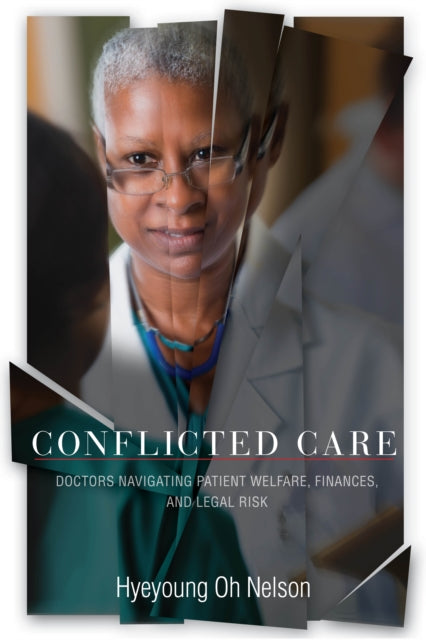
Conflicted Care: Doctors Navigating Patient Welfare, Finances, and Legal Risk
Conflicted Care: Doctors Navigating Patient Welfare, Finances, and Legal Risk
💎 Earn 91 Points (£0.91) on this item.
YOU SAVE £3.68
- Condition: Brand new
- UK Delivery times: Usually arrives within 2 - 3 working days
- UK Shipping: Fee starts at £2.39. Subject to product weight & dimension
Bulk ordering. Want 15 or more copies? Get a personalised quote and bigger discounts. Learn more about bulk orders.
Couldn't load pickup availability
- More about Conflicted Care: Doctors Navigating Patient Welfare, Finances, and Legal Risk
Conflicted Care is an ethnography about how doctors make decisions at a large, prestigious academic medical center. It reveals that patient wellbeing is only one of several factors governing day-to-day decisions, and that harm is built into the practice of medicine in the United States. The book offers novel policy and practice recommendations for health care practitioners, policy makers, and healthcare institutions.
Format: Paperback / softback
Length: 210 pages
Publication date: 27 September 2022
Publisher: Stanford University Press
The oath that doctors take to do no harm suggests that patient welfare is at the center of what it means to be a successful medical professional. It is also understood, however, that hospitals are not only vessels for medical care—they are businesses, educational institutions, and complex bureaucracies with intricate codes of etiquette that dictate how each staff member should approach situations with patients. In Conflicted Care, Hyeyoung Oh Nelson provides an in-depth look at the decision-making processes of physicians at a large, prestigious academic medical center—that she calls Pacific Medical Center—and finds that more often than not patient wellbeing is only one of several factors governing day-to-day decisions.
The steps physicians take reveal a kind of hidden curriculum of the medical world, one that is guided by status and hierarchy, bureaucracy, norms for consulting with third parties, regulations for interactions with patients, and medical uncertainty. While at an institutional and individual level patient care continues to be integral to everything the physicians do, they are forced to reconcile that vow with these other, often-conflicting internal logics. Harm, Nelson argues, is thus built into the practice of medicine in the United States. This harm can take the form of unnecessary treatments and consultations or inadequate treatment for pain to motivate specialist intervention that would otherwise be resisted. These and other practices have the overall consequence of significantly driving up inpatient care costs, which then results in patients forgoing needed, ongoing treatment once they receive their medical bills.
Drawing on a deep ethnography of physicians in the Internal Medicine department at Pacific Medical Center, Nelson offers a nuanced and empathetic account of the challenges faced by these healthcare professionals. She highlights the ways in which physicians navigate a complex web of institutional pressures, patient expectations, and medical uncertainty to make decisions that are often in the best interest of their patients. At the same time, she acknowledges the ways in which these decisions can be influenced by factors such as financial incentives, professional competition, and bureaucratic red tape.
One of the most striking aspects of Conflicted Care is Nelson's analysis of the ways in which status and hierarchy play a role in shaping physician decision-making. She argues that physicians are often influenced by their colleagues' opinions and recommendations, as well as by the perceived prestige and power associated with different medical specialties. This can lead to a culture of conformity and groupthink, where physicians may be reluctant to deviate from the standard of care or challenge established norms.
Nelson also explores the impact of bureaucracy on physician decision-making. She argues that the complex administrative processes and regulations that govern hospitals and medical practices can create barriers to effective patient care. Physicians may spend excessive time on paperwork and administrative tasks, which can detract from their ability to provide quality care to their patients. This can lead to delays in diagnosis, treatment, and follow-up, which can have serious consequences for patients' health outcomes.
Another important theme in Conflicted Care is the role of norms for consulting with third parties in shaping physician decision-making. Nelson argues that physicians are often influenced by the opinions and recommendations of other healthcare professionals, such as specialists, consultants, and patient advocates. This can lead to a culture of consensus-building and shared decision-making, where physicians work together to develop the best treatment plan for their patients.
However, Nelson also points out the potential drawbacks of this approach. She argues that the reliance on third-party opinions can lead to a lack of individual autonomy and patient-centered care. Physicians may be pressured to follow the recommendations of others rather than making decisions based on their own clinical expertise and the best interests of their patients. This can lead to suboptimal treatment outcomes and a failure to address the unique needs and preferences of individual patients.
In addition to the impact of status, hierarchy, bureaucracy, norms for consulting with third parties, and medical uncertainty on physician decision-making, Conflicted Care also explores the ways in which these factors can contribute to harm. Nelson argues that unnecessary treatments and consultations, as well as inadequate treatment for pain, can be motivated by financial incentives, professional competition, and bureaucratic pressures. These practices can lead to overtesting, overdiagnosis, and overtreatment, which can have serious consequences for patients' health and well-being.
Furthermore, Nelson argues that the high cost of inpatient care can lead to patients forgoing needed, ongoing treatment once they receive their medical bills. This can have a significant impact on patients' health outcomes and quality of life, as well as on the overall healthcare system. Nelson suggests that there are several steps that can be taken to address these issues and improve physician decision-making.
One of the most important steps is to promote patient-centered care and autonomy. Physicians should work to develop strong relationships with their patients and to provide care that is tailored to their individual needs and preferences. This can involve taking the time to listen to patients' concerns, providing clear explanations of treatment options, and involving patients in decision-making processes.
Another important step is to address the factors that contribute to the high cost of inpatient care. This can involve implementing policies that promote efficiency and reduce waste, such as reducing unnecessary tests and procedures. It can also involve promoting alternative payment models, such as bundled payments, that reward providers for delivering high-quality care rather than for the number of services provided.
Finally, it is important to address the factors that contribute to professional competition and bureaucratic pressures. This can involve implementing policies that promote collaboration and teamwork. It can also involve promoting transparency and accountability in the healthcare system, such as by implementing policies that require physicians to disclose conflicts of interest and to report their performance metrics.
In conclusion, Conflicted Care is a thought-provoking and compelling ethnography that provides a deep insight into the decision-making processes of physicians at a large, prestigious academic medical center. Hyeyoung Oh Nelson's analysis of the ways in which status, hierarchy, bureaucracy, norms for consulting with third parties, regulations for interactions with patients, and medical uncertainty shape physician decision-making reveals a complex and often-conflicting landscape. While patient wellbeing is an important factor in physician decision-making, it is often only one of several factors that govern day-to-day decisions.
Conflicted Care highlights the potential harm that can be caused by unnecessary treatments, inadequate treatment for pain, and high inpatient care costs. By promoting patient-centered care, addressing the factors that contribute to the high cost of inpatient care, and promoting collaboration and transparency in the healthcare system, we can work to improve physician decision-making and ensure that patients receive the best possible care.
Dimension: 229 x 152 (mm)
ISBN-13: 9781503633476
This item can be found in:
UK and International shipping information
UK and International shipping information
UK Delivery and returns information:
- Delivery within 2 - 3 days when ordering in the UK.
- Shipping fee for UK customers from £2.39. Fully tracked shipping service available.
- Returns policy: Return within 30 days of receipt for full refund.
International deliveries:
Shulph Ink now ships to Australia, Belgium, Canada, France, Germany, Ireland, Italy, India, Luxembourg Saudi Arabia, Singapore, Spain, Netherlands, New Zealand, United Arab Emirates, United States of America.
- Delivery times: within 5 - 10 days for international orders.
- Shipping fee: charges vary for overseas orders. Only tracked services are available for most international orders. Some countries have untracked shipping options.
- Customs charges: If ordering to addresses outside the United Kingdom, you may or may not incur additional customs and duties fees during local delivery.