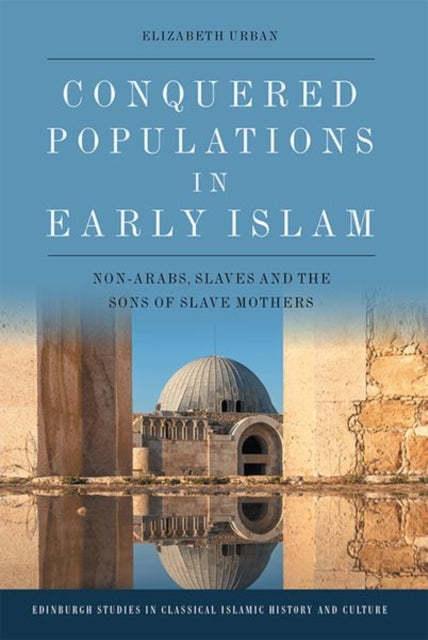
Elizabeth Urban
Conquered Populations in Early Islam: Non-Arabs, Slaves and the Sons of Slave Mothers
Conquered Populations in Early Islam: Non-Arabs, Slaves and the Sons of Slave Mothers
💎 Earn 441 Points (£4.41) on this item.
YOU SAVE £26.79
- Condition: Brand new
- UK Delivery times: Usually arrives within 2 - 3 working days
- UK Shipping: Fee starts at £2.39. Subject to product weight & dimension
Bulk ordering. Want 15 or more copies? Get a personalised quote and bigger discounts. Learn more about bulk orders.
Couldn't load pickup availability
- More about Conquered Populations in Early Islam: Non-Arabs, Slaves and the Sons of Slave Mothers
Conquered Populations in Early Islam explores the journey of new Muslims and their identities within the early Islamic community, focusing on Muslims of slave origins who were both insiders and outsiders. It reveals the shifting boundaries of the community and celebrates the dynamism of Islamic history.
Format: Hardback
Length: 288 pages
Publication date: 07 January 2020
Publisher: Edinburgh University Press
New Muslims in Early Islamic Society: Navigating Identities and Belonging
New Muslims in Early Islamic Society: Navigating Identities and Belonging
This book delves into the experiences of new Muslims as they joined the early Islamic community and sought to establish their identities within it. It particularly focuses on Muslims of slave origins, who were part of the society in which they lived but whose slave background often made them feel like outsiders. How did these Muslims navigate the complex terrain of insider and outsider, finding their place in early Islamic society? And how did Islamic society itself change to accommodate these new members?
To answer these questions, Conquered Populations in Early Islam examines the ways in which these liminal Muslims resolved the tension between belonging and otherness. It reveals the shifting boundaries of the early Islamic community and celebrates the dynamism of Islamic history.
One of the key themes of the book is the role of conversion in shaping Muslim identities. Conversion was a significant event in the lives of new Muslims, and it often involved a process of self-discovery and self-reflection. Muslims of slave origins often had to confront their past and the injustices they had experienced, and this process of conversion helped them to find a sense of purpose and meaning in their lives.
However, conversion also brought with it its own set of challenges. Muslims of slave origins were often viewed with suspicion and discrimination by the wider Muslim community, and they had to work hard to prove their loyalty and commitment to Islam. This often led to a sense of isolation and marginalization, as Muslims of slave origins were often excluded from social and political activities.
Despite these challenges, Muslims of slave origins played a significant role in the early Islamic community. They contributed to the development of Islamic law and theology, and they were instrumental in the spread of Islam throughout the world. They also played a role in the development of Islamic art and architecture, and they helped to shape the cultural identity of the early Islamic community.
One of the most significant challenges faced by Muslims of slave origins was the issue of slavery itself. Slavery was a deeply ingrained institution in the Arab world, and it was difficult to eradicate. However, the early Islamic community made significant efforts to address the issue of slavery, and they eventually abolished it. This was a significant victory for Muslims of slave origins, and it helped to improve their social and economic status.
However, the abolition of slavery also brought with it its own set of challenges. Many former slaves were unable to find work, and they were often forced to live in poverty. This led to a sense of resentment and anger among the former slaves, and it contributed to the rise of extremist groups such as ISIS.
To address these challenges, the early Islamic community developed a system of social welfare. This system provided assistance to those in need, and it helped to reduce poverty and inequality. It also provided opportunities for education and training, which helped to improve the skills of former slaves and enable them to find work.
In addition to social welfare, the early Islamic community also developed a system of religious education. This system provided Muslims with a deep understanding of Islam and its teachings, and it helped to promote a sense of unity and community among Muslims. It also provided a platform for the development of Islamic art and architecture, and it helped to shape the cultural identity of the early Islamic community.
Despite these challenges, the early Islamic community continued to grow and thrive. It spread throughout the world, and it became one of the largest and most influential religions in the world. It also played a significant role in the development of science, medicine, and philosophy, and it helped to shape the cultural identity of the world.
In conclusion, Conquered Populations in Early Islam is a fascinating book that explores the experiences of new Muslims as they joined the early Islamic community and sought to establish their identities within it. It reveals the shifting boundaries of the early Islamic community and celebrates the dynamism of Islamic history. By examining the ways in which these liminal Muslims resolved the tension between belonging and otherness, the book helps us to better understand the complex and diverse nature of Islamic society.
Weight: 482g
Dimension: 240 x 176 x 18 (mm)
ISBN-13: 9781474423212
UK and International shipping information
UK and International shipping information
UK Delivery and returns information:
- Delivery within 2 - 3 days when ordering in the UK.
- Shipping fee for UK customers from £2.39. Fully tracked shipping service available.
- Returns policy: Return within 30 days of receipt for full refund.
International deliveries:
Shulph Ink now ships to Australia, Belgium, Canada, France, Germany, Ireland, Italy, India, Luxembourg Saudi Arabia, Singapore, Spain, Netherlands, New Zealand, United Arab Emirates, United States of America.
- Delivery times: within 5 - 10 days for international orders.
- Shipping fee: charges vary for overseas orders. Only tracked services are available for most international orders. Some countries have untracked shipping options.
- Customs charges: If ordering to addresses outside the United Kingdom, you may or may not incur additional customs and duties fees during local delivery.