Shulph Ink
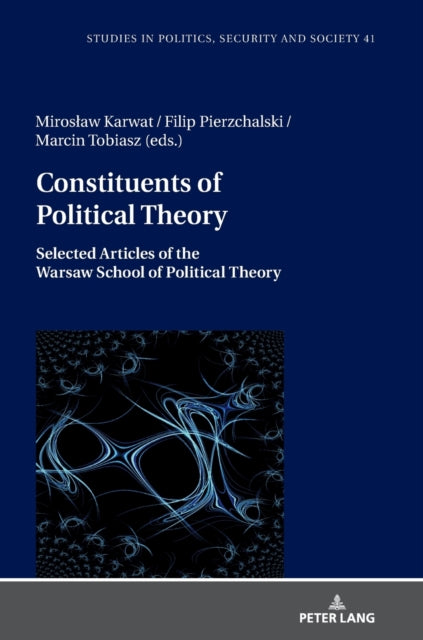
Constituents of Political Theory: Selected Articles of the Warsaw School of Political Theory
Constituents of Political Theory: Selected Articles of the Warsaw School of Political Theory
💎 Earn 226 Points (£2.26) on this item.
We can order this item for you. Delivery usually takes about 4 to 6 weeks.
This item is not held in our immediate stock. We will order it for you after checkout.
Estimated delivery: About 4 to 6 weeks
YOU SAVE £5.89
- Condition: Brand new
- UK Delivery times: Usually arrives within 2 - 3 working days
- UK Shipping: Fee starts at £2.39. Subject to product weight & dimension
Bulk ordering. Want 15 or more copies? Get a personalised quote and bigger discounts. Learn more about bulk orders.
Couldn't load pickup availability
- More about Constituents of Political Theory: Selected Articles of the Warsaw School of Political Theory
The Warsaw School of Political Theory is a group of scholars affiliated with the University of Warsaw that conducts research based on methodological holism, holistic integral definitions, sociocentric spatial analyses, and a critical approach to the "cratocentric" tradition.
Format: Hardback
Length: 322 pages
Publication date: 22 October 2021
Publisher: Peter Lang AG
The book presents a captivating collection of thought-provoking articles authored by esteemed members of the Warsaw School of Political Theory, an esteemed academic institution affiliated with the University of Warsaw. This distinguished group of scholars, with its roots dating back to the 1970s when professor Artur Bodnar established the Political Theory Research Group at the University of Warsaw's Methodical Centre for Political Science (COM SNP), has been diligently conducting groundbreaking research under the visionary guidance of professor Mirosław Karwat. The Warsaw School stands out for its unique characteristics, which include a profound embrace of methodological holism, the acceptance and innovative refinement of holistic integral definitions, the application of sociocentric spatial analyses, and a critical perspective on the "cratocentric" tradition.
The Warsaw School of Political Theory, a distinguished academic institution affiliated with the University of Warsaw, has assembled a remarkable collection of thought-provoking articles authored by esteemed members of its esteemed community. This distinguished group of scholars, with its roots dating back to the 1970s when professor Artur Bodnar established the Political Theory Research Group at the University of Warsaw's Methodical Centre for Political Science (COM SNP), has been diligently conducting groundbreaking research under the visionary guidance of professor Mirosław Karwat. The Warsaw School distinguishes itself through a profound embrace of methodological holism, the acceptance and innovative refinement of holistic integral definitions, the application of sociocentric spatial analyses, and a critical perspective on the "cratocentric" tradition.
The book offers a rich tapestry of insights and perspectives, drawing upon the expertise and expertise of these esteemed scholars. Each article delves into various aspects of political theory, exploring themes such as political philosophy, social justice, democracy, and governance. The authors employ a rigorous analytical approach, employing a range of theoretical frameworks and methodologies to shed light on complex issues and provide fresh insights into the realm of political thought.
One of the hallmark features of the Warsaw School of Political Theory is its commitment to methodological holism. This approach emphasizes the importance of integrating multiple perspectives and disciplines to understand complex political phenomena. The scholars within the school recognize the interconnectedness of social, economic, cultural, and political factors, and strive to develop comprehensive theories that account for the holistic nature of political systems.
Another distinguishing aspect of the school is its acceptance and creative development of holistic integral definitions. The authors redefine traditional concepts and theories to encompass a broader range of factors and dimensions. They seek to develop a more comprehensive understanding of political phenomena by integrating insights from various fields, such as sociology, psychology, economics, and philosophy. This integrative approach enables the scholars to explore the complex interplay between different aspects of society and to develop more effective policies and strategies for addressing social and political challenges.
The application of sociocentric spatial analyses is another notable feature of the Warsaw School of Political Theory. The scholars recognize the importance of space and place in shaping political processes and outcomes. They employ sociocentric spatial theories to examine the relationships between individuals, groups, and institutions and to understand the dynamics of power and authority within political systems. This approach enables the scholars to analyze the spatial distribution of resources, power, and authority and to identify the factors that contribute to social and political inequalities.
Furthermore, the Warsaw School of Political Theory takes a critical approach to the "cratocentric" tradition. This tradition, which emphasizes the role of individuals and elites in shaping political processes, is often criticized for neglecting the broader social and cultural context. The scholars within the school challenge this tradition by emphasizing the importance of collective action, social movements, and popular participation in shaping political outcomes. They argue that political decisions should be made in the interests of the broader society and that the voices and perspectives of marginalized groups should be heard and valued.
In conclusion, the book presents a captivating collection of articles authored by esteemed members of the Warsaw School of Political Theory. The school's unique characteristics, including its commitment to methodological holism, acceptance and development of holistic integral definitions, application of sociocentric spatial analyses, and critical approach to the "cratocentric" tradition, set it apart as a leading institution in the field of political theory. Through their rigorous research and innovative thinking, the scholars within the school contribute to our understanding of political phenomena and provide valuable insights into the challenges and opportunities facing contemporary societies.
Weight: 486g
Dimension: 210 x 148 (mm)
ISBN-13: 9783631840825
Edition number: New ed
UK and International shipping information
UK and International shipping information
UK Delivery and returns information:
- Delivery within 2 - 3 days when ordering in the UK.
- Shipping fee for UK customers from £2.39. Fully tracked shipping service available.
- Returns policy: Return within 30 days of receipt for full refund.
International deliveries:
Shulph Ink now ships to Australia, Belgium, Canada, France, Germany, Ireland, Italy, India, Luxembourg Saudi Arabia, Singapore, Spain, Netherlands, New Zealand, United Arab Emirates, United States of America.
- Delivery times: within 5 - 10 days for international orders.
- Shipping fee: charges vary for overseas orders. Only tracked services are available for most international orders. Some countries have untracked shipping options.
- Customs charges: If ordering to addresses outside the United Kingdom, you may or may not incur additional customs and duties fees during local delivery.