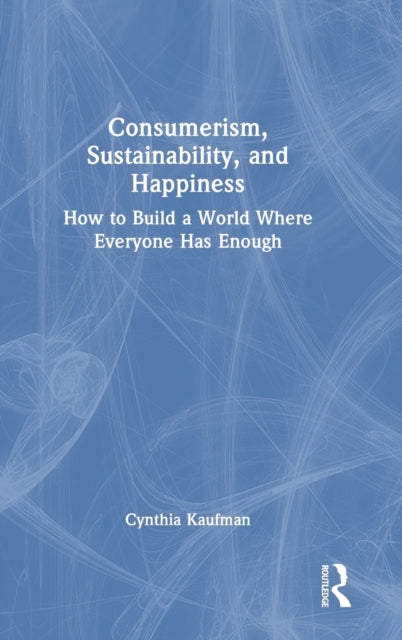
Cynthia Kaufman
Consumerism, Sustainability, and Happiness: How to Build a World Where Everyone Has Enough
Consumerism, Sustainability, and Happiness: How to Build a World Where Everyone Has Enough
💎 Earn 811 Points (£8.11) on this item.
We can order this item for you. Delivery usually takes about 4 to 6 weeks.
This item is not held in our immediate stock. We will order it for you after checkout.
Estimated delivery: About 4 to 6 weeks
YOU SAVE £9.63
- Condition: Brand new
- UK Delivery times: Usually arrives within 2 - 3 working days
- UK Shipping: Fee starts at £3.89. Subject to product weight & dimension
Bulk ordering. Want 15 or more copies? Get a personalised quote and bigger discounts. Learn more about bulk orders.
Couldn't load pickup availability
- More about Consumerism, Sustainability, and Happiness: How to Build a World Where Everyone Has Enough
The book explores the relationship between environment, economics, individual and communal happiness, and sustainability, offering a constructive reconception of labor, consumption, and human happiness. It is accessible to students and general readers.
Format: Hardback
Length: 142 pages
Publication date: 28 April 2023
Publisher: Taylor & Francis Ltd
The intricate relationship between the environment, economics, individual and collective well-being, and sustainability is a subject that requires thorough examination. By exploring the interconnections between these factors, we can gain a deeper understanding of the challenges and opportunities that arise in our modern world.
One important aspect to consider is the role of labor in the economy. Traditionally, labor has been seen as a means of production, with workers providing their time and skills in exchange for wages. However, there is growing recognition of the importance of labor as a source of human happiness and fulfillment.
In today's globalized economy, many workers are subjected to long hours, low pay, and poor working conditions. This can lead to increased stress, anxiety, and depression, which can have negative impacts on both individual well-being and societal sustainability. On the other hand, there are also examples of companies that prioritize worker well-being and sustainability, such as those that offer flexible work arrangements, fair wages, and opportunities for career growth.
Another important aspect to consider is consumer behavior and consumption patterns. The way in which we consume goods and services has a significant impact on the environment and on our own well-being. For example, excessive consumption and wasteful practices can lead to environmental degradation, resource depletion, and social inequality. On the other hand, sustainable consumption and production practices can promote environmental sustainability, social justice, and economic growth.
Individual and collective well-being is also closely linked to sustainability. When individuals are healthy, happy, and fulfilled, they are more likely to engage in behaviors that support sustainability, such as reducing waste, conserving energy, and supporting local businesses. Conversely, when individuals are experiencing social, economic, or environmental challenges, they may be more likely to engage in behaviors that contribute to these problems, such as pollution or resource depletion.
To promote sustainable development and individual and collective well-being, it is important to reconceptualize labor, consumption, and human happiness. This can involve promoting sustainable employment practices, promoting sustainable consumption patterns, and investing in social and economic policies that support well-being and equity.
In conclusion, the relationship between the environment, economics, individual and collective well-being, and sustainability is complex and multifaceted. By examining these interconnections, we can gain a deeper understanding of the challenges and opportunities that arise in our modern world and work towards creating a more sustainable and equitable future.
The intricate relationship between the environment, economics, individual and collective well-being, and sustainability is a subject that requires thorough examination. By exploring the interconnections between these factors, we can gain a deeper understanding of the challenges and opportunities that arise in our modern world.
One important aspect to consider is the role of labor in the economy. Traditionally, labor has been seen as a means of production, with workers providing their time and skills in exchange for wages. However, there is growing recognition of the importance of labor as a source of human happiness and fulfillment.
In today's globalized economy, many workers are subjected to long hours, low pay, and poor working conditions. This can lead to increased stress, anxiety, and depression, which can have negative impacts on both individual well-being and societal sustainability. On the other hand, there are also examples of companies that prioritize worker well-being and sustainability, such as those that offer flexible work arrangements, fair wages, and opportunities for career growth.
Another important aspect to consider is consumer behavior and consumption patterns. The way in which we consume goods and services has a significant impact on the environment and on our own well-being. For example, excessive consumption and wasteful practices can lead to environmental degradation, resource depletion, and social inequality. On the other hand, sustainable consumption and production practices can promote environmental sustainability, social justice, and economic growth.
Individual and collective well-being is also closely linked to sustainability. When individuals are healthy, happy, and fulfilled, they are more likely to engage in behaviors that support sustainability, such as reducing waste, conserving energy, and supporting local businesses. Conversely, when individuals are experiencing social, economic, or environmental challenges, they may be more likely to engage in behaviors that contribute to these problems, such as pollution or resource depletion.
To promote sustainable development and individual and collective well-being, it is important to reconceptualize labor, consumption, and human happiness. This can involve promoting sustainable employment practices, promoting sustainable consumption patterns, and investing in social and economic policies that support well-being and equity.
In conclusion, the relationship between the environment, economics, individual and collective well-being, and sustainability is complex and multifaceted. By examining these interconnections, we can gain a deeper understanding of the challenges and opportunities that arise in our modern world and work towards creating a more sustainable and equitable future.
Weight: 328g
Dimension: 157 x 236 x 14 (mm)
ISBN-13: 9781032408231
UK and International shipping information
UK and International shipping information
We deliver throughout the United Kingdom and to 128 countries and territories worldwide, including the United States, Australia, Canada, Germany, Spain and France.