Shulph Ink
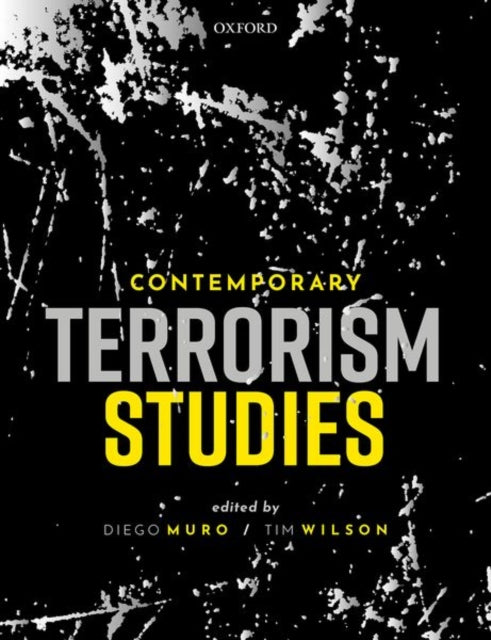
Contemporary Terrorism Studies
Contemporary Terrorism Studies
YOU SAVE £4.04
- Condition: Brand new
- UK Delivery times: Usually arrives within 2 - 3 working days
- UK Shipping: Fee starts at £3.89. Subject to product weight & dimension
Bulk ordering. Want 15 or more copies? Get a personalised quote and bigger discounts. Learn more about bulk orders.
Couldn't load pickup availability
- More about Contemporary Terrorism Studies
Contemporary Terrorism Studies is the first textbook to provide a multi-disciplinary, methodologically plural, and richly diverse introduction to terrorism studies. It covers the main approaches in terrorism studies, is structured into three comprehensive sections, and is designed with pedagogical features to help enhance student learning. It is available for students and institutions to purchase in a variety of formats and is supported by online resources.
Format: Paperback / softback
Length: 648 pages
Publication date: 26 March 2022
Publisher: Oxford University Press
When do individuals radicalize?
Radicalization is a complex process that can occur at different stages in an individual's life. It is often triggered by a combination of factors such as social, political, economic, and religious grievances. The process can take years, and individuals may go through various stages before ultimately engaging in violent acts. Some of the factors that can contribute to radicalization include exposure to extremist ideology, lack of education, discrimination, and experiences of trauma.
Can terrorism be rational?
Terrorism is often portrayed as irrational and senseless, driven by emotions and beliefs that are not based on logic or reason. However, some scholars argue that terrorism can be rationalized in certain contexts. For example, terrorists may believe that their actions are necessary to defend their religion, culture, or homeland from perceived threats. They may also see themselves as warriors fighting against oppressive regimes or foreign invaders.
How can we define terrorism?
Defining terrorism is a complex and controversial task, as there is no universally accepted definition. The United Nations (UN) defines terrorism as "the threatened or actual use of illegal force and violence by a group or individual, primarily to achieve political, religious, or ideological goals through fear, coercion, or intimidation." However, this definition is widely criticized for being too broad and vague, as it can encompass a wide range of activities that may not be considered terrorism by some.
What is the role of women in terrorism?
Women have played a significant role in terrorism throughout history, and their involvement has evolved over time. While women have historically been involved in support roles such as fundraising and logistics, they are now increasingly taking on leadership roles in terrorist organizations. Some studies suggest that women may be more likely to engage in terrorism due to a combination of factors such as gender inequality, social exclusion, and religious beliefs.
Can states be terrorist?
While states have historically been the primary actors responsible for terrorism, there is growing evidence that non-state actors such as terrorist organizations and lone-wolf terrorists are also capable of carrying out acts of terrorism. Some scholars argue that states can become terrorist if they use their power and resources to support or condone terrorism, while others argue that states cannot be terrorists because they have a legal and moral obligation to protect their citizens from harm.
World leading experts answer these questions in Contemporary Terrorism Studies, the first textbook to provide a multi-disciplinary, methodologically plural, and richly diverse introduction to terrorism studies. Contemporary Terrorism Studies covers the main approaches in terrorism studies, and is structured into three comprehensive sections. The first on "The State of Terrorism Studies" maps the development and historical context of the discipline, and looks to the future of terrorism studies. Part two on "Issues and Debates in Terrorism Studies" examines key contentious questions and debates such as the role of women, technology, and the media in terrorism. The final part, part three on "Countering Terrorism" focuses specifically on counterterrorism: it's instruments, foreign policy, legal frameworks, and organizations. Overall, the text will engage students, and establish a confident understanding of the subject.
The textbook has been developed with pedagogical features to help enhance student learning. Each chapter contains case studies to highlight real-world examples of political violence, questions for reflection to encourage critical thinking, and suggestions for further reading which provide useful sources for further reading, essays, and exam preparation. Furthermore, a consistent, accessible tone, and jargon-free writing style makes Contemporary Terrorism Studies the clearest guide to understanding terrorism.
Digital formats and resources
Contemporary Terrorism Studies is available for students and institutions to purchase in a variety of formats, and is supported by online resources.
The e-book offers a mobile experience, making it easy for students to access the content on their devices wherever they are. The textbook also includes interactive features such as quizzes and videos to help students engage with the material and deepen their understanding of the subject.
In conclusion, Contemporary Terrorism Studies is an essential textbook for anyone interested in understanding terrorism. It provides a comprehensive and multidisciplinary introduction to the subject, covering the main approaches in terrorism studies, key contentious questions and debates, and counterterrorism. The textbook is developed with pedagogical features to help enhance student learning, and is supported by online resources. Whether you are a student, researcher, or policymaker, Contemporary Terrorism Studies is a valuable resource for gaining a deeper understanding of the complex and evolving field of terrorism studies.
Weight: 1248g
Dimension: 191 x 246 x 31 (mm)
ISBN-13: 9780198829560
UK and International shipping information
UK and International shipping information
We deliver throughout the United Kingdom and to 128 countries and territories worldwide, including the United States, Australia, Canada, Germany, Spain and France.