Shulph Ink
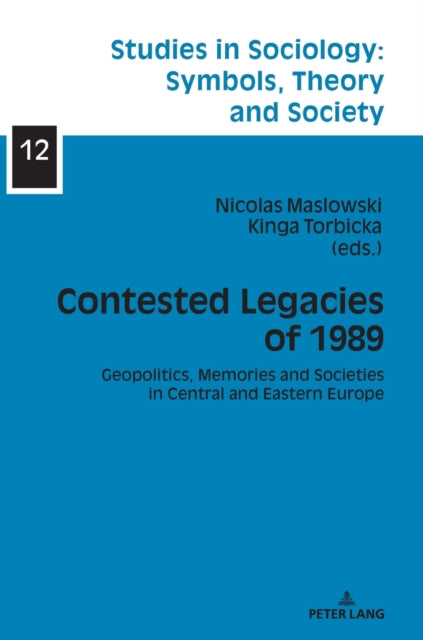
Contested Legacies of 1989: Geopolitics, Memories and Societies in Central and Eastern Europe
Contested Legacies of 1989: Geopolitics, Memories and Societies in Central and Eastern Europe
💎 Earn 148 Points (£1.48) on this item.
We can order this item for you. Delivery usually takes about 4 to 6 weeks.
This item is not held in our immediate stock. We will order it for you after checkout.
Estimated delivery: About 4 to 6 weeks
YOU SAVE £3.85
- Condition: Brand new
- UK Delivery times: Usually arrives within 2 - 3 working days
- UK Shipping: Fee starts at £2.39. Subject to product weight & dimension
Bulk ordering. Want 15 or more copies? Get a personalised quote and bigger discounts. Learn more about bulk orders.
Couldn't load pickup availability
- More about Contested Legacies of 1989: Geopolitics, Memories and Societies in Central and Eastern Europe
Central and Eastern Europe has been healing fresh wounds from modern history and facing dilemmas of modernity for the past 30 years. The present volume analyzes the contemporary challenges related to the heritage of 1989, such as geopolitical aspects, policies of collective memory, and intrasocietal issues. It suggests the region is approaching the end of a revolutionary cycle of transition.
Format: Hardback
Length: 228 pages
Publication date: 28 February 2022
Publisher: Peter Lang AG
Central and Eastern Europe has been deeply impacted by modern history, grappling with the complexities of modernity. Over the past three decades, the region has been striving to heal fresh wounds, navigating the challenges of a rapidly changing world. This present volume delves into the contemporary challenges associated with the heritage of 1989, a pivotal moment in the region's history. The peaceful revolution that unfolded brought about significant socio-cultural, institutional, and strategic transformations, shaping the long-term trajectory of Central and Eastern European policymaking. However, in recent years, these legacies, particularly the geopolitical dimensions of the transformation, policies of collective memory, and intrasocietal issues, have come under increasing scrutiny. It appears that the region is nearing the conclusion of a revolutionary cycle of transition. This volume aims to investigate this phenomenon as it unfolds, shedding light on the complex dynamics and transformations that have shaped Central and Eastern Europe in the post-Cold War era.
The peaceful revolution of 1989 brought about profound socio-cultural, institutional, and strategic transformations in Central and Eastern Europe. This transformative period set the stage for a new era of policymaking in the region. However, as time has passed, these legacies have been increasingly questioned and scrutinized. The geopolitical aspects of the transformation, the policies of collective memory, and even intrasocietal issues have come under close examination. It seems that the region is approaching the end of a revolutionary cycle of transition.
This volume seeks to investigate this phenomenon as it unfolds. It aims to explore the challenges and opportunities that Central and Eastern Europe faces in the post-revolutionary era. The authors analyze the various dimensions of the transformation, including political, economic, social, and cultural aspects. They also examine the policies and practices that have been adopted to address the legacy of 1989, including efforts to promote democracy, human rights, and social inclusion.
One of the key themes of the volume is the impact of globalization on Central and Eastern Europe. The region has been significantly affected by the global economy, with many countries seeking to integrate into the global market and attract foreign investment. However, this process has also brought about challenges, such as job loss, economic inequality, and social unrest. The authors explore how Central and Eastern Europe can navigate these challenges and leverage the opportunities presented by globalization to promote sustainable development and prosperity.
Another important theme of the volume is the role of institutions in shaping the post-revolutionary era. The collapse of communist regimes in the region led to the establishment of new democratic institutions, but these institutions have faced numerous challenges in the years since 1989. The authors examine how these institutions can be strengthened and improved to ensure that they serve the needs of the people and promote democratic governance.
Collective memory is also a significant aspect of the post-revolutionary era. The legacy of the communist regime has left a deep imprint on the memories and narratives of individuals and communities in Central and Eastern Europe. The authors explore how collective memory can be used to promote social cohesion, reconciliation, and healing, while also avoiding the perpetuation of harmful stereotypes and divisions.
Intrasocietal issues are also a critical component of the post-revolutionary era. The region has experienced significant social and economic changes, which have led to tensions and conflicts within societies. The authors examine how these issues can be addressed, including through policies that promote social inclusion, education, and job creation.
In conclusion, Central and Eastern Europe has been deeply affected by modern history, grappling with the complexities of modernity. Over the past three decades, the region has been striving to heal fresh wounds, navigating the challenges of a rapidly changing world. This present volume delves into the contemporary challenges associated with the heritage of 1989, a pivotal moment in the region's history. The peaceful revolution that unfolded brought about significant socio-cultural, institutional, and strategic transformations, shaping the long-term trajectory of Central and Eastern European policymaking. However, in recent years, these legacies, particularly the geopolitical dimensions of the transformation, policies of collective memory, and intrasocietal issues, have come under increasing scrutiny. It appears that the region is nearing the conclusion of a revolutionary cycle of transition. This volume aims to investigate this phenomenon as it unfolds, shedding light on the complex dynamics and transformations that have shaped Central and Eastern Europe in the post-Cold War era.
Weight: 369g
Dimension: 210 x 148 (mm)
ISBN-13: 9783631857984
Edition number: New ed
UK and International shipping information
UK and International shipping information
UK Delivery and returns information:
- Delivery within 2 - 3 days when ordering in the UK.
- Shipping fee for UK customers from £2.39. Fully tracked shipping service available.
- Returns policy: Return within 30 days of receipt for full refund.
International deliveries:
Shulph Ink now ships to Australia, Belgium, Canada, France, Germany, Ireland, Italy, India, Luxembourg Saudi Arabia, Singapore, Spain, Netherlands, New Zealand, United Arab Emirates, United States of America.
- Delivery times: within 5 - 10 days for international orders.
- Shipping fee: charges vary for overseas orders. Only tracked services are available for most international orders. Some countries have untracked shipping options.
- Customs charges: If ordering to addresses outside the United Kingdom, you may or may not incur additional customs and duties fees during local delivery.