Shulph Ink
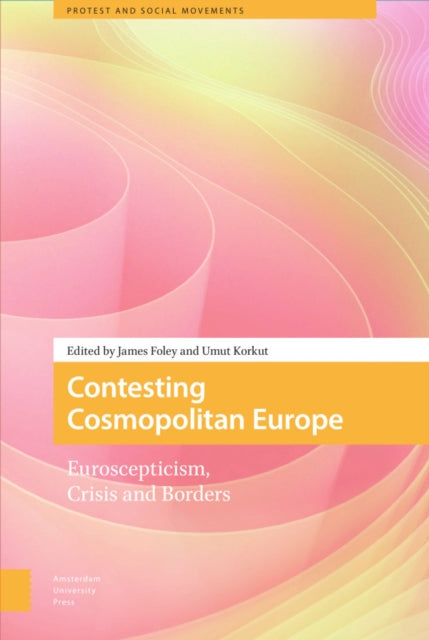
Contesting Cosmopolitan Europe: Euroscepticism, Crisis and Borders
Contesting Cosmopolitan Europe: Euroscepticism, Crisis and Borders
We can order this item for you. Delivery usually takes about 4 to 6 weeks.
This item is not held in our immediate stock. We will order it for you after checkout.
Estimated delivery: About 4 to 6 weeks
YOU SAVE £11.00
- Condition: Brand new
- UK Delivery times: Usually arrives within 2 - 3 working days
- UK Shipping: Fee starts at £3.89. Subject to product weight & dimension
Bulk ordering. Want 15 or more copies? Get a personalised quote and bigger discounts. Learn more about bulk orders.
Couldn't load pickup availability
- More about Contesting Cosmopolitan Europe: Euroscepticism, Crisis and Borders
The project of European integration has been through several shocks, such as the Eurozone crisis, irregular migration, and the coronavirus pandemic, which have politicized questions related to the governance of borders and markets. This book charts the rise of contestation over the meaning of "Europe" and questions the impact of contestation on the assumed "cosmopolitan" values of Europe.
Format: Hardback
Length: 210 pages
Publication date: 01 August 2022
Publisher: Amsterdam University Press
The project of European integration has experienced a series of seismic shocks, beginning with the Eurozone crisis, followed by responses to the sudden surge of irregular migration, and most recently, the coronavirus pandemic. These shocks have politicized issues related to the governance of borders and markets, which for decades had been considered beyond the realm of contention. For some time, these issues have been spilling over into domestic and European electoral politics, with the rise of "populist" and Eurosceptic parties. However, increasingly, the crises have begun to reshape the liberal narratives that have been central to the European project.
This book charts the rise of contestation over the meaning of "Europe," particularly in the context of the coronavirus crisis and Brexit. Drawing together cutting-edge, interdisciplinary scholarship from across the continent, it questions not only the traditional conflict between European and nationalist politics but also the impact of contestation on the assumed "cosmopolitan" values of Europe.
The Eurozone crisis marked a significant turning point in the project of European integration. It exposed the vulnerabilities of the single currency and the lack of coordination among member states. This led to calls for greater fiscal integration, financial regulation, and a stronger central government. However, these proposals were met with resistance from some member states, who feared that they would undermine their national sovereignty and economic interests.
The surge of irregular migration in recent years has also posed a challenge to the European project. The arrival of large numbers of migrants, particularly from war-torn regions, has put pressure on social services, housing, and employment. This has led to calls for stricter border controls and policies that prioritize national security. However, these policies have also been criticized for their human rights implications and for failing to address the root causes of migration.
The coronavirus pandemic has further intensified the challenges facing the European project. The pandemic has led to a sharp economic downturn, with millions of people losing their jobs and businesses closing. This has led to calls for greater economic integration and support for vulnerable sectors. However, it has also highlighted the disparities between member states and the need for a more coordinated response to the crisis.
The rise of "populist" and Eurosceptic parties has also been a significant feature of the recent political landscape. These parties have tapped into the concerns of voters who feel that their voices are not being heard by the mainstream political establishment. They have criticized the European Union for its bureaucracy, its lack of accountability, and its perceived disregard for the interests of ordinary people.
Despite these challenges, the European project remains a vital and important endeavor. The European Union has played a key role in promoting peace, stability, and economic growth in Europe. It has also provided a platform for cooperation and dialogue among member states, which has helped to address a range of global challenges, such as climate change and terrorism.
However, the European project faces several challenges in the years to come. These include the ongoing refugee crisis, the rise of authoritarianism in some member states, and the need to address the economic and social disparities between member states.
To address these challenges, the European Union will need to continue to prioritize dialogue and cooperation among member states. It will also need to be more responsive to the concerns of ordinary people and to address the root causes of social and economic inequality.
In conclusion, the project of European integration has experienced a series of shocks, beginning with the Eurozone crisis, followed by responses to the sudden growth of irregular migration, and most recently, the coronavirus pandemic. These shocks have politicized issues related to the governance of borders and markets, which for decades had been considered beyond the realm of contestation. However, the crises have also begun to reshape the liberal narratives that have been central to the European project. This book charts the rise of contestation over the meaning of "Europe," particularly in the context of the coronavirus crisis and Brexit. Drawing together cutting-edge, interdisciplinary scholarship from across the continent, it questions not only the traditional conflict between European and nationalist politics but also the impact of contestation on the assumed "cosmopolitan" values of Europe. The European project remains a vital and important endeavor, but it faces several challenges in the years to come. To address these challenges, the European Union will need to continue to prioritize dialogue and cooperation among member states, and it will also need to be more responsive to the concerns of ordinary people and to address the root causes of social and economic inequality.
Weight: 470g
Dimension: 162 x 240 x 19 (mm)
ISBN-13: 9789463727259
UK and International shipping information
UK and International shipping information
We deliver throughout the United Kingdom and to 128 countries and territories worldwide, including the United States, Australia, Canada, Germany, Spain and France.