Shulph Ink
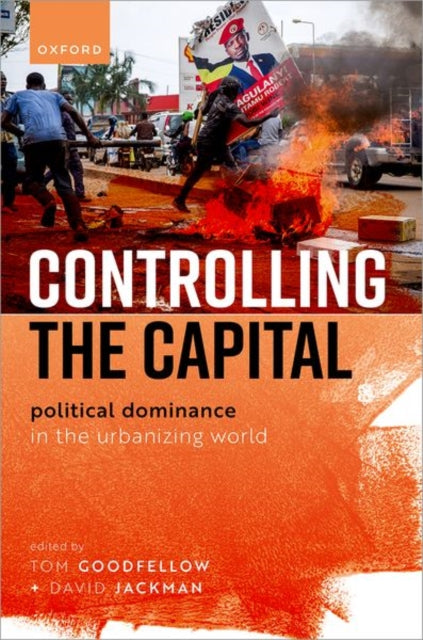
Controlling the Capital: Political Dominance in the Urbanizing World
Controlling the Capital: Political Dominance in the Urbanizing World
💎 Earn 493 Points (£4.93) on this item.
We can order this item for you. Delivery usually takes about 4 to 6 weeks.
This item is not held in our immediate stock. We will order it for you after checkout.
Estimated delivery: About 4 to 6 weeks
- Condition: Brand new
- UK Delivery times: Usually arrives within 2 - 3 working days
- UK Shipping: Fee starts at £3.89. Subject to product weight & dimension
Bulk ordering. Want 15 or more copies? Get a personalised quote and bigger discounts. Learn more about bulk orders.
Couldn't load pickup availability
- More about Controlling the Capital: Political Dominance in the Urbanizing World
Authoritarianism is increasing globally, with more countries experiencing democratic decline than enhancement. This has raised questions about the role of cities in this authoritarian turn. The book "Controlling the Capital" explores how authoritarian regimes have been attempting to build and sustain long-term dominance in capital cities in Sub-Saharan Africa and South Asia. It offers a cross-regional comparative study of the relationship between cities and political dominance, contributing to debates on authoritarianism, authoritarian durability, urbanization, political contestation and resistance, the politics of development, and the prospects for democracy.
Format: Hardback
Length: 288 pages
Publication date: 28 September 2023
Publisher: Oxford University Press
Authoritarianism is on the rise globally, with more than twice as many countries experiencing democratic decline as democratic enhancement in recent years. This has been occurring simultaneously with unprecedented rates of urbanization in many parts of the world, raising questions about the role of cities, often considered the focal points of democratic deepening, in this authoritarian turn. While most literature considers authoritarianism on the national scale, the chapters in this book train their gaze on capital cities, which, as containers of both capital and sovereignty, are spaces in which authoritarian dominance is increasingly built, contested, maintained, and undone. Focusing on some of the world's fastest urbanizing regions, Sub-Saharan Africa and South Asia, the book explores the multiple ways in which authoritarian regimes have been attempting to build and sustain long-term dominance in capital cities in order to meet the challenge of urban political resistance. The diverse selection of case studies presented here spans governing regimes that have recently tried to build urban dominance and spectacularly failed, as well as those that have managed to hold onto power by constantly evolving strategies for dominance that limit the potential for urban opposition to tip into regime overthrow. With chapters on Addis Ababa, Colombo, Dhaka, Harare, Kampala, and Lusaka, Controlling the Capital offers the first cross-regional comparative study of the relationship between cities and political dominance. It contributes to debates on authoritarianism and autocracy, urban governance, and the politics of development in the Global South.
Introduction:
Authoritarianism is on the rise globally, with more than twice as many countries experiencing democratic decline as democratic enhancement in recent years. This has been occurring simultaneously with unprecedented rates of urbanization in many parts of the world, raising questions about the role of cities, often considered the focal points of democratic deepening, in this authoritarian turn. While most literature considers authoritarianism on the national scale, the chapters in this book train their gaze on capital cities, which, as containers of both capital and sovereignty, are spaces in which authoritarian dominance is increasingly built, contested, maintained, and undone. Focusing on some of the world's fastest urbanizing regions, Sub-Saharan Africa and South Asia, the book explores the multiple ways in which authoritarian regimes have been attempting to build and sustain long-term dominance in capital cities in order to meet the challenge of urban political resistance.
The Rise of Authoritarianism:
Authoritarianism is a political system in which a single individual, group, or institution holds absolute power and control over the government and society. It is characterized by the absence of democratic institutions, limited civil liberties, and a concentration of power in the hands of a few. The rise of authoritarianism has been observed in many parts of the world in recent years, driven by a range of factors, including economic instability, political polarization, and the erosion of democratic norms and values.
Urbanization and Authoritarianism:
The rise of authoritarianism has been occurring simultaneously with unprecedented rates of urbanization in many parts of the world. Urbanization is the process of people moving from rural areas to cities, resulting in the growth of urban populations and the transformation of urban landscapes. While cities have long been considered the focal points of democratic deepening, the chapters in this book argue that authoritarian regimes have been increasingly using capital cities as spaces in which to build and sustain their dominance.
The Role of Capital Cities:
Capital cities are important centers of economic activity, political power, and cultural expression. They are often considered the engines of economic growth and development, providing opportunities for employment, education, and social mobility. However, they are also spaces in which authoritarian regimes can exercise their power and control. As containers of both capital and sovereignty, capital cities are spaces in which authoritarian dominance is increasingly built, contested, maintained, and undone.
Authoritarian Strategies:
Authoritarian regimes have been using a range of strategies to build and sustain their dominance in capital cities. These strategies include the repression of political opposition, the control of the media, the suppression of civil liberties, and the use of state-owned enterprises to consolidate power. Authoritarian regimes have also been attempting to build and sustain long-term dominance in capital cities by investing in infrastructure, education, and healthcare.
Case Studies:
The book includes a diverse selection of case studies presented on Addis Ababa, Colombo, Dhaka, Harare, Kampala, and Lusaka. These cities are located in Sub-Saharan Africa and South Asia, two regions that are experiencing rapid urbanization and are home to many authoritarian regimes. The case studies explore the multiple ways in which authoritarian regimes have been attempting to build and sustain their dominance in these cities, including the repression of political opposition, the control of the media, the suppression of civil liberties, and the use of state-owned enterprises to consolidate power.
Conclusion:
The chapters in this book provide a valuable contribution to our understanding of the relationship between cities and political dominance. They demonstrate that authoritarian regimes are increasingly using capital cities as spaces in which to build and sustain their dominance, and that this dominance is built, contested, maintained, and undone through a range of strategies. The book contributes to debates on authoritarianism and autocracy, urban governance, and the politics of development in the Global South.
Weight: 598g
Dimension: 165 x 243 x 23 (mm)
ISBN-13: 9780192868329
UK and International shipping information
UK and International shipping information
We deliver throughout the United Kingdom and to 128 countries and territories worldwide, including the United States, Australia, Canada, Germany, Spain and France.