Cosima Werner
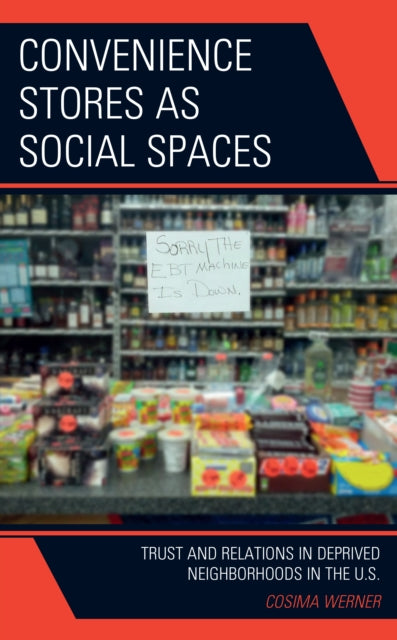
Convenience Stores as Social Spaces: Trust and Relations in Deprived Neighborhoods in the U.S.
Convenience Stores as Social Spaces: Trust and Relations in Deprived Neighborhoods in the U.S.
💎 Earn 451 Points (£4.51) on this item.
We can order this item for you. Delivery usually takes about 4 to 6 weeks.
This item is not held in our immediate stock. We will order it for you after checkout.
Estimated delivery: About 4 to 6 weeks
- Condition: Brand new
- UK Delivery times: Usually arrives within 2 - 3 working days
- UK Shipping: Fee starts at £2.39. Subject to product weight & dimension
Bulk ordering. Want 15 or more copies? Get a personalised quote and bigger discounts. Learn more about bulk orders.
Couldn't load pickup availability
- More about Convenience Stores as Social Spaces: Trust and Relations in Deprived Neighborhoods in the U.S.
In Convenience Stores as Social Spaces: Trust and Community in Deprived Neighborhoods in the U.S., Cosima Werner examines the contested meanings of convenience stores and how they are perceived as social spaces in impoverished neighborhoods. Despite security measures and language barriers, trustful relationships are essential for shoppers to access resources.
Format: Hardback
Length: 294 pages
Publication date: 15 June 2023
Publisher: Lexington Books
Liquor, tobacco, processed food, and sugary snacks are the mainstay of convenience stores in impoverished neighborhoods across the United States. In Convenience Stores as Social Spaces: Trust and Community in Deprived Neighborhoods in the U.S., Cosima Werner delves into the complex meanings of these stores and their perception as social spaces within these communities. At first glance, convenience stores seem to be the antithesis of social spaces. Surveillance cameras monitor every shopper interaction, security personnel keep a watchful eye on suspicious behavior, and bulletproof glass sometimes separates employees from customers. However, despite numerous security measures, language barriers, and cultural differences, establishing trust is crucial for many shoppers to access resources such as loans, food, drinks, or information that helps them make ends meet.
Drawing on concepts of trust and mistrust inherent in social atmospheres, this book analyzes the diverse meanings of convenience stores as social spaces. Werner conducts ethnographic research in Chicago and Detroit, shedding light on the contested meanings of convenience stores and their role in shaping social interactions within deprived neighborhoods.
One of the key findings of the book is that convenience stores are often viewed as a source of comfort and familiarity in an otherwise unfamiliar environment. They serve as a meeting place for community members, providing a space where people can gather, chat, and share stories. Convenience stores also play a crucial role in distributing goods and services, particularly to those who may not have access to traditional retail outlets.
However, the perception of convenience stores as social spaces is not without its challenges. Security measures, language barriers, and cultural differences can create barriers to trust and hinder the development of meaningful relationships. For instance, some shoppers may feel intimidated by the presence of security personnel or worried about being surveilled. Language barriers can also make it difficult for customers to communicate their needs or receive assistance from store employees.
Despite these obstacles, there are strategies that can be employed to promote trust and foster community within convenience stores. One approach is to prioritize customer service and create a welcoming environment. Store employees should be trained to be friendly, attentive, and responsive to customer needs. Language barriers can be addressed by providing multilingual signage and offering translation services. Cultural differences can be celebrated by offering a diverse range of products and promoting cultural events and activities within the store.
Another important aspect of convenience stores as social spaces is their role in addressing social and economic inequalities. Convenience stores can provide employment opportunities and economic support to marginalized communities, particularly those who may not have access to traditional job markets. They can also offer affordable goods and services, particularly to low-income individuals and families.
However, there are concerns about the impact of convenience stores on public health and well-being. The prevalence of sugary snacks, processed foods, and alcohol in convenience stores has been linked to a range of health problems, including obesity, diabetes, and cardiovascular disease. There are also concerns about the potential for crime and violence to occur in convenience stores, particularly in areas with high crime rates.
To address these concerns, policymakers and community organizations should work together to promote healthy food options and regulate the sale of alcohol and tobacco in convenience stores. Community-based organizations can also play a role in promoting social cohesion and providing support to marginalized communities. For example, community gardens.
In conclusion, convenience stores are complex social spaces that play a significant role in the lives of individuals and communities in deprived neighborhoods across the United States. While they may be perceived as the antithesis of social spaces, they can also be viewed as sources of comfort, familiarity, and economic support. By promoting trust, fostering community, and addressing social and economic inequalities, convenience stores can contribute to the well-being and prosperity of these communities. However, it is important to approach these stores with a critical eye and to work towards creating a more equitable and inclusive retail landscape.
Weight: 540g
Dimension: 236 x 159 x 22 (mm)
ISBN-13: 9781666930771
This item can be found in:
UK and International shipping information
UK and International shipping information
UK Delivery and returns information:
- Delivery within 2 - 3 days when ordering in the UK.
- Shipping fee for UK customers from £2.39. Fully tracked shipping service available.
- Returns policy: Return within 30 days of receipt for full refund.
International deliveries:
Shulph Ink now ships to Australia, Belgium, Canada, France, Germany, Ireland, Italy, India, Luxembourg Saudi Arabia, Singapore, Spain, Netherlands, New Zealand, United Arab Emirates, United States of America.
- Delivery times: within 5 - 10 days for international orders.
- Shipping fee: charges vary for overseas orders. Only tracked services are available for most international orders. Some countries have untracked shipping options.
- Customs charges: If ordering to addresses outside the United Kingdom, you may or may not incur additional customs and duties fees during local delivery.