Shulph Ink
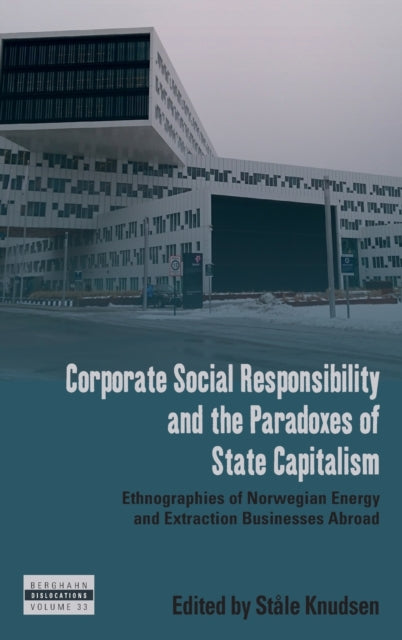
Corporate Social Responsibility and the Paradoxes of State Capitalism: Ethnographies of Norwegian Energy and Extraction Businesses Abroad
Corporate Social Responsibility and the Paradoxes of State Capitalism: Ethnographies of Norwegian Energy and Extraction Businesses Abroad
💎 Earn 536 Points (£5.36) on this item.
We can order this item for you. Delivery usually takes about 4 to 6 weeks.
This item is not held in our immediate stock. We will order it for you after checkout.
Estimated delivery: About 4 to 6 weeks
- Condition: Brand new
- UK Delivery times: Usually arrives within 2 - 3 working days
- UK Shipping: Fee starts at £2.39. Subject to product weight & dimension
Bulk ordering. Want 15 or more copies? Get a personalised quote and bigger discounts. Learn more about bulk orders.
Couldn't load pickup availability
- More about Corporate Social Responsibility and the Paradoxes of State Capitalism: Ethnographies of Norwegian Energy and Extraction Businesses Abroad
This book explores how transnational Norwegian energy and extractive industries handle corporate social responsibility (CSR) when operating abroad in places such as China, Brazil, and Turkey, critically examining the workings of Norwegian corporate capitalism and its engagement with responsibility, accountability, and sustainability.
Format: Hardback
Length: 354 pages
Publication date: 12 May 2023
Publisher: Berghahn Books
This book delves into the intricate dynamics of transnational Norwegian energy and extractive industries as they navigate the complex terrain of corporate social responsibility (CSR) in diverse global contexts. Through a comprehensive series of case studies spanning various regions, including China, Brazil, and Turkey, it sheds light on how these industries uphold their ethical standards and contribute to sustainable development while operating abroad.
Norwegian capitalism, characterized by significant state ownership and deep integration into the Nordic societal model, is often portrayed as "benign" or ethical. However, this volume goes beyond mere surface impressions by meticulously tracing CSR policy and practice, from the corporate headquarters to the operational frontlines. It critically examines the workings of Norwegian corporate capitalism and its engagement with fundamental issues of responsibility, accountability, and sustainability.
In the chapters that follow, the book explores how Norwegian energy and extractive companies adapt their CSR strategies to meet the unique challenges and opportunities presented in each foreign market. It examines the interplay between corporate governance structures, local stakeholder dynamics, and international regulatory frameworks, highlighting the complexities and trade-offs involved in balancing economic growth, environmental protection, and social well-being.
One of the key themes that emerge is the importance of transparency and accountability in the Norwegian corporate landscape. The companies studied are recognized for their commitment to reporting and disclosing their social and environmental impact, fostering dialogue with local communities and engaging in constructive dialogue with stakeholders. However, the book also raises concerns about the potential limitations of these practices, particularly in contexts where regulatory frameworks may be weak or where corporate power dynamics favor exploitation over sustainability.
Another notable aspect of the book is its examination of the role of corporate social responsibility in promoting sustainable development. The authors argue that Norwegian energy and extractive industries can play a vital role in addressing global challenges such as climate change, poverty, and social inequality. By adopting sustainable practices and investing in local communities, these companies can contribute to long-term economic growth while also promoting social and environmental well-being.
However, the book also acknowledges the challenges that lie ahead in realizing these goals. It highlights the need for robust international regulations and policies to ensure that corporate social responsibility is not merely a lip service but a genuine commitment to sustainable development. It calls for a shift in mindset, where companies are held accountable for their impact on society and the environment and where sustainable practices are prioritized over short-term profits.
In conclusion, this book offers a valuable insight into the complex dynamics of transnational Norwegian energy and extractive industries as they navigate the realm of corporate social responsibility in diverse global contexts. It sheds light on the strengths and weaknesses of Norwegian corporate capitalism and provides a roadmap for promoting sustainable development in these industries. By engaging with key issues of responsibility, accountability, and sustainability, this volume contributes to the ongoing debate about the role of business in addressing global challenges and building a more equitable and sustainable world.
Introduction:
Norwegian capitalism, characterized by significant state ownership and deep integration into the Nordic societal model, is often portrayed as "benign" or ethical. However, this volume goes beyond mere surface impressions by meticulously tracing CSR policy and practice, from the corporate headquarters to the operational frontlines. It critically examines the workings of Norwegian corporate capitalism and its engagement with fundamental issues of responsibility, accountability, and sustainability.
In the chapters that follow, the book explores how Norwegian energy and extractive companies adapt their CSR strategies to meet the unique challenges and opportunities presented in each foreign market. It examines the interplay between corporate governance structures, local stakeholder dynamics, and international regulatory frameworks, highlighting the complexities and trade-offs involved in balancing economic growth, environmental protection, and social well-being.
One of the key themes that emerge is the importance of transparency and accountability in the Norwegian corporate landscape. The companies studied are recognized for their commitment to reporting and disclosing their social and environmental impact, fostering dialogue with local communities and engaging in constructive dialogue with stakeholders. However, the book also raises concerns about the potential limitations of these practices, particularly in contexts where regulatory frameworks may be weak or where corporate power dynamics favor exploitation over sustainability.
Another notable aspect of the book is its examination of the role of corporate social responsibility in promoting sustainable development. The authors argue that Norwegian energy and extractive industries can play a vital role in addressing global challenges such as climate change, poverty, and social inequality. By adopting sustainable practices and investing in local communities, these companies can contribute to long-term economic growth while also promoting social and environmental well-being.
However, the book also acknowledges the challenges that lie ahead in realizing these goals. It highlights the need for robust international regulations and policies to ensure that corporate social responsibility is not merely a lip service but a genuine commitment to sustainable development. It calls for a shift in mindset, where companies are held accountable for their impact on society and the environment and where sustainable practices are prioritized over short-term profits.
In conclusion, this book offers a valuable insight into the complex dynamics of transnational Norwegian energy and extractive industries as they navigate the realm of corporate social responsibility in diverse global contexts. It sheds light on the strengths and weaknesses of Norwegian corporate capitalism and provides a roadmap for promoting sustainable development in these industries. By engaging with key issues of responsibility, accountability, and sustainability, this volume contributes to the ongoing debate about the role of business in addressing global challenges and building a more equitable and sustainable world.
Dimension: 229 x 152 (mm)
ISBN-13: 9781800738737
This item can be found in:
UK and International shipping information
UK and International shipping information
UK Delivery and returns information:
- Delivery within 2 - 3 days when ordering in the UK.
- Shipping fee for UK customers from £2.39. Fully tracked shipping service available.
- Returns policy: Return within 30 days of receipt for full refund.
International deliveries:
Shulph Ink now ships to Australia, Belgium, Canada, France, Germany, Ireland, Italy, India, Luxembourg Saudi Arabia, Singapore, Spain, Netherlands, New Zealand, United Arab Emirates, United States of America.
- Delivery times: within 5 - 10 days for international orders.
- Shipping fee: charges vary for overseas orders. Only tracked services are available for most international orders. Some countries have untracked shipping options.
- Customs charges: If ordering to addresses outside the United Kingdom, you may or may not incur additional customs and duties fees during local delivery.