Nereida Ripero-Muniz
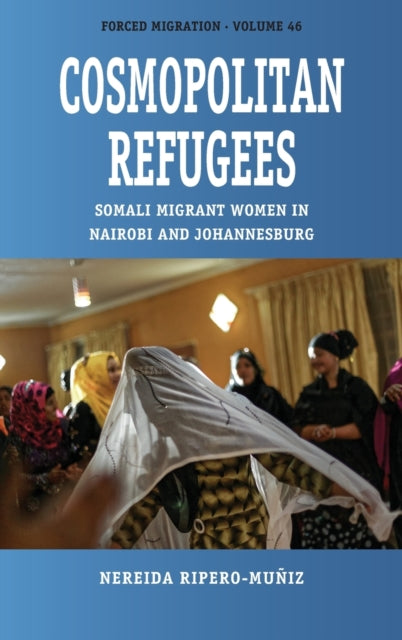
Cosmopolitan Refugees: Somali Migrant Women in Nairobi and Johannesburg
Cosmopolitan Refugees: Somali Migrant Women in Nairobi and Johannesburg
💎 Earn 461 Points (£4.61) on this item.
We can order this item for you. Delivery usually takes about 4 to 6 weeks.
This item is not held in our immediate stock. We will order it for you after checkout.
Estimated delivery: About 4 to 6 weeks
- Condition: Brand new
- UK Delivery times: Usually arrives within 2 - 3 working days
- UK Shipping: Fee starts at £2.39. Subject to product weight & dimension
Bulk ordering. Want 15 or more copies? Get a personalised quote and bigger discounts. Learn more about bulk orders.
Couldn't load pickup availability
- More about Cosmopolitan Refugees: Somali Migrant Women in Nairobi and Johannesburg
The book explores the dynamics of identity formation processes in diasporic spaces, focusing on gender, cultural, and religious practices in a situation of displacement. It presents a comparative case study of Somali migrant women in Nairobi and Johannesburg, using ethnographic observations and first-person accounts.
Format: Hardback
Length: 167 pages
Publication date: 13 January 2023
Publisher: Berghahn Books
Diasporic spaces offer a unique setting for exploring the dynamics of identity formation processes, as individuals navigate the challenges of displacement and renegotiate their gender, cultural, and religious practices. In this book, the author presents a comparative case study of Somali migrant women in Nairobi and Johannesburg, two cosmopolitan urban hubs in the global South. The book is based on extensive ethnographic observations in both cities, first-person accounts of migration journeys across the African continent, and women's reflections on what it means to be a Somali woman today.
Nairobi, the capital city of Kenya, is a melting pot of cultures, with a diverse population that includes Somalis, Kenyans, Indians, and other ethnic groups. The city is known for its vibrant arts scene, bustling markets, and thriving business community. Somali migrant women in Nairobi face a range of challenges, including discrimination, poverty, and social exclusion. They often work in low-paying jobs, such as domestic work, street vending, and construction, and struggle to access education and healthcare.
Johannesburg, the largest city in South Africa, is also a hub for Somali migrants. The city has a large Somali community, with many Somalis arriving in the country as refugees during the civil war in Somalia in the 1990s. Somali migrant women in Johannesburg face similar challenges as those in Nairobi, but they also face additional challenges related to gender-based violence and discrimination. The city has a high rate of gender-based violence, with women being particularly vulnerable to sexual assault, rape, and domestic violence.
The author of this book uses ethnographic observations and first-person accounts to explore the experiences of Somali migrant women in Nairobi and Johannesburg. She highlights the ways in which gender, cultural, and religious practices are renegotiated in a situation of displacement. For example, Somali women in Nairobi and Johannesburg may adopt new religious practices, such as Islam, to cope with the challenges of displacement. They may also engage in traditional practices, such as marriage and childbirth, to maintain their cultural identity.
However, the author also notes that the renegotiation of gender, cultural, and religious practices can be complex and challenging. Women may face resistance from their families and communities, who may not approve of their new practices. They may also face discrimination and violence from other members of their community.
To address these challenges, the author suggests that there is a need for greater support and resources for Somali migrant women in Nairobi and Johannesburg. This includes access to education and healthcare, as well as legal and social services. The author also suggests that there is a need for greater awareness of the challenges faced by Somali migrant women and for efforts to promote gender equality and social justice.
In conclusion, this book provides a valuable insight into the dynamics of identity formation processes in diasporic spaces. It highlights the ways in which gender, cultural, and religious practices are renegotiated in a situation of displacement and the challenges faced by Somali migrant women in Nairobi and Johannesburg. The author suggests that there is a need for greater support and resources for these women to address these challenges and promote gender equality and social justice.
Weight: 394g
Dimension: 159 x 236 x 18 (mm)
ISBN-13: 9781800738188
This item can be found in:
UK and International shipping information
UK and International shipping information
UK Delivery and returns information:
- Delivery within 2 - 3 days when ordering in the UK.
- Shipping fee for UK customers from £2.39. Fully tracked shipping service available.
- Returns policy: Return within 30 days of receipt for full refund.
International deliveries:
Shulph Ink now ships to Australia, Belgium, Canada, France, Germany, Ireland, Italy, India, Luxembourg Saudi Arabia, Singapore, Spain, Netherlands, New Zealand, United Arab Emirates, United States of America.
- Delivery times: within 5 - 10 days for international orders.
- Shipping fee: charges vary for overseas orders. Only tracked services are available for most international orders. Some countries have untracked shipping options.
- Customs charges: If ordering to addresses outside the United Kingdom, you may or may not incur additional customs and duties fees during local delivery.