LioraHendelman-Baavur
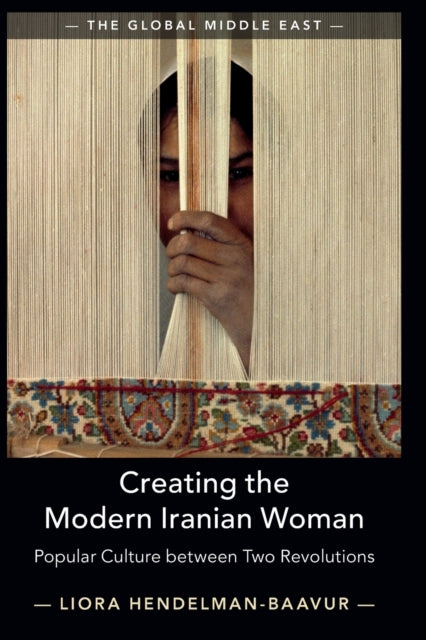
Creating the Modern Iranian Woman: Popular Culture between Two Revolutions
Creating the Modern Iranian Woman: Popular Culture between Two Revolutions
💎 Earn 160 Points (£1.60) on this item.
We can order this item for you. Delivery usually takes about 4 to 6 weeks.
This item is not held in our immediate stock. We will order it for you after checkout.
Estimated delivery: About 4 to 6 weeks
YOU SAVE £1.90
- Condition: Brand new
- UK Delivery times: Usually arrives within 2 - 3 working days
- UK Shipping: Fee starts at £2.39. Subject to product weight & dimension
Bulk ordering. Want 15 or more copies? Get a personalised quote and bigger discounts. Learn more about bulk orders.
Couldn't load pickup availability
- More about Creating the Modern Iranian Woman: Popular Culture between Two Revolutions
The book "Women in Print: Modernity, Identity, and the Press in Iran" by Liora Hendelman-Baavur explores how women's position in Iran changed between the 1963 White Revolution and the 1979 Iranian Revolution, challenging Western assumptions about Iranian popular culture. It examines the history of Iranian women's commercial magazines and their broader economic, social, political, and cultural context.
Format: Paperback / softback
Length: 340 pages
Publication date: 28 October 2021
Publisher: Cambridge University Press
Between the 1963 White Revolution and the 1979 Iranian Revolution, the position of women in Iran underwent a significant transformation. The Pahlavi regime implemented policies and reforms aimed at advancing women's rights and promoting modernization. These reforms encompassed land, suffrage, education, and dress reforms, which were believed to contribute to the progress of women and the rapid development of the country. In her book, Liora Hendelman-Baavur delves into these changes, examining the interplay between global aspects of modernity and notions of identity in Iranian popular culture. By focusing on the history of Iran's popular print media, particularly women's commercial magazines, Hendelman-Baavur challenges prevailing Western assumptions about the complexities of Iranian popular culture. Her analysis contextualizes Iranian women's magazines within their broader economic, social, political, and cultural landscape, highlighting how representations of the modern woman in Iranian popular culture were shaped by the intricate dynamics of cultural contact and exchange between Iran and the West.
The 1963 White Revolution, led by Mohammad Reza Shah Pahlavi, brought about significant changes in the social and political landscape of Iran. It aimed to modernize the country and address the issues of poverty, corruption, and social inequality. One of the key aspects of the White Revolution was the emphasis on women's rights and empowerment. The regime introduced policies that aimed to improve women's access to education, employment, and political participation. Women were granted the right to vote, and they were encouraged to participate in public life. The White Revolution also saw the introduction of land reform policies, which aimed to redistribute land from the wealthy landowners to the poor farmers. This policy was particularly beneficial to women, as it gave them access to land and the means to cultivate it, leading to increased economic independence and empowerment.
However, the White Revolution was not without its critics. Some saw it as a conservative backlash against the progressive reforms of the previous decade. Others accused the regime of using women's rights as a tool to gain support from the international community and distract from its own authoritarianism. Despite these criticisms, the White Revolution had a lasting impact on the position of women in Iran. It paved the way for further reforms and advancements in women's rights in the following decades.
The 1979 Iranian Revolution, led by Ayatollah Ruhollah Khomeini, brought about a significant shift in the political landscape of Iran. The revolution was characterized by a rejection of Western influence and a desire to establish an Islamic state. The new regime introduced policies that were deeply conservative and patriarchal, particularly towards women. Women were subjected to strict dress codes, and their rights to education, employment, and political participation were curtailed. Women were also forced to cover their heads, and they were prohibited from participating in public life.
The Iranian Revolution had a profound impact on the position of women in Iran. It reversed many of the gains made by the White Revolution and led to a significant decline in women's rights and empowerment. Women were marginalized and excluded from the political and social discourse, and their rights were increasingly violated. The revolution also led to the emergence of a conservative religious ideology that blamed women for the problems of the society.
Despite these challenges, women in Iran have continued to fight for their rights and to advocate for gender equality. Women's rights organizations have emerged, and they have worked to raise awareness about the issues facing women in Iran and to advocate for policy changes. Women have also taken to the streets to protest against the regime's policies and to demand their rights.
In conclusion, the position of women in Iran has undergone a significant transformation over the past century. From the White Revolution to the Iranian Revolution, women have experienced a range of policies and reforms that have aimed to advance their rights and promote modernization. While the 1963 White Revolution brought about significant improvements in women's rights, the 1979 Iranian Revolution reversed many of these gains and led to a significant decline in women's rights and empowerment. Women in Iran continue to face challenges, but they have remained resilient and determined to fight for their rights and to advocate for gender equality. It is essential to continue to support and empower women in Iran and to work towards a society that is inclusive and equitable for all.
Weight: 500g
Dimension: 152 x 229 x 24 (mm)
ISBN-13: 9781108726931
This item can be found in:
UK and International shipping information
UK and International shipping information
UK Delivery and returns information:
- Delivery within 2 - 3 days when ordering in the UK.
- Shipping fee for UK customers from £2.39. Fully tracked shipping service available.
- Returns policy: Return within 30 days of receipt for full refund.
International deliveries:
Shulph Ink now ships to Australia, Belgium, Canada, France, Germany, Ireland, Italy, India, Luxembourg Saudi Arabia, Singapore, Spain, Netherlands, New Zealand, United Arab Emirates, United States of America.
- Delivery times: within 5 - 10 days for international orders.
- Shipping fee: charges vary for overseas orders. Only tracked services are available for most international orders. Some countries have untracked shipping options.
- Customs charges: If ordering to addresses outside the United Kingdom, you may or may not incur additional customs and duties fees during local delivery.