Michael J. Monahan
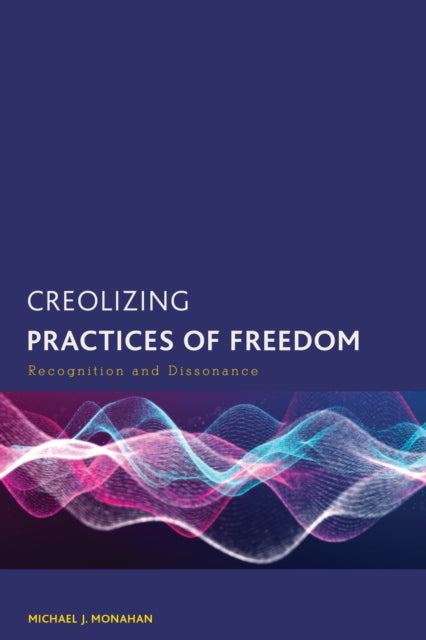
Creolizing Practices of Freedom: Recognition and Dissonance
Creolizing Practices of Freedom: Recognition and Dissonance
💎 Earn 169 Points (£1.69) on this item.
We can order this item for you. Delivery usually takes about 4 to 6 weeks.
This item is not held in our immediate stock. We will order it for you after checkout.
Estimated delivery: About 4 to 6 weeks
- Condition: Brand new
- UK Delivery times: Usually arrives within 2 - 3 working days
- UK Shipping: Fee starts at £2.39. Subject to product weight & dimension
Bulk ordering. Want 15 or more copies? Get a personalised quote and bigger discounts. Learn more about bulk orders.
Couldn't load pickup availability
- More about Creolizing Practices of Freedom: Recognition and Dissonance
Creolizing Practices of Freedom argues that freedom is a matter of purifying the self and the body politic, embracing indeterminacy and ambiguity as productive elements of the practice.
Format: Paperback / softback
Length: 206 pages
Publication date: 25 March 2024
Publisher: Rowman & Littlefield
Creolizing Practices of Freedom argues that many of our long-standing debates over the concept of freedom have been bound up in the politics of purity, explicitly or implicitly insisting on clear and distinct boundaries between self and other or between choice and coercion. In this model, freedom becomes a matter of purifying the self at the individual level and the body politic at the larger social level. The appropriate response to this is a creolizing theory of freedom, an approach that sees indeterminacy and ambiguity not as tragic flaws but as crucial productive elements of the practice of freedom.
Creolizing Practices of Freedom challenges the notion that freedom is a fixed and universal concept and suggests that it is shaped by the specific historical, cultural, and social contexts in which it operates. The book argues that freedom is not just about individual autonomy but also about collective empowerment and social transformation.
One of the key arguments of Creolizing Practices of Freedom is that freedom is not a static or fixed concept but is constantly evolving and adapting to changing circumstances. The book draws on a range of examples from different parts of the world to illustrate this point, including the struggle for civil rights in the United States, the Arab Spring, and the ongoing struggles for democracy in many parts of the world.
According to Creolizing Practices of Freedom, the politics of purity have often been used to justify oppression and discrimination. For example, the idea that certain groups of people are inherently superior to others has been used to justify slavery, colonialism, and other forms of exploitation. The book argues that these practices are not only morally wrong but also ineffective in achieving long-term social change.
In contrast to the politics of purity, Creolizing Practices of Freedom advocates for a creolizing theory of freedom. This approach recognizes that freedom is not a fixed and universal concept but is shaped by the specific historical, cultural, and social contexts in which it operates. The book argues that freedom is not just about individual autonomy but also about collective empowerment and social transformation.
One of the key elements of a creolizing theory of freedom is the idea of indeterminacy and ambiguity. The book argues that these elements are not only inevitable but also productive. Indeterminacy and ambiguity allow for creativity, innovation, and adaptation, which are essential for social change.
The book also argues that freedom is not just about individual autonomy but also about collective empowerment and social transformation. The book draws on a range of examples from different parts of the world to illustrate this point, including the struggle for civil rights in the United States, the Arab Spring, and the ongoing struggles for democracy in many parts of the world.
In conclusion, Creolizing Practices of Freedom argues that many of our long-standing debates over the concept of freedom have been bound up in the politics of purity. The book advocates for a creolizing theory of freedom that recognizes that freedom is not a fixed and universal concept but is shaped by the specific historical, cultural, and social contexts in which it operates. The book argues that freedom is not just about individual autonomy but also about collective empowerment and social transformation and that indeterminacy and ambiguity are not only inevitable but also productive elements of the practice of freedom.
Weight: 322g
Dimension: 230 x 153 x 15 (mm)
ISBN-13: 9781538174630
This item can be found in:
UK and International shipping information
UK and International shipping information
UK Delivery and returns information:
- Delivery within 2 - 3 days when ordering in the UK.
- Shipping fee for UK customers from £2.39. Fully tracked shipping service available.
- Returns policy: Return within 30 days of receipt for full refund.
International deliveries:
Shulph Ink now ships to Australia, Belgium, Canada, France, Germany, Ireland, Italy, India, Luxembourg Saudi Arabia, Singapore, Spain, Netherlands, New Zealand, United Arab Emirates, United States of America.
- Delivery times: within 5 - 10 days for international orders.
- Shipping fee: charges vary for overseas orders. Only tracked services are available for most international orders. Some countries have untracked shipping options.
- Customs charges: If ordering to addresses outside the United Kingdom, you may or may not incur additional customs and duties fees during local delivery.