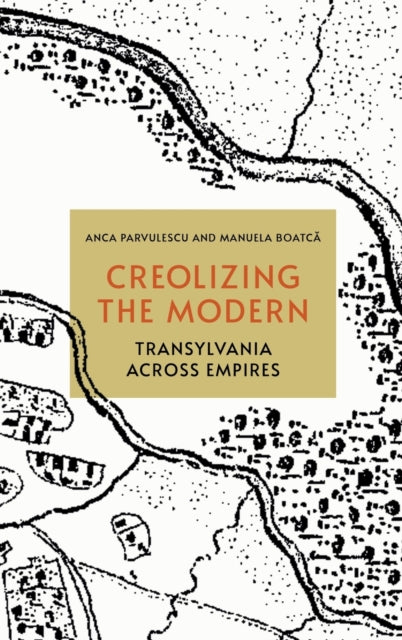
Anca Parvulescu,Manuela Boatca
Creolizing the Modern: Transylvania across Empires
Creolizing the Modern: Transylvania across Empires
💎 Earn 513 Points (£5.13) on this item.
We can order this item for you. Delivery usually takes about 4 to 6 weeks.
This item is not held in our immediate stock. We will order it for you after checkout.
Estimated delivery: About 4 to 6 weeks
YOU SAVE £13.34
- Condition: Brand new
- UK Delivery times: Usually arrives within 2 - 3 working days
- UK Shipping: Fee starts at £2.39. Subject to product weight & dimension
Bulk ordering. Want 15 or more copies? Get a personalised quote and bigger discounts. Learn more about bulk orders.
Couldn't load pickup availability
- More about Creolizing the Modern: Transylvania across Empires
Modernity, coloniality, and interimperiality are intertwined through historical Transylvania, offering a platform for a multi-level reading of Liviu Rebreanu's 1920 novel Ion. The book explores themes such as capitalist integration, antisemitism, enslavement of Roma, multilingualism, gender relations, and religion. Creolizing the Modern develops a comparative method for engaging with areas with conflicting imperial and anti-imperial histories.
Format: Hardback
Length: 270 pages
Publication date: 01 October 2022
Publisher: Cornell University Press
Modernity, coloniality, and interimperiality are complex and interconnected phenomena that have shaped the world in profound ways. Anca Parvulescu and Manuela Boatcă offer innovative decolonial perspectives that aim to creolize modernity and the modern world-system. Their approach bridges the humanities and social sciences, drawing on historical examples to explore the complexities of these systems.
Historical Transylvania, located at the intersection of the Habsburg Empire, the Ottoman Empire, Austria-Hungary, and Russia, provides a unique platform for their multi-level reading of Liviu Rebreanu's 1920 novel "Ion." The novel explores a range of themes, including the region's capitalist integration, antisemitism, the enslavement of Roma, multilingualism, gender relations, and religion.
Creolizing the Modern develops a comparative method for engaging with areas of the world that have inherited multiple, conflicting imperial and anti-imperial histories. It challenges the dominant narratives that have shaped our understanding of these systems and seeks to create a more inclusive and equitable world.
One of the key themes of Creolizing the Modern is the question of the region's capitalist integration. Parvulescu and Boatcă argue that capitalism has been deeply embedded in Transylvania's history, and that it has played a significant role in shaping its social and economic structures. However, they also point out that capitalism has been accompanied by a range of negative consequences, including the exploitation of workers, the marginalization of certain groups, and the destruction of traditional ways of life.
To address these negative consequences, Parvulescu and Boatcă propose a decolonial approach that seeks to redefine capitalism and its relationship to the rest of the world. They argue that capitalism should be seen as a system of power that is rooted in colonialism and that it has been used to exploit and control other societies. They suggest that a more equitable and sustainable alternative to capitalism is possible, and that it can be achieved through a process of decolonization.
Antisemitism is another important theme in Creolizing the Modern. Parvulescu and Boatcă argue that antisemitism has been a persistent feature of Transylvania's history, and that it has been used to justify various forms of discrimination and violence against Jews. They point out that antisemitism has been deeply intertwined with capitalism and that it has been used to maintain the status quo of power and privilege.
To address antisemitism, Parvulescu and Boatcă propose a decolonial approach that seeks to challenge the dominant narratives that have been used to justify it. They argue that antisemitism is a form of racism that is rooted in colonialism and that it has been used to maintain the power of the dominant group. They suggest that a more inclusive and equitable society can be achieved through a process of decolonization that involves recognizing the rights of all individuals, regardless of their race, ethnicity, or religion.
The enslavement of Roma is another important theme in Creolizing the Modern. Parvulescu and Boatcă argue that the enslavement of Roma has been a persistent feature of Transylvania's history, and that it has been used to justify various forms of discrimination and violence against them. They point out that the enslavement of Roma has been deeply intertwined with capitalism and that it has been used to maintain the status quo of power and privilege.
To address the enslavement of Roma, Parvulescu and Boatcă propose a decolonial approach that seeks to challenge the dominant narratives that have been used to justify it. They argue that the enslavement of Roma is a form of racism that is rooted in colonialism and that it has been used to maintain the power of the dominant group. They suggest that a more inclusive and equitable society can be achieved through a process of decolonization that involves recognizing the rights of all individuals, regardless of their race, ethnicity, or religion.
Multilingualism is another important theme in Creolizing the Modern. Parvulescu and Boatcă argue that multilingualism has been a significant feature of Transylvania's history, and that it has been used to promote cultural diversity and to resist the dominance of a single language. They point out that multilingualism has been deeply intertwined with capitalism and that it has been used to maintain the status quo of power and privilege.
To address multilingualism, Parvulescu and Boatcă propose a decolonial approach that seeks to challenge the dominant narratives that have been used to justify it. They argue that multilingualism is a form of cultural diversity that is rooted in colonialism and that it has been used to maintain the power of the dominant group. They suggest that a more inclusive and equitable society can be achieved through a process of decolonization that involves recognizing the rights of all individuals, regardless of their language.
Gender relations are another important theme in Creolizing the Modern. Parvulescu and Boatcă argue that gender relations have been deeply intertwined with capitalism and that they have been used to maintain the status quo of power and privilege. They point out that gender relations have been shaped by colonialism and that they have been used to justify various forms of discrimination and violence against women.
To address gender relations, Parvulescu and Boatcă propose a decolonial approach that seeks to challenge the dominant narratives that have been used to justify them. They argue that gender relations are a form of social inequality that is rooted in colonialism and that they have been used to maintain the power of the dominant group. They suggest that a more inclusive and equitable society can be achieved through a process of decolonization that involves recognizing the rights of all individuals, regardless of their gender.
Religion is another important theme in Creolizing the Modern. Parvulescu and Boatcă argue that religion has been deeply intertwined with capitalism and that it has been used to justify various forms of discrimination and violence against religious minorities. They point out that religion has been shaped by colonialism and that it has been used to maintain the status quo of power and privilege.
To address religion, Parvulescu and Boatcă propose a decolonial approach that seeks to challenge the dominant narratives that have been used to justify it. They argue that religion is a form of social inequality that is rooted in colonialism and that it has been used to maintain the power of the dominant group. They suggest that a more inclusive and equitable society can be achieved through a process of decolonization that involves recognizing the rights of all individuals, regardless of their religion.
In conclusion, Creolizing the Modern offers a powerful and innovative decolonial perspective that aims to creolize modernity and the modern world-system. It challenges the dominant narratives that have shaped our understanding of these systems and seeks to create a more inclusive and equitable world. By engaging with the complexities of historical Transylvania, Parvulescu and Boatcă provide a valuable resource for scholars and activists who are committed to promoting social justice and equality.
Weight: 28g
Dimension: 229 x 152 (mm)
ISBN-13: 9781501765728
UK and International shipping information
UK and International shipping information
UK Delivery and returns information:
- Delivery within 2 - 3 days when ordering in the UK.
- Shipping fee for UK customers from £2.39. Fully tracked shipping service available.
- Returns policy: Return within 30 days of receipt for full refund.
International deliveries:
Shulph Ink now ships to Australia, Belgium, Canada, France, Germany, Ireland, Italy, India, Luxembourg Saudi Arabia, Singapore, Spain, Netherlands, New Zealand, United Arab Emirates, United States of America.
- Delivery times: within 5 - 10 days for international orders.
- Shipping fee: charges vary for overseas orders. Only tracked services are available for most international orders. Some countries have untracked shipping options.
- Customs charges: If ordering to addresses outside the United Kingdom, you may or may not incur additional customs and duties fees during local delivery.