Shulph Ink
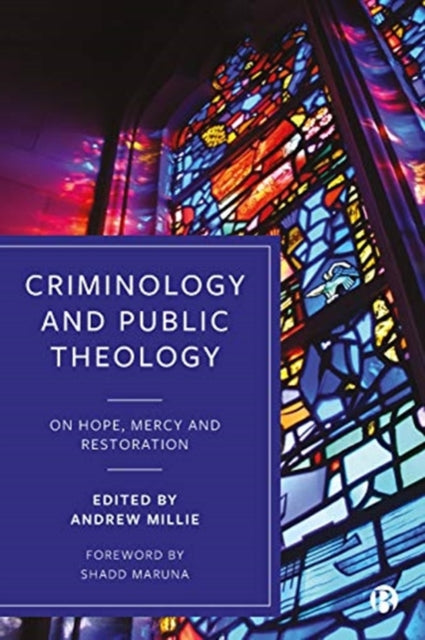
Criminology and Public Theology: On Hope, Mercy and Restoration
Criminology and Public Theology: On Hope, Mercy and Restoration
💎 Earn 371 Points (£3.71) on this item.
We can order this item for you. Delivery usually takes about 4 to 6 weeks.
This item is not held in our immediate stock. We will order it for you after checkout.
Estimated delivery: About 4 to 6 weeks
YOU SAVE £15.66
- Condition: Brand new
- UK Delivery times: Usually arrives within 2 - 3 working days
- UK Shipping: Fee starts at £2.39. Subject to product weight & dimension
Bulk ordering. Want 15 or more copies? Get a personalised quote and bigger discounts. Learn more about bulk orders.
Couldn't load pickup availability
- More about Criminology and Public Theology: On Hope, Mercy and Restoration
Criminology and theology scholars challenge the dominance of retributive punishment by exploring Christian ideas of hope, mercy, and restoration in criminal justice. The book promotes cross-disciplinary learning and is of interest to academics, students, practitioners, and policy makers.
Format: Hardback
Length: 360 pages
Publication date: 11 November 2020
Publisher: Bristol University Press
In the face of a seemingly perpetual crisis within criminal justice systems, esteemed scholars from the fields of criminology and theology have united to challenge the prevailing orthodoxy by questioning the overwhelming emphasis on retributive punishment. This timely and groundbreaking contribution explores alternative approaches that draw upon Christian principles of hope, mercy, and restoration. By fostering cross-disciplinary learning, this book appeals to a wide range of academic disciplines, including criminology, socio-legal studies, legal philosophy, public theology, and religious studies. It also holds significance for practitioners and policy makers who seek to address the complex challenges of criminal justice in today's world.
The dominance of retributive punishment in criminal justice systems has been a longstanding and controversial issue. While some argue that it is necessary to deter crime and protect society, others believe that it is ineffective, cruel, and violates human rights. One of the main arguments against retributive punishment is that it does not address the root causes of crime, such as poverty, inequality, and social exclusion. Instead, it focuses solely on punishing individuals for their actions, without providing any opportunities for rehabilitation or restoration.
Another criticism of retributive punishment is that it perpetuates a cycle of violence and revenge. By seeking to harm or punish those who have committed crimes, it can create a sense of hostility and resentment within communities, which can lead to further acts of violence and crime. This can also undermine the trust between law enforcement and the communities they serve, which is essential for effective policing and public safety.
In contrast, Christian ideas of hope, mercy, and restoration offer alternative approaches to criminal justice. These ideas are based on the belief that all people are created in the image of God and are worthy of love and respect. They emphasize the importance of forgiveness, redemption, and rehabilitation, which can help individuals break free from the cycle of crime and become productive members of society.
One example of a Christian-based alternative to retributive punishment is restorative justice. Restorative justice is a process that involves the victims, offenders, and community members in resolving conflicts and repairing harm. It focuses on building relationships and promoting empathy and understanding, which can help to heal wounds and prevent future crimes.
Another approach is victim-offender reconciliation, which involves the victims of crime and the offenders responsible for their actions coming together to seek forgiveness and reconciliation. This process can help to restore the sense of trust between the victim and the offender, as well as provide closure and healing for both parties.
In addition to these alternative approaches, Christian ideas of hope, mercy, and restoration can also be applied to the broader criminal justice system. For example, they can be used to promote social justice and address the root causes of crime, such as poverty and inequality. They can also be used to advocate for policies that prioritize rehabilitation and restoration over punishment, such as drug decriminalization and increased access to education and job training programs.
Despite the potential benefits of Christian-based alternatives to retributive punishment, there are also challenges and criticisms that need to be addressed. One concern is that these approaches may be perceived as soft on crime or as promoting a permissive attitude toward criminal behavior. Additionally, there may be cultural and religious barriers to the implementation of these approaches, particularly in communities that prioritize traditional punitive measures.
To address these challenges, it is important to promote cross-disciplinary learning and collaboration between academics, practitioners, and policymakers. This can include developing training programs that emphasize the integration of Christian principles into criminal justice practices, as well as promoting dialogue and understanding between different religious and cultural perspectives.
In conclusion, the dominance of retributive punishment in criminal justice systems has been a longstanding and controversial issue. While some argue that it is necessary to deter crime and protect society, others believe that it is ineffective, cruel, and violates human rights. Christian ideas of hope, mercy, and restoration offer alternative approaches to criminal justice that draw on the principles of love, forgiveness, and redemption. These ideas can help to address the root causes of crime, promote social justice, and restore trust between law enforcement and the communities they serve. However, there are challenges and criticisms that need to be addressed to ensure the successful implementation of these approaches. By promoting cross-disciplinary learning and collaboration, we can work towards creating a more just and compassionate criminal justice system that reflects the values of Christian faith and principles.
Weight: 692g
Dimension: 163 x 240 x 27 (mm)
ISBN-13: 9781529207392
UK and International shipping information
UK and International shipping information
UK Delivery and returns information:
- Delivery within 2 - 3 days when ordering in the UK.
- Shipping fee for UK customers from £2.39. Fully tracked shipping service available.
- Returns policy: Return within 30 days of receipt for full refund.
International deliveries:
Shulph Ink now ships to Australia, Belgium, Canada, France, Germany, Ireland, Italy, India, Luxembourg Saudi Arabia, Singapore, Spain, Netherlands, New Zealand, United Arab Emirates, United States of America.
- Delivery times: within 5 - 10 days for international orders.
- Shipping fee: charges vary for overseas orders. Only tracked services are available for most international orders. Some countries have untracked shipping options.
- Customs charges: If ordering to addresses outside the United Kingdom, you may or may not incur additional customs and duties fees during local delivery.