Shulph Ink
Critical Perspectives on Plurilingualism in Deaf Education
Critical Perspectives on Plurilingualism in Deaf Education
We can order this item for you. Delivery usually takes about 4 to 6 weeks.
This item is not held in our immediate stock. We will order it for you after checkout.
Estimated delivery: About 4 to 6 weeks
YOU SAVE £7.66
- Condition: Brand new
- UK Delivery times: Usually arrives within 2 - 3 working days
- UK Shipping: Fee starts at £3.89. Subject to product weight & dimension
Bulk ordering. Want 15 or more copies? Get a personalised quote and bigger discounts. Learn more about bulk orders.
Couldn't load pickup availability
- More about Critical Perspectives on Plurilingualism in Deaf Education
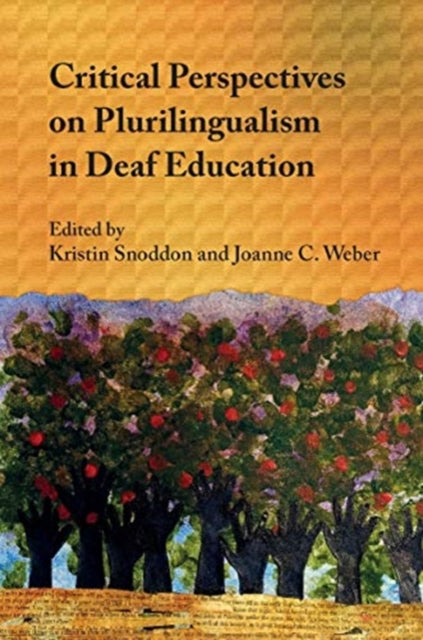
This book provides a critical overview and snapshot of the use of sign languages in education for deaf children today, exploring contemporary issues such as bimodal bilingualism, translanguaging, teacher education, sign language interpreting, and parent sign language learning. It incorporates the views of young deaf people and their parents regarding their language use, marking a significant development in understanding deaf children's language use.
\n Format: Paperback / softback
\n Length: 272 pages
\n Publication date: 12 July 2021
\n Publisher: Multilingual Matters
\n
This groundbreaking book is a pioneering effort in the field of international research on plurilingualism in deaf education, encompassing education within and beyond school settings and across different stages of life. It offers a comprehensive and insightful examination of the contemporary use of sign languages in deaf education, delving into various aspects such as bimodal bilingualism, translanguaging, teacher education, sign language interpreting, and parent sign language learning. The research presented within this volume represents a significant advancement in our understanding of the language practices of deaf children, shedding light on their linguistic flexibility and pragmatism. Moreover, it incorporates valuable perspectives from young deaf individuals and their parents, providing a rare glimpse into their communication habits that have been previously underrepresented in academic research. By undertaking this comprehensive exploration, the book contributes to a deeper understanding of the linguistic and educational needs of deaf children and their families, paving the way for more effective and inclusive educational practices.
This groundbreaking book is a pioneering effort in the field of international research on plurilingualism in deaf education, encompassing education within and beyond school settings and across different stages of life. It offers a comprehensive and insightful examination of the contemporary use of sign languages in deaf education, delving into various aspects such as bimodal bilingualism, translanguaging, teacher education, sign language interpreting, and parent sign language learning. The research presented within this volume represents a significant advancement in our understanding of the language practices of deaf children, shedding light on their linguistic flexibility and pragmatism. Moreover, it incorporates valuable perspectives from young deaf individuals and their parents, providing a rare glimpse into their communication habits that have been previously underrepresented in academic research. By undertaking this comprehensive exploration, the book contributes to a deeper understanding of the linguistic and educational needs of deaf children and their families, paving the way for more effective and inclusive educational practices.
This book is a groundbreaking contribution to the field of international research on plurilingualism in deaf education, encompassing education within and beyond school settings and across different stages of life. It offers a comprehensive and insightful examination of the contemporary use of sign languages in deaf education, delving into various aspects such as bimodal bilingualism, translanguaging, teacher education, sign language interpreting, and parent sign language learning. The research presented within this volume represents a significant advancement in our understanding of the language practices of deaf children, shedding light on their linguistic flexibility and pragmatism. Moreover, it incorporates valuable perspectives from young deaf individuals and their parents, providing a rare glimpse into their communication habits that have been previously underrepresented in academic research. By undertaking this comprehensive exploration, the book contributes to a deeper understanding of the linguistic and educational needs of deaf children and their families, paving the way for more effective and inclusive educational practices.
This book is a groundbreaking contribution to the field of international research on plurilingualism in deaf education, encompassing education within and beyond school settings and across different stages of life. It offers a comprehensive and insightful examination of the contemporary use of sign languages in deaf education, delving into various aspects such as bimodal bilingualism, translanguaging, teacher education, sign language interpreting, and parent sign language learning. The research presented within this volume represents a significant advancement in our understanding of the language practices of deaf children, shedding light on their linguistic flexibility and pragmatism. Moreover, it incorporates valuable perspectives from young deaf individuals and their parents, providing a rare glimpse into their communication habits that have been previously underrepresented in academic research. By undertaking this comprehensive exploration, the book contributes to a deeper understanding of the linguistic and educational needs of deaf children and their families, paving the way for more effective and inclusive educational practices.
This book is a groundbreaking contribution to the field of international research on plurilingualism in deaf education, encompassing education within and beyond school settings and across different stages of life. It offers a comprehensive and insightful examination of the contemporary use of sign languages in deaf education, delving into various aspects such as bimodal bilingualism, translanguaging, teacher education, sign language interpreting, and parent sign language learning. The research presented within this volume represents a significant advancement in our understanding of the language practices of deaf children, shedding light on their linguistic flexibility and pragmatism. Moreover, it incorporates valuable perspectives from young deaf individuals and their parents, providing a rare glimpse into their communication habits that have been previously underrepresented in academic research. By undertaking this comprehensive exploration, the book contributes to a deeper understanding of the linguistic and educational needs of deaf children and their families, paving the way for more effective and inclusive educational practices.
\n Weight: 422g\n
Dimension: 156 x 233 x 21 (mm)\n
ISBN-13: 9781800410732\n \n
UK and International shipping information
UK and International shipping information
We deliver throughout the United Kingdom and to 128 countries and territories worldwide, including the United States, Australia, Canada, Germany, Spain and France.