Magri
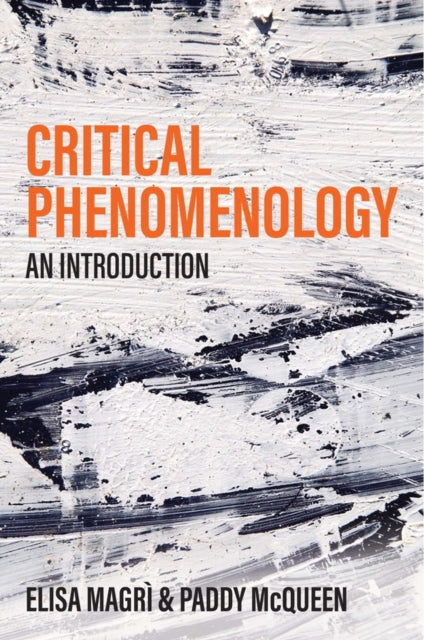
Critical Phenomenology: An Introduction
Critical Phenomenology: An Introduction
💎 Earn 79 Points (£0.79) on this item.
YOU SAVE £2.07
- Condition: Brand new
- UK Delivery times: Usually arrives within 2 - 3 working days
- UK Shipping: Fee starts at £2.39. Subject to product weight & dimension
Bulk ordering. Want 15 or more copies? Get a personalised quote and bigger discounts. Learn more about bulk orders.
Couldn't load pickup availability
- More about Critical Phenomenology: An Introduction
Phenomenology is a major philosophical movement that has influenced many contemporary traditions and investigations. Magrì and McQueen's Critical Phenomenology: An Introduction is the first book to address critical questions at the core of classical and contemporary phenomenology, providing a concise and accessible introduction to key areas of research. It will be essential reading for undergraduate philosophy students and academics interested in critical phenomenology.
Format: Paperback / softback
Length: 240 pages
Publication date: 13 October 2022
Publisher: Polity Press
Phenomenology is a major movement in twentieth-century philosophy that has had a profound impact on various contemporary philosophical traditions and inquiries. In recent years, phenomenological insights have been further developed in relation to philosophy of illness, disability, race, gender, sexuality, and politics, leading to the emergence of critical phenomenology as a prominent field for interdisciplinary research.
Magrì and McQueen's Critical Phenomenology: An Introduction is a groundbreaking work that addresses the critical questions at the heart of both classical and contemporary phenomenology. This book offers a concise and accessible introduction to key areas of phenomenological research, including intersubjectivity, bodily experience, race, gender, social experience, and political action. By demonstrating the rich history of phenomenology and its ongoing philosophical and ethical significance, this textbook serves as an essential resource for undergraduate philosophy students and scholars interested in critical phenomenology.
Phenomenology is a philosophical approach that emphasizes the study of human experiences and their subjective meanings. It seeks to understand the essence of human existence by examining the structures of consciousness, perception, and interpretation. Phenomenology has its roots in the work of philosophers such as Edmund Husserl, Martin Heidegger, and Jean-Paul Sartre, who were concerned with the nature of human consciousness and the ways in which it shapes our understanding of the world.
One of the key insights of phenomenology is the importance of intersubjectivity. Phenomenologists argue that our experiences are not merely subjective or private, but are always shaped by the social and cultural contexts in which we live. This means that our experiences are not isolated or individual, but are always embedded in broader social and historical processes. For example, a person's experience of pain may be influenced by their cultural beliefs about the body, their social relationships, and their personal history.
Phenomenology also emphasizes the importance of bodily experience. Phenomenologists argue that our bodies are not merely physical objects, but are also sites of subjective experience and meaning-making. Our bodies are not just tools for survival or physical exertion, but are also sites of emotional, cognitive, and spiritual experiences. For example, a person's experience of hunger may be influenced by their body's physiological processes, but it may also be shaped by their cultural beliefs about food, their social relationships, and their personal history.
Phenomenology has also been applied to the study of race, gender, sexuality, and politics. Phenomenologists have argued that these categories of identity are not fixed or universal, but are rather constructed and reproduced through social and cultural processes. For example, the experience of racism may be influenced by a person's race, but it may also be shaped by their social relationships, their cultural beliefs, and their personal experiences. Similarly, the experience of gender may be influenced by a person's biological sex, but it may also be shaped by their social roles, their cultural expectations, and their personal experiences.
Critical phenomenology is a subfield of phenomenology that emphasizes the critical and reflexive nature of phenomenological research. Critical phenomenologists argue that phenomenology should not be treated as a neutral or objective method of inquiry, but rather as a tool for social and political critique. Critical phenomenology seeks to understand the ways in which social and cultural structures shape our experiences and perceptions, and to develop strategies for challenging and transforming these structures.
One of the key approaches of critical phenomenology is the use of hermeneutics. Hermeneutics is a philosophical approach that emphasizes the interpretation of texts and symbols. Critical phenomenologists argue that phenomenological research should be approached as a form of hermeneutic inquiry, in which the researcher seeks to understand the meaning and significance of the experiences being studied.
Another approach of critical phenomenology is the use of deconstruction. Deconstruction is a philosophical approach that emphasizes the dismantling of hierarchical structures and the exposure of the underlying assumptions and biases that shape our experiences and perceptions. Critical phenomenologists argue that phenomenological research should be approached as a form of deconstruction, in which the researcher seeks to expose the underlying structures and assumptions that shape our experiences and perceptions.
Critical phenomenology has been applied to a wide range of fields, including philosophy of illness, disability, race, gender, sexuality, and politics. For example, critical phenomenology has been used to understand the experiences of people with chronic illnesses, such as cancer or chronic pain. Critical phenomenology has also been used to understand the experiences of people with disabilities, such as autism or deafness. Critical phenomenology has also been used to understand the experiences of people from marginalized communities, such as women, people of color, and LGBTQ+ individuals.
In conclusion, phenomenology is a major movement in twentieth-century philosophy that has had a profound impact on various contemporary philosophical traditions and inquiries. In recent years, phenomenological insights have been further developed in relation to philosophy of illness, disability, race, gender, sexuality, and politics, leading to the emergence of critical phenomenology as a prominent field for interdisciplinary research. Magrì and McQueen's Critical Phenomenology: An Introduction is a groundbreaking work that addresses the critical questions at the heart of both classical and contemporary phenomenology. This book offers a concise and accessible introduction to key areas of phenomenological research, including intersubjectivity, bodily experience, race, gender, social experience, and political action. By demonstrating the rich history of phenomenology and its ongoing philosophical and ethical significance, this textbook serves as an essential resource for undergraduate philosophy students and scholars interested in critical phenomenology.
Weight: 398g
Dimension: 226 x 166 x 21 (mm)
ISBN-13: 9781509541126
This item can be found in:
UK and International shipping information
UK and International shipping information
UK Delivery and returns information:
- Delivery within 2 - 3 days when ordering in the UK.
- Shipping fee for UK customers from £2.39. Fully tracked shipping service available.
- Returns policy: Return within 30 days of receipt for full refund.
International deliveries:
Shulph Ink now ships to Australia, Belgium, Canada, France, Germany, Ireland, Italy, India, Luxembourg Saudi Arabia, Singapore, Spain, Netherlands, New Zealand, United Arab Emirates, United States of America.
- Delivery times: within 5 - 10 days for international orders.
- Shipping fee: charges vary for overseas orders. Only tracked services are available for most international orders. Some countries have untracked shipping options.
- Customs charges: If ordering to addresses outside the United Kingdom, you may or may not incur additional customs and duties fees during local delivery.