Shulph Ink
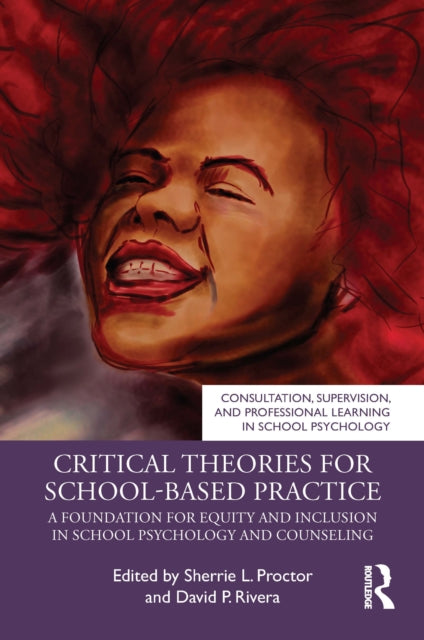
Critical Theories for School Psychology and Counseling: A Foundation for Equity and Inclusion in School-Based Practice
Critical Theories for School Psychology and Counseling: A Foundation for Equity and Inclusion in School-Based Practice
💎 Earn 198 Points (£1.98) on this item.
YOU SAVE £2.35
- Condition: Brand new
- UK Delivery times: Usually arrives within 2 - 3 working days
- UK Shipping: Fee starts at £3.89. Subject to product weight & dimension
Bulk ordering. Want 15 or more copies? Get a personalised quote and bigger discounts. Learn more about bulk orders.
Couldn't load pickup availability
- More about Critical Theories for School Psychology and Counseling: A Foundation for Equity and Inclusion in School-Based Practice
Critical Theories for School Psychology and Counseling provides an accessible introduction to five critical theories that inform equitable, inclusive work with marginalized and underserved student populations. It offers conceptualizations and practical applications for cognitive assessment, school-based counseling, discipline disproportionality, and more, serving as a valuable resource for graduate students, university faculty, and practicum and internship supervisors.
Format: Paperback / softback
Length: 260 pages
Publication date: 30 November 2021
Publisher: Taylor & Francis Ltd
Critical Theories for School Psychology and Counseling is a comprehensive guide that provides school psychologists and counselors with essential insights into five critical theories that shape their work with marginalized and underserved student populations. By offering accessible conceptualizations of each theory and clear links to their practical applications and supervision, the book addresses common professional functions and challenges such as cognitive assessment, school-based counseling, discipline disproportionality, and more. This innovative collection is a valuable resource for graduate students, university faculty, and practicum and internship supervisors, offering them a fresh perspective on serving learners from diverse identities, cultures, and abilities.
The first critical theory discussed in the book is Multiculturalism. Multiculturalism recognizes the importance of cultural diversity and emphasizes the need for school psychologists and counselors to be aware of and sensitive to the cultural backgrounds of their students. It encourages practitioners to develop culturally responsive practices that take into account the unique needs and experiences of diverse student populations.
The second theory is Social Justice. Social justice emphasizes the importance of equity and fairness in education and society. It challenges school psychologists and counselors to work towards creating inclusive and equitable learning environments that promote the social and emotional development of all students. Social justice theory also emphasizes the role of social and political factors in shaping student outcomes and the need for practitioners to advocate for policies that promote social justice.
The third critical theory is Critical Race Theory. Critical Race Theory examines the ways in which race shapes social and educational outcomes and the experiences of marginalized and underserved student populations. It challenges the notion of a color-blind society and emphasizes the need for practitioners to recognize and address the institutional and systemic barriers that perpetuate racial inequality. Critical Race Theory also encourages practitioners to develop culturally responsive practices that address the unique needs and experiences of students of color.
The fourth critical theory is Feminist Theory. Feminist Theory emphasizes the importance of gender equality and the need to address gender-based discrimination and oppression. It challenges traditional gender roles and encourages practitioners to promote gender equity in their work with students. Feminist Theory also emphasizes the importance of intersectionality, which recognizes the interconnectedness of different forms of discrimination and oppression.
The fifth critical theory is Postmodernism. Postmodernism challenges traditional notions of truth and knowledge and emphasizes the importance of diversity and pluralism. It encourages practitioners to develop flexible and adaptable approaches to their work that are responsive to the changing needs and experiences of students. Postmodernism also emphasizes the importance of reflexivity, which involves reflecting on one's own biases and assumptions and working towards becoming more inclusive and equitable.
In conclusion, Critical Theories for School Psychology and Counseling is a valuable resource for practitioners working with marginalized and underserved student populations. By introducing them to five critical theories that inform their work, the book provides a framework for promoting equity, inclusion, and social justice in education. By developing culturally responsive practices and advocating for policies that promote social justice, school psychologists can help create learning environments that support the academic and social-emotional development of all students.
Weight: 418g
Dimension: 152 x 230 x 22 (mm)
ISBN-13: 9780367415778
UK and International shipping information
UK and International shipping information
We deliver throughout the United Kingdom and to 128 countries and territories worldwide, including the United States, Australia, Canada, Germany, Spain and France.