Ryszard Nycz
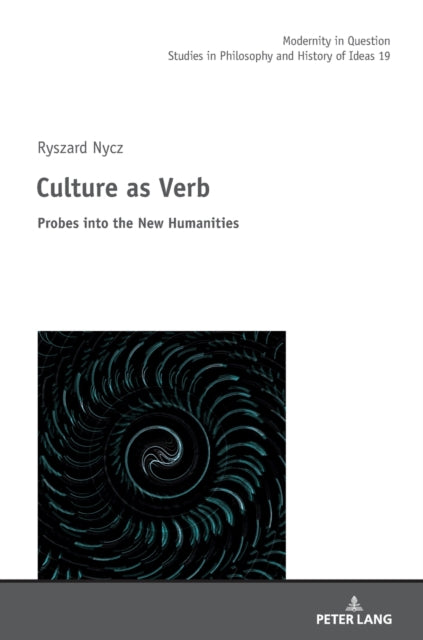
Culture as Verb: Probes into the New Humanities
Culture as Verb: Probes into the New Humanities
We can order this item for you. Delivery usually takes about 4 to 6 weeks.
This item is not held in our immediate stock. We will order it for you after checkout.
Estimated delivery: About 4 to 6 weeks
YOU SAVE £5.51
- Condition: Brand new
- UK Delivery times: Usually arrives within 2 - 3 working days
- UK Shipping: Fee starts at £3.89. Subject to product weight & dimension
Bulk ordering. Want 15 or more copies? Get a personalised quote and bigger discounts. Learn more about bulk orders.
Couldn't load pickup availability
- More about Culture as Verb: Probes into the New Humanities
The new humanities are a broad and diversified front of orientations,directions,and turns grouped around five major currents: the digital humanities,engaged humanities,cognitive humanities,art-based research,and posthumanities. They oppose the principles of the modern theory of humanistic cognition and posit a different type of cognition: embodied,penetrating the interior of the studied field,personalized (participatory),active (intervening),and situated (engaged). This change leads to a real culture of participatory action that is reconciled with the perspectivity and partiality of the subjects cognitive actions and paves the way to reality from within and in its own right.
Format: Hardback
Length: 208 pages
Publication date: 15 March 2023
Publisher: Peter Lang AG
The book delves into a fascinating realm of scholarly pursuits known as the "new humanities," a vibrant and diverse array of orientations, directions, and shifts clustered around five fundamental currents: the digital humanities, engaged humanities, cognitive humanities, art-based research, and posthumanities. What unites these approaches is their steadfast rejection of the principles underlying the modern theory of humanistic cognition, which is perceived as immaterial, external, impersonal, static, and neutral. In contrast, the new humanities advocate for a distinct form of cognition: embodied, deeply penetrating the subject matter under investigation, personalized (involving active participation), active (intervening), and situated (engaged). This transformative shift heralds a departure from the culture of disinterested observation, rooted in the myth of a contemplative perspective on the external world, to a genuine culture of participatory action that harmonizes with the subject's cognitive actions' perspectivity and partiality. It opens the door to a realm of reality that emerges from within, standing on its own merits.
The digital humanities, as one of the five major currents within the new humanities, encompass a wide range of practices and methodologies that leverage digital technologies to explore and analyze human culture and society. This field encompasses the study of digital archives, digital libraries, digital media, and computational methods to analyze and interpret cultural artifacts and phenomena. Digital humanities scholars employ a variety of theoretical frameworks, including cultural studies, information studies, and media studies, to understand the complex relationships between technology, culture, and society.
One of the key aspects of the digital humanities is its emphasis on collaboration and interdisciplinary research. Digital humanities projects often involve partnerships between scholars from different fields, such as history, literature, art, and computer science, to create new insights and approaches to understanding human culture. This collaboration allows for a more comprehensive and nuanced understanding of the past and present, as well as the potential for future interventions and interventions.
Another important aspect of the digital humanities is its commitment to accessibility and open access. Many digital humanities projects are made available online, free of charge, and accessible to a wide audience. This commitment to accessibility ensures that the insights and discoveries of digital humanities research can be shared with a broader public, promoting greater understanding and engagement with cultural heritage and society.
In recent years, the digital humanities have gained increasing recognition and support from academic institutions, government agencies, and private foundations. This support has led to the development of new research centers, institutes, and programs dedicated to the study of the digital humanities. These institutions provide resources, training, and funding opportunities for scholars and researchers to advance their work in this field.
Despite its many benefits, the digital humanities also face challenges and criticisms. Some critics argue that the digital humanities are too focused on technology and neglect the humanistic aspects of cultural analysis. Others argue that the digital humanities are too narrow in their focus and do not adequately address the complex and multifaceted nature of human culture and society.
In response to these criticisms, digital humanities scholars are working to develop new approaches and methodologies that balance the technical and humanistic aspects of cultural analysis. This includes the use of qualitative and quantitative analysis, as well as the integration of different theoretical frameworks and methodologies.
In conclusion, the digital humanities are a rapidly evolving field that is transforming the way of understanding human culture and society. By leveraging digital technologies and interdisciplinary research, the digital humanities provide new insights and approaches to understanding the past, present, and potential for the future. Through its commitment to accessibility and open access, the digital humanities promote greater understanding and engagement with cultural heritage and society. While facing challenges and criticisms, the digital humanities are working to develop new approaches and methodologies that balance the technical and humanistic aspects of cultural analysis. As the field continues to evolve, it will play an increasingly important role in shaping our understanding of the world around us.
Weight: 337g
Dimension: 210 x 148 (mm)
ISBN-13: 9783631874554
Edition number: New ed
UK and International shipping information
UK and International shipping information
We deliver throughout the United Kingdom and to 128 countries and territories worldwide, including the United States, Australia, Canada, Germany, Spain and France.