Shulph Ink
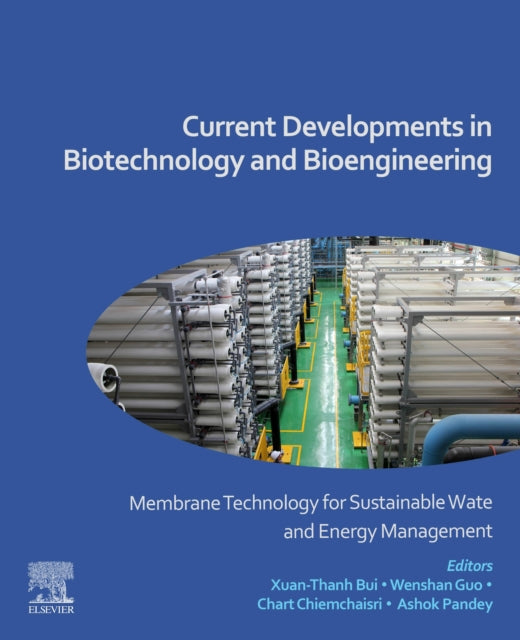
Current Developments in Biotechnology and Bioengineering: Membrane Technology for Sustainable Water and Energy Management
Current Developments in Biotechnology and Bioengineering: Membrane Technology for Sustainable Water and Energy Management
💎 Earn 980 Points (£9.80) on this item.
- Condition: Brand new
- UK Delivery times: Usually arrives within 2 - 3 working days
- UK Shipping: Fee starts at £2.39. Subject to product weight & dimension
Bulk ordering. Want 15 or more copies? Get a personalised quote and bigger discounts. Learn more about bulk orders.
Couldn't load pickup availability
- More about Current Developments in Biotechnology and Bioengineering: Membrane Technology for Sustainable Water and Energy Management
Membrane Technology for Sustainable Water and Energy Management is a comprehensive reference covering advanced technologies for membrane processes, including water/wastewater treatment and reuse, membrane materials, operation and maintenance, fouling control, life cycle assessment, removal of micro/emerging pollutants, and operational cost.
Format: Paperback / softback
Length: 532 pages
Publication date: 01 February 2023
Publisher: Elsevier - Health Sciences Division
Current Developments in Biotechnology and Bioengineering: Membrane Technology for Sustainable Water and Energy Management delves into a comprehensive range of advanced technologies for membrane processes, encompassing water/wastewater treatment and reuse, membrane materials, operation and maintenance, fouling control, life cycle assessment, removal of micro/emerging pollutants, and operational cost of membrane processes. This esteemed reference, supported by prominent editors and esteemed global contributors, presents chapters on innovative membrane treatment strategies for addressing the current pollution of complex organic matters, nutrients, toxic substances, microplastics, membrane fouling control in diverse water resources, and the potential of reusing water resources through promising separation technologies, including reverse osmosis, forward osmosis, and membrane distillation.
The utilization of membranes in water and energy management has gained significant attention in recent years due to their numerous advantages. Membrane processes offer efficient and sustainable solutions for treating water and wastewater, enabling the removal of contaminants, the recovery of valuable resources, and the production of clean water and energy.
One of the key areas of research in membrane technology is water/wastewater treatment. Membrane bioreactors (MBRs) are a popular technology for treating municipal and industrial wastewater, as they combine biological treatment with membrane separation to achieve high removal efficiencies of pollutants. MBRs can treat a wide range of contaminants, including organic compounds, nutrients, and pathogens, and can produce high-quality treated water that can be reused for various purposes.
Another area of focus in membrane technology is the development of advanced membrane materials. Membrane materials play a critical role in the performance and longevity of membrane processes, and researchers are continuously exploring new materials that can improve the efficiency, durability, and cost-effectiveness of these processes. Some of the emerging materials include polymeric membranes, ceramic membranes, and composite membranes, which offer unique properties such as high permeability, excellent chemical resistance, and long-term stability.
Operation and maintenance of membrane processes are also important aspects of sustainable water and energy management. Proper operation and maintenance can ensure that membrane systems operate at optimal efficiency and minimize the risk of fouling, which can lead to reduced performance and increased operational costs. Techniques such as backwashing, cleaning, and sterilization are commonly used to maintain membrane systems and prevent fouling.
Fouling control is another critical aspect of membrane technology. Fouling is the accumulation of particles, bacteria, and other contaminants on the membrane surface, which can reduce the permeability of the membrane and lead to reduced water or energy production. Various fouling control strategies, such as surface modification, chemical treatment, and biocontrol, are being developed to minimize fouling and improve the lifespan of membrane systems.
Life cycle assessment (LCA) is a tool that is used to evaluate the environmental impact of membrane processes throughout their entire life cycle, from production to disposal. LCA helps identify potential environmental impacts and provides insights into the sustainability of different membrane technologies.
In addition to water and wastewater treatment, membrane technology is also being applied to other areas such as energy production and desalination. Membrane distillation, for example, is a promising technology for desalination, as it can produce high-quality drinking water from saltwater using a membrane barrier. Membrane-based solar collectors are also being developed to convert solar energy into electricity, which can provide a clean and renewable source of energy.
Despite the numerous benefits of membrane technology, there are also challenges that need to be addressed. One of the challenges is the high cost of membrane systems, which can make them inaccessible to many communities and industries. Additionally, the development and implementation of membrane technology require specialized knowledge and expertise, which can limit the availability of these technologies in developing countries.
To address these challenges, researchers and industry stakeholders are working to develop innovative solutions and technologies that can improve the affordability, scalability, and sustainability of membrane processes. One approach is to develop hybrid membrane systems that combine different membrane technologies to achieve optimal performance and cost-effectiveness. Another approach is to promote the use of decentralized membrane systems, which can be more affordable and easier to install and maintain in remote or underserved areas.
In conclusion, current developments in biotechnology and bioengineering: membrane technology for sustainable water and energy management offer a promising solution for addressing the global challenges of water scarcity and energy demand. Membrane processes offer efficient and sustainable solutions for treating water and wastewater, enabling the recovery of valuable resources and the production of clean water and energy. With the continued development of advanced membrane materials, operation and maintenance strategies, and fouling control techniques, membrane technology has the potential to play a significant role in achieving sustainable water and energy management in the future.
ISBN-13: 9780443191800
This item can be found in:
UK and International shipping information
UK and International shipping information
UK Delivery and returns information:
- Delivery within 2 - 3 days when ordering in the UK.
- Shipping fee for UK customers from £2.39. Fully tracked shipping service available.
- Returns policy: Return within 30 days of receipt for full refund.
International deliveries:
Shulph Ink now ships to Australia, Belgium, Canada, France, Germany, Ireland, Italy, India, Luxembourg Saudi Arabia, Singapore, Spain, Netherlands, New Zealand, United Arab Emirates, United States of America.
- Delivery times: within 5 - 10 days for international orders.
- Shipping fee: charges vary for overseas orders. Only tracked services are available for most international orders. Some countries have untracked shipping options.
- Customs charges: If ordering to addresses outside the United Kingdom, you may or may not incur additional customs and duties fees during local delivery.