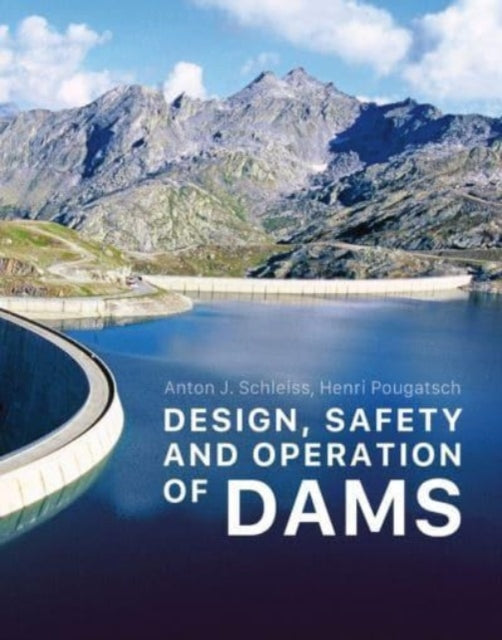
Anton J. Schleiss,Henri Pougatsch
Dams
Dams
💎 Earn 755 Points (£7.55) on this item.
YOU SAVE £8.96
- Condition: Brand new
- UK Delivery times: Usually arrives within 2 - 3 working days
- UK Shipping: Fee starts at £2.39. Subject to product weight & dimension
Bulk ordering. Want 15 or more copies? Get a personalised quote and bigger discounts. Learn more about bulk orders.
Couldn't load pickup availability
- More about Dams
Dams are large and complex civil engineering projects that store water supplies, protect people and landscapes, and serve as a recourse in the event of water shortages. Dams clearly articulates the basic design and dimensioning principles that govern dam engineering, including a three-pillar safety concept, different types of concrete and embankment dams, foundation design, and monitoring and maintenance. It is enriched with numerous examples that reflect the internationally recognized competence of Swiss engineering in dam design.
Format: Hardback
Length: 790 pages
Publication date: 05 May 2023
Publisher: Presses Polytechniques et Universitaires Romandes
Dams, colossal structures that stand as testament to human ingenuity and engineering prowess, have played a pivotal role in shaping development and economic prosperity throughout history. These massive engineering marvels serve a multitude of purposes, chief among them being the storage of water supplies to cater to the essential and energy requirements of communities. Moreover, dams act as a formidable barrier against the destructive forces of water, safeguarding both people and landscapes from the devastating impact of floods and erosion. In times of water scarcity, they provide a vital lifeline, ensuring a steady supply of water for various uses.
Dams, true masterpieces of civil engineering, are meticulously designed and dimensioned to ensure their stability, efficiency, and long-term performance. The foundation of a dam is a critical aspect, as it must withstand the immense weight and pressure of the water and the surrounding terrain. Various types of concrete and embankment dams are employed, each with its own unique characteristics and environmental implications. Concrete dams, for instance, are renowned for their durability and strength, while embankment dams are constructed using earth and rock to create a natural barrier against water.
However, dams do not come without their environmental consequences. The construction of dams can disrupt natural ecosystems, displacing flora and fauna, and altering water flow patterns. Additionally, the storage of water can lead to the formation of reservoirs, which can alter the temperature and oxygen levels of the water, affecting aquatic life. To mitigate these impacts, careful consideration is given to the design and location of dams, taking into account factors such as biodiversity, hydrology, and social and economic considerations.
In addition to their functional aspects, dams also serve as important cultural and historical landmarks. They have been used for centuries to control water flow, irrigate crops, and generate electricity. Some dams, such as the Hoover Dam in the United States, have become iconic symbols of human achievement and technological prowess.
Furthermore, dams play a crucial role in disaster management. They can act as a buffer against floods, reducing the impact of water on vulnerable communities and infrastructure. In times of drought, dams can store water and release it gradually to ensure a steady supply of water for agriculture and other uses.
In conclusion, dams are multifaceted engineering marvels that have a profound impact on society and the environment. They serve as vital water storage facilities, protect against natural disasters, and contribute to economic development. While their construction and management pose challenges, ongoing efforts are being made to balance the needs of development with the preservation of the environment. As we continue to rely on dams for our water and energy needs, it is essential to ensure that they are designed, constructed, and managed with the utmost care and consideration for the well-being of future generations.
Dams, colossal structures that stand as testament to human ingenuity and engineering prowess, have played a pivotal role in shaping development and economic prosperity throughout history. These massive engineering marvels serve a multitude of purposes, chief among them being the storage of water supplies to cater to the essential and energy requirements of communities. Moreover, dams act as a formidable barrier against the destructive forces of water, safeguarding both people and landscapes from the devastating impact of floods and erosion. In times of water scarcity, they provide a vital lifeline, ensuring a steady supply of water for various uses.
Dams, true masterpieces of civil engineering, are meticulously designed and dimensioned to ensure their stability, efficiency, and long-term performance. The foundation of a dam is a critical aspect, as it must withstand the immense weight and pressure of the water and the surrounding terrain. Various types of concrete and embankment dams are employed, each with its own unique characteristics and environmental implications. Concrete dams, for instance, are renowned for their durability and strength, while embankment dams are constructed using earth and rock to create a natural barrier against water.
However, dams do not come without their environmental consequences. The construction of dams can disrupt natural ecosystems, displacing flora and fauna, and altering water flow patterns. Additionally, the storage of water can lead to the formation of reservoirs, which can alter the temperature and oxygen levels of the water, affecting aquatic life. To mitigate these impacts, careful consideration is given to the design and location of dams, taking into account factors such as biodiversity, hydrology, and social and economic considerations.
In addition to their functional aspects, dams also serve as important cultural and historical landmarks. They have been used for centuries to control water flow, irrigate crops, and generate electricity. Some dams, such as the Hoover Dam in the United States, have become iconic symbols of human achievement and technological prowess.
Furthermore, dams play a crucial role in disaster management. They can act as a buffer against floods, reducing the impact of water on vulnerable communities and infrastructure. In times of drought, dams can store water and release it gradually to ensure a steady supply of water for agriculture and other uses.
In conclusion, dams are multifaceted engineering marvels that have a profound impact on society and the environment. They serve as vital water storage facilities, protect against natural disasters, and contribute to economic development. While their construction and management pose challenges, ongoing efforts are being made to balance the needs of development with the preservation of the environment. As we continue to rely on dams for our water and energy needs, it is essential to ensure that they are designed, constructed, and managed with the utmost care and consideration for the well-being of future generations.
Weight: 1650g
Dimension: 200 x 248 x 47 (mm)
ISBN-13: 9782889154852
This item can be found in:
UK and International shipping information
UK and International shipping information
UK Delivery and returns information:
- Delivery within 2 - 3 days when ordering in the UK.
- Shipping fee for UK customers from £2.39. Fully tracked shipping service available.
- Returns policy: Return within 30 days of receipt for full refund.
International deliveries:
Shulph Ink now ships to Australia, Belgium, Canada, France, Germany, Ireland, Italy, India, Luxembourg Saudi Arabia, Singapore, Spain, Netherlands, New Zealand, United Arab Emirates, United States of America.
- Delivery times: within 5 - 10 days for international orders.
- Shipping fee: charges vary for overseas orders. Only tracked services are available for most international orders. Some countries have untracked shipping options.
- Customs charges: If ordering to addresses outside the United Kingdom, you may or may not incur additional customs and duties fees during local delivery.