Crystal U. Davis
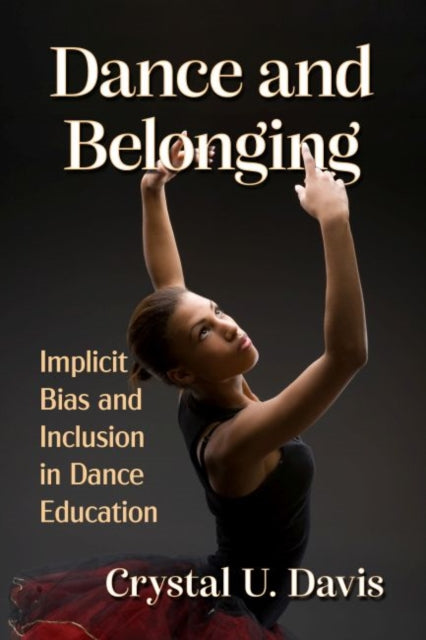
Dance and Belonging: Implicit Bias and Inclusion in Dance Education
Dance and Belonging: Implicit Bias and Inclusion in Dance Education
💎 Earn 188 Points (£1.88) on this item.
We can order this item for you. Delivery usually takes about 4 to 6 weeks.
This item is not held in our immediate stock. We will order it for you after checkout.
Estimated delivery: About 4 to 6 weeks
YOU SAVE £2.24
- Condition: Brand new
- UK Delivery times: Usually arrives within 2 - 3 working days
- UK Shipping: Fee starts at £2.39. Subject to product weight & dimension
Bulk ordering. Want 15 or more copies? Get a personalised quote and bigger discounts. Learn more about bulk orders.
Couldn't load pickup availability
- More about Dance and Belonging: Implicit Bias and Inclusion in Dance Education
The book explores how bias affects the brain, perception, and decision-making in dance and offers solutions for addressing bias in the dance classroom. It applies social psychology to dance events, communities, and teaching strategies and examines examples of bias in dance education.
Format: Paperback / softback
Length: 277 pages
Publication date: 30 November 2022
Publisher: McFarland & Co Inc
Bias has a significant impact on the brain, perception, and decision-making, and it also has a profound effect on the field of dance. This book explores how social psychology can be applied to the events, communities, and teaching strategies in dance classrooms of all sizes and age ranges, and it identifies the mechanisms that both exacerbate and disrupt the effects of biases. It examines various examples of bias in dance education, as well as the ramifications of prejudice and inequity. The book sets out the mechanisms that both exacerbate and disrupt the effects of biases, and it ultimately explores practiced solutions for addressing bias in the dance classroom. Its aim is to inspire dance students, teachers, administrators, and arts stakeholders to begin new conversations that will allow dance classrooms to become more welcoming and inclusive spaces.
Bias in Dance: Understanding the Impact on the Brain, Perception, and Decision-Making
Bias is a pervasive phenomenon that affects our daily lives, and it has a significant impact on the field of dance. This book explores how bias affects the brain, perception, and decision-making, and it identifies the mechanisms that both exacerbate and disrupt the effects of biases. It examines various examples of bias in dance education, as well as the ramifications of prejudice and inequity. The book sets out the mechanisms that both exacerbate and disrupt the effects of biases, and it ultimately explores practiced solutions for addressing bias in the dance classroom. Its aim is to inspire dance students, teachers, administrators, and arts stakeholders to begin new conversations that will allow dance classrooms to become more welcoming and inclusive spaces.
Social Psychology and Dance
Social psychology is a branch of psychology that studies the behavior of individuals in social situations. It applies social theory and research to the events, communities, and teaching strategies in dance classrooms of all sizes and age ranges. By understanding the social dynamics that influence dance, we can better understand how bias affects the brain, perception, and decision-making. Social psychology can help us to develop strategies for addressing bias in the dance classroom, and it can also help us to create more inclusive and welcoming spaces for dance students and teachers.
Implicit Biases and Power Dynamics
Implicit biases are unconscious beliefs or attitudes that we hold about certain groups of people. They can be based on a variety of factors, such as race, gender, age, sexual orientation, and disability. Implicit biases can have a significant impact on our behavior, and they can lead to discrimination and inequity. In dance education, implicit biases can manifest in a variety of ways, such as in the selection of students for classes, in the evaluation of students' performances, and in the treatment of students by teachers. By understanding implicit biases, we can work to address them and create more inclusive and welcoming spaces for dance students and teachers.
Examples of Bias in Dance Education
There are many examples of bias in dance education. For example, in some dance schools, students from minority backgrounds may be underrepresented or may face discrimination in the classroom. In some dance classes, students may be expected to conform to a particular body type or style, which can be harmful to their self-esteem and body image. In some dance competitions, judges may be biased against certain groups of dancers, which can result in unfair outcomes. By understanding these examples of bias, we can work to address them and create more inclusive and welcoming spaces for dance students and teachers.
Ramifications of Prejudice and Inequity
Prejudice and inequity can have a significant impact on dance students and teachers. Prejudice can lead to feelings of isolation and exclusion, while inequity can lead to unequal access to resources and opportunities. In dance education, prejudice and inequity can manifest in a variety of ways, such as in the selection of students for classes, in the evaluation of students' performances, and in the treatment of students by teachers. By understanding these ramifications, we can work to address them and create more inclusive and welcoming spaces for dance students and teachers.
Mechanisms that Exacerbate and Disrupt the Effects of Biases
There are several mechanisms that exacerbate and disrupt the effects of biases in dance education. One of these mechanisms is the socialization process. The socialization process involves learning the social norms and values of a particular culture or community. If the socialization process is biased, it can lead to the perpetuation of biases. Another mechanism is the power dynamics on and off the dance floor. The power dynamics on and off the dance floor can be influenced by a variety of factors, such as gender, race, and social status. If the power dynamics are biased, it can lead to the perpetuation of biases. By understanding these mechanisms, we can work to address them and create more inclusive and welcoming spaces for dance students and teachers.
Practiced Solutions for Addressing Bias in the Dance Classroom
There are several practiced solutions for addressing bias in the dance classroom. One of these solutions is to create a more diverse and inclusive dance community. This can be done by recruiting students from a variety of backgrounds and by providing opportunities for students to interact with each other. Another solution is to provide training for teachers on how to address bias. This training can include training on implicit biases, power dynamics, and strategies for creating more inclusive and welcoming spaces for dance students and teachers. By implementing these solutions, we can work to create more inclusive and welcoming spaces for dance students and teachers.
Conclusion
Bias has a significant impact on the brain, perception, and decision-making, and it also has a profound effect on the field of dance. This book explores how social psychology can be applied to the events, communities, and teaching strategies in dance classrooms of all sizes and age ranges, and it identifies the mechanisms that both exacerbate and disrupt the effects of biases. It examines various examples of bias in dance education, as well as the ramifications of prejudice and inequity. The book sets out the mechanisms that both exacerbate and disrupt the effects of biases, and it ultimately explores practiced solutions for addressing bias in the dance classroom. Its aim is to inspire dance students, teachers, administrators, and arts stakeholders to begin new conversations that will allow dance classrooms to become more welcoming and inclusive spaces.
Weight: 314g
Dimension: 150 x 224 x 15 (mm)
ISBN-13: 9781476684451
UK and International shipping information
UK and International shipping information
UK Delivery and returns information:
- Delivery within 2 - 3 days when ordering in the UK.
- Shipping fee for UK customers from £2.39. Fully tracked shipping service available.
- Returns policy: Return within 30 days of receipt for full refund.
International deliveries:
Shulph Ink now ships to Australia, Belgium, Canada, France, Germany, Ireland, Italy, India, Luxembourg Saudi Arabia, Singapore, Spain, Netherlands, New Zealand, United Arab Emirates, United States of America.
- Delivery times: within 5 - 10 days for international orders.
- Shipping fee: charges vary for overseas orders. Only tracked services are available for most international orders. Some countries have untracked shipping options.
- Customs charges: If ordering to addresses outside the United Kingdom, you may or may not incur additional customs and duties fees during local delivery.