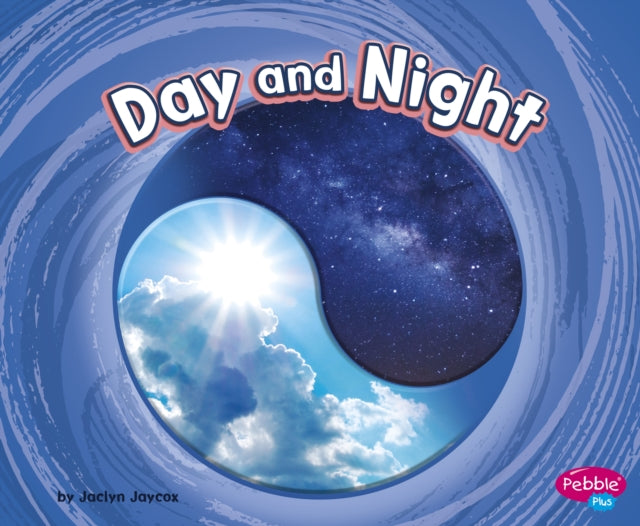
Jaclyn Jaycox
Day and Night
Day and Night
YOU SAVE £1.61
- Condition: Brand new
- UK Delivery times: Usually arrives within 2 - 3 working days
- UK Shipping: Fee starts at £3.89. Subject to product weight & dimension
Bulk ordering. Want 15 or more copies? Get a personalised quote and bigger discounts. Learn more about bulk orders.
Couldn't load pickup availability
- More about Day and Night
The sun is bright during the day, but you can't see it at night because the sun and Earth follow patterns that cause day and night.
Format: Paperback / softback
Length: 24 pages
Publication date: 28 January 2021
Publisher: Capstone Global Library Ltd
The sun, a radiant celestial object, illuminates the Earth with its warm and comforting rays during the day, casting a brilliant light that fills our surroundings with a sense of joy and vitality. However, despite its apparent brightness, the sun cannot be seen at night. This phenomenon is a result of the intricate dance between the sun and the Earth, where the two celestial bodies follow specific patterns that determine the occurrence of day and night.
The sun, a massive celestial sphere composed primarily of hydrogen and helium, revolves around the center of the solar system, exerting a gravitational force that holds the planets in orbit. The Earth, being one of the planets in the solar system, also revolves around the sun, completing one orbit every 365 days.
One of the key factors that contribute to the occurrence of day and night is the tilt of the Earth's axis. The Earth's axis is an imaginary line that runs through the center of the planet from north to south. The tilt of the axis determines the angle at which the Earth's surface is oriented towards the sun.
During the summer months in the Northern Hemisphere, the Earth's axis is tilted towards the sun, resulting in a longer day. The sun rises higher in the sky, and its rays reach a greater distance across the Earth's surface, resulting in more hours of sunlight. On the other hand, during the winter months in the Northern Hemisphere, the Earth's axis is tilted away from the sun, resulting in a shorter day. The sun rises lower in the sky, and its rays reach a smaller distance across the Earth's surface, resulting in fewer hours of sunlight.
In addition to the tilt of the Earth's axis, the rotation of the Earth also plays a crucial role in determining the occurrence of day and night. The Earth rotates on its axis from west to east, taking approximately 24 hours to complete one rotation. During the day, the Earth's eastern side is facing the sun, while the western side is in shadow. As the Earth rotates, the sun gradually moves across the sky, resulting in the changing of the seasons and the daily cycle of sunrise and sunset.
Another factor that contributes to the occurrence of day and night is the movement of the Earth around the sun. The Earth travels around the sun in an elliptical orbit, with its closest point to the sun being called the perihelion and its farthest point being called the aphelion. The perihelion occurs during the January and July months, while the aphelion occurs during the July and January months.
The movement of the Earth around the sun affects the amount of sunlight that reaches the Earth's surface. During the perihelion, the Earth is closer to the sun, resulting in more sunlight being absorbed by the Earth's surface. This increased sunlight leads to higher temperatures and longer days during the summer months in the Northern Hemisphere. On the other hand, during the aphelion, the Earth is farther from the sun, resulting in less sunlight being absorbed by the Earth's surface. This decreased sunlight leads to lower temperatures and shorter days during the winter months in the Northern Hemisphere.
In conclusion, the sun shines bright during the day, providing us with warmth, light, and energy. However, the sun cannot be seen at night due to the intricate dance between the sun and the Earth. The tilt of the Earth's axis, the rotation of the Earth, and the movement of the Earth around the sun all contribute to the occurrence of day and night. By understanding these patterns, we can better appreciate the beauty and complexity of our solar system and the natural cycles that govern our world.
Weight: 72g
Dimension: 175 x 202 x 4 (mm)
ISBN-13: 9781474795258
UK and International shipping information
UK and International shipping information
We deliver throughout the United Kingdom and to 128 countries and territories worldwide, including the United States, Australia, Canada, Germany, Spain and France.