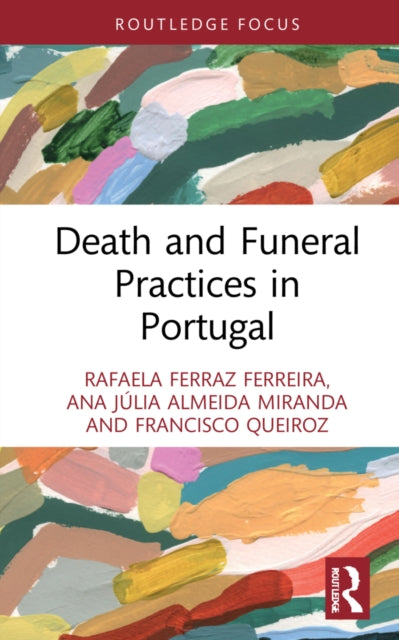
Rafaela Ferraz Ferreira,Ana Julia Almeida Miranda,Francisco Queiroz
Death and Funeral Practices in Portugal
Death and Funeral Practices in Portugal
💎 Earn 259 Points (£2.59) on this item.
We can order this item for you. Delivery usually takes about 4 to 6 weeks.
This item is not held in our immediate stock. We will order it for you after checkout.
Estimated delivery: About 4 to 6 weeks
YOU SAVE £3.08
- Condition: Brand new
- UK Delivery times: Usually arrives within 2 - 3 working days
- UK Shipping: Fee starts at £2.39. Subject to product weight & dimension
Bulk ordering. Want 15 or more copies? Get a personalised quote and bigger discounts. Learn more about bulk orders.
Couldn't load pickup availability
- More about Death and Funeral Practices in Portugal
Academic studies on death and cemeteries in Portugal are relatively recent, with a focus on history and art. This book is the first to provide a comprehensive look at the evolution and current status of Portuguese funerary practice, exploring the historical development, legal framework, and management of cemeteries, crematoria, and other death spaces. It also interprets the predominance of Catholic funerals, examines the recent history of cremation, and contextualizes the practices of exhumation and grave re-use.
Format: Hardback
Length: 146 pages
Publication date: 01 April 2022
Publisher: Taylor & Francis Ltd
Academic studies on death and cemeteries in Portugal are relatively recent, with a predominant historical and artistic perspective. Studies on the practical aspects of managing the dead and their spaces are even more recent, lacking a cohesive body of work. Combining these approaches, "Death and Funeral Practices in Portugal" is the first comprehensive book to explore the evolution and current status of Portuguese funerary practice. By examining the country's historical development, analyzing the contemporary legal framework, and systematizing the way Portugal manages its cemeteries, crematoria, and other death spaces, the book aims to provide an essential reference for researchers interested in Portuguese funeral practice.
The book delves into various themes, including the prevalence of Catholic funerals, the recent history of cremation, and the contextualization of practices such as exhumation and grave re-use, which are integral to the functioning of a Portuguese cemetery. This work is specifically designed for a non-Portuguese audience, appealing to researchers and scholars while also being accessible to students and non-specialist readers with an interest in the subject.
The study of death and cemeteries in Portugal has undergone a significant transformation in recent years. While historical and artistic perspectives have traditionally dominated the field, there has been a growing interest in exploring the practicalities of managing the dead and their spaces. This shift has led to the emergence of studies on the logistics and challenges associated with funeral practices, cremation, and cemetery management.
Despite these advancements, the field of death and funeral practices in Portugal still lacks a cohesive body of work. This is partly due to the relatively recent nature of these studies and the need for more comprehensive research. However, there are signs of progress, with researchers and scholars increasingly collaborating to shed light on the intricacies of Portuguese funerary practices.
One notable aspect of Portuguese funerary practices is the prevalence of Catholic funerals. Catholicism has played a significant role in Portuguese culture and society for centuries, and this influence is evident in the funeral rituals and traditions observed in the country. Catholic funerals typically involve elaborate ceremonies, prayers, and rituals, often conducted by priests or other religious officials.
In recent years, there has been a growing trend towards cremation in Portugal. While cremation was once considered taboo in many parts of the world, it has become increasingly popular in Portugal due to various factors, including cost-effectiveness, environmental concerns, and personal preferences. Cremation rates in Portugal have been steadily increasing, with approximately 50% of deaths now being cremated.
Cremation has brought about its own set of challenges and controversies. While some argue that cremation is a more environmentally friendly and cost-effective way to dispose of the dead, others argue that it undermines traditional funeral practices and can be seen as a form of secularization. Cremation facilities in Portugal have been criticized for their lack of regulation and oversight, with concerns about the quality of the cremation process and the potential for human error.
Despite these challenges, cremation has become an increasingly popular choice for many Portuguese families. Cremation facilities in the country have grown in number and sophistication, offering a range of services and options to families. Cremation societies
have also become more integrated into funeral practices, with some funeral homes offering cremation as a standard option alongside traditional burial services.
In addition to Catholic funerals and cremation, there are other practices and traditions associated with death and funeral practices in Portugal. One such practice is the exhumation of bodies from cemeteries for various reasons, including family disputes, historical research, or archaeological purposes. Exhumation is a complex and controversial process that requires careful consideration and respect for the deceased and their families.
Grave re-use is another practice that is integral to the functioning of a Portuguese cemetery. In many cemeteries, graves are reused after a certain period of time, either by re-interring the remains of a previous occupant or by allowing new burials to take place. This practice is often seen as a way to conserve space and reduce the demand for new cemetery construction.
However, grave re-use has also raised concerns about the preservation of cultural heritage and the respect for the deceased. Some argue that re-using graves can undermine the integrity of the cemetery and disrupt the spiritual and emotional connections between the deceased and their families. Others argue that grave re-use can be a sustainable and environmentally friendly way to manage cemetery space.
In conclusion, academic studies on death and cemeteries in Portugal are relatively recent, with a predominant historical and artistic perspective. Studies on the practical aspects of managing the dead and their spaces are even more recent, lacking a cohesive body of work. Combining these approaches, "Death and Funeral Practices in Portugal" is the first comprehensive book to explore the evolution and current status of Portuguese funerary practice. By examining the country's historical development, analyzing the contemporary legal framework, and systematizing the way Portugal manages its cemeteries, crematoria, and other death spaces, the book aims to provide an essential reference for researchers interested in Portuguese funeral practice.
The book delves into various themes, including the prevalence of Catholic funerals, the recent history of cremation, and the contextualization of practices such as exhumation and grave re-use, which are integral to the functioning of a Portuguese cemetery. This work is specifically designed for a non-Portuguese audience, appealing to researchers and scholars while also being accessible to students and non-specialist readers with an interest in the subject.
The study of death and cemeteries in Portugal has undergone a significant transformation in recent years. While historical and artistic perspectives have traditionally dominated the field, there has been a growing interest in exploring the practicalities of managing the dead and their spaces. This shift has led to the emergence of studies on the logistics and challenges associated with funeral practices, cremation, and cemetery management.
Despite these advancements, the field of death and funeral practices in Portugal still lacks a cohesive body of work. This is partly due to the relatively recent nature of these studies and the need for more comprehensive research. However, there are signs of progress, with researchers and scholars increasingly collaborating to shed light on the intricacies of Portuguese funerary practices.
One notable aspect of Portuguese funerary practices is the prevalence of Catholic funerals. Catholicism has played a significant role in Portuguese culture and society for centuries, and this influence is evident in the funeral rituals and traditions observed in the country. Catholic funerals typically involve elaborate ceremonies, prayers, and rituals, often conducted by priests or other religious officials.
In recent years, there has been a growing trend towards cremation in Portugal. While cremation was once considered taboo in many parts of the world, it has become increasingly popular in Portugal due to various factors, including cost-effectiveness, environmental concerns, and personal preferences. Cremation rates in Portugal have been steadily increasing, with approximately 50% of deaths now being cremated.
Cremation has brought about its own set of challenges and controversies. While some argue that cremation is a more environmentally friendly and cost-effective way to dispose of the dead, others argue that it undermines traditional funeral practices and can be seen as a form of secularization. Cremation facilities in Portugal have been criticized for their lack of regulation and oversight, with concerns about the quality of the cremation process and the potential for human error.
Despite these challenges, cremation has become an increasingly popular choice for many Portuguese families. Cremation facilities in the country have grown in number and sophistication, offering a range of services and options to families. Cremation facilities have also become more integrated into funeral practices, with some funeral homes offering cremation as a standard option alongside traditional burial services.
In addition to Catholic funerals and cremation, there are other practices and traditions associated with death and funeral practices in Portugal. One such practice is the exhumation of bodies from cemeteries for various reasons, including family disputes, historical research, or archaeological purposes. Exhumation is a complex and controversial process that requires careful consideration and respect for the deceased and their families.
Grave re-use is another practice that is integral to the functioning of a Portuguese cemetery. In many cemeteries, graves are reused after a certain period of time, either by re-interring the remains of a previous occupant or by allowing new burials to take place. This practice is often seen as a way to conserve space and reduce the demand for new cemetery construction.
However, grave re-use has also raised concerns about the preservation of cultural heritage and the respect for the deceased. Some argue that re-using graves can undermine the integrity of the cemetery and disrupt the spiritual and emotional connections between the deceased and their families. Others argue that grave re-use can be a sustainable and environmentally friendly way to manage cemetery space.
In conclusion, academic studies on death and cemeteries in Portugal are relatively recent, with a predominant historical and artistic perspective. Studies on the practical aspects of managing the dead and their spaces are even more recent, lacking a cohesive body of work. Combining these approaches, "Death and Funeral Practices in Portugal" is the first comprehensive book to explore the evolution and current status of Portuguese funerary practice. By examining the country's historical development, analyzing the contemporary legal framework, and systematizing the way Portugal manages its cemeteries, crematoria, and other death spaces, the book aims to provide an essential reference for researchers interested in Portuguese funeral practice.
The book delves into various themes, including the prevalence of Catholic funerals, the recent history of cremation, and the contextualization of practices such as exhumation and grave re-use, which are integral to the functioning of a Portuguese cemetery. This work is specifically designed for a non-Portuguese audience, appealing to researchers and scholars while also being accessible to students and non-specialist readers with an interest in the subject.
Weight: 453g
Dimension: 216 x 138 (mm)
ISBN-13: 9780367721558
This item can be found in:
UK and International shipping information
UK and International shipping information
UK Delivery and returns information:
- Delivery within 2 - 3 days when ordering in the UK.
- Shipping fee for UK customers from £2.39. Fully tracked shipping service available.
- Returns policy: Return within 30 days of receipt for full refund.
International deliveries:
Shulph Ink now ships to Australia, Belgium, Canada, France, Germany, Ireland, Italy, India, Luxembourg Saudi Arabia, Singapore, Spain, Netherlands, New Zealand, United Arab Emirates, United States of America.
- Delivery times: within 5 - 10 days for international orders.
- Shipping fee: charges vary for overseas orders. Only tracked services are available for most international orders. Some countries have untracked shipping options.
- Customs charges: If ordering to addresses outside the United Kingdom, you may or may not incur additional customs and duties fees during local delivery.