Shulph Ink
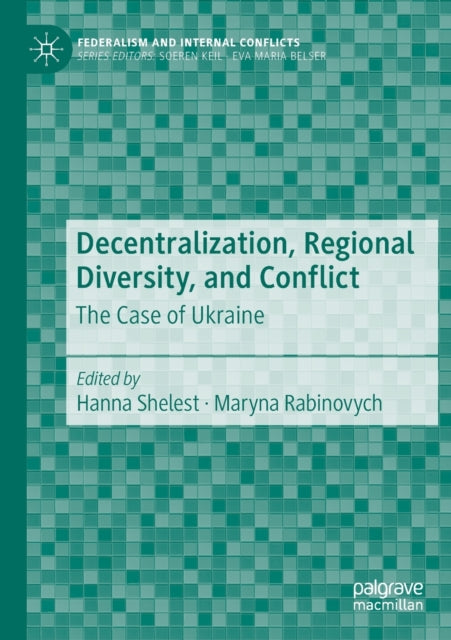
Decentralization, Regional Diversity, and Conflict: The Case of Ukraine
Decentralization, Regional Diversity, and Conflict: The Case of Ukraine
💎 Earn 536 Points (£5.36) on this item.
We can order this item for you. Delivery usually takes about 4 to 6 weeks.
This item is not held in our immediate stock. We will order it for you after checkout.
Estimated delivery: About 4 to 6 weeks
YOU SAVE £22.62
- Condition: Brand new
- UK Delivery times: Usually arrives within 2 - 3 working days
- UK Shipping: Fee starts at £2.39. Subject to product weight & dimension
Bulk ordering. Want 15 or more copies? Get a personalised quote and bigger discounts. Learn more about bulk orders.
Couldn't load pickup availability
- More about Decentralization, Regional Diversity, and Conflict: The Case of Ukraine
The edited volume explores the links between the Ukraine crisis, regional diversity, and decentralization reform, providing insights into the historical constitution of regional diversity, the legal qualification of the conflict, and the role of decentralization in promoting conflict resolution and modernization. It also highlights the securitization of regional diversity issues and territorial self-government arrangements in terms of Russia's support for self-proclaimed Donetsk and Luhansk Peoples Republics.
Format: Paperback / softback
Length: 373 pages
Publication date: 30 July 2021
Publisher: Springer Nature Switzerland AG
This edited volume delves into the intricate connections between the ongoing crisis in and around Ukraine, regional diversity, and the reform of decentralization. It offers comprehensive insights into the historical roots of regional diversity and the evolution of center-periphery dynamics in Ukraine, the legal classification of the conflict in Eastern Ukraine, and the role of decentralization reform in fostering conflict resolution, modernization, democratization, and European integration of Ukraine. A significant focus is placed on the securitization of both regional diversity issues and territorial self-government arrangements in light of Russia's support for self-proclaimed Donetsk and Luhansk Peoples Republics. The volume adeptly captures the multifaceted nature of contemporary "hybrid" conflicts, encompassing both internal and external dimensions, and the hybridization and securitization of territorial self-governance solutions. As such, it makes a substantial contribution to the ongoing debate on territorial self-government and conflict resolution.
Introduction:
The ongoing crisis in and around Ukraine has profound implications for regional diversity and decentralization reform. Ukraine is a country with a rich cultural and linguistic heritage, characterized by a diverse range of regions and communities. However, the conflict in Eastern Ukraine has highlighted the challenges of managing regional diversity and promoting decentralization in a country with a centralized government.
Regional Diversity and Decentralization Reform:
Regional diversity is a fundamental aspect of Ukrainian society, with each region having its own unique cultural, economic, and social characteristics. Decentralization reform is aimed at devolving power and resources from the central government to local governments, allowing them to better address the needs and priorities of their communities.
Historical Constitution of Regional Diversity:
The historical constitution of regional diversity in Ukraine has been shaped by a complex interplay of factors, including historical events, political geography, and economic development. Ukraine has a long history of conflict and division, with different regions often vying for power and influence. This has led to the development of distinct regional identities and cultures, which have contributed to the country's rich cultural heritage.
Evolution of Center-Periphery Relationships:
The evolution of center-periphery relationships in Ukraine has been marked by tensions and conflicts. The central government has historically exerted significant control over regional affairs, while the periphery regions have often felt marginalized and underrepresented. This has led to calls for decentralization reform to promote greater regional autonomy and self-governance.
Legal Qualification of the Conflict in Eastern Ukraine:
The conflict in Eastern Ukraine has been legally qualified as a conflict between the Ukrainian government and separatist groups supported by Russia. The conflict has resulted in the deaths of thousands of people and the displacement of millions. The legal qualification of the conflict has significant implications for international law and the resolution of the conflict.
Role of Decentralization Reform in Promoting Conflict Resolution:
Decentralization reform has the potential to promote conflict resolution by providing local governments with greater autonomy and resources to address the underlying causes of conflict. By empowering local communities and promoting dialogue and cooperation, decentralization reform can help to reduce tensions and promote peace.
Modernization, Democratization, and European Integration:
Decentralization reform is also closely linked to modernization, democratization, and European integration of Ukraine. By devolving power and resources to local governments, decentralization reform can help to improve the quality of public services, promote economic development, and strengthen the country's democratic institutions.
Securitization of Regional Diversity Issues and Territorial Self-Government Arrangements:
The securitization of regional diversity issues and territorial self-government arrangements is a significant concern in the context of the ongoing crisis in Ukraine. Russia's support for separatist groups in Eastern Ukraine has led to the emergence of hybrid conflicts, which involve both internal and external aspects. The securitization of regional diversity issues and territorial self-government arrangements has the potential to exacerbate tensions and lead to further conflict.
Conclusion:
The ongoing crisis in and around Ukraine highlights the importance of managing regional diversity and promoting decentralization reform. By understanding the historical constitution of regional diversity, the evolution of center-periphery relationships, the legal qualification of the conflict in Eastern Ukraine, and the role of decentralization reform in promoting conflict resolution, modernization, democratization, and European integration, we can develop effective strategies to address the challenges posed by the crisis.
Weight: 511g
Dimension: 210 x 148 (mm)
ISBN-13: 9783030417673
Edition number: 1st ed. 2020
This item can be found in:
UK and International shipping information
UK and International shipping information
UK Delivery and returns information:
- Delivery within 2 - 3 days when ordering in the UK.
- Shipping fee for UK customers from £2.39. Fully tracked shipping service available.
- Returns policy: Return within 30 days of receipt for full refund.
International deliveries:
Shulph Ink now ships to Australia, Belgium, Canada, France, Germany, Ireland, Italy, India, Luxembourg Saudi Arabia, Singapore, Spain, Netherlands, New Zealand, United Arab Emirates, United States of America.
- Delivery times: within 5 - 10 days for international orders.
- Shipping fee: charges vary for overseas orders. Only tracked services are available for most international orders. Some countries have untracked shipping options.
- Customs charges: If ordering to addresses outside the United Kingdom, you may or may not incur additional customs and duties fees during local delivery.