Shulph Ink
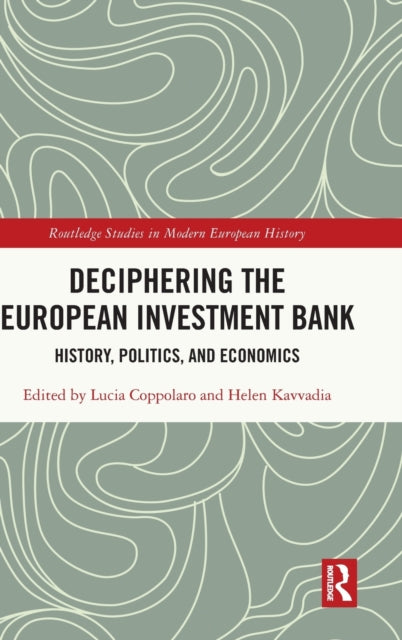
Deciphering the European Investment Bank: History, Politics, and Economics
Deciphering the European Investment Bank: History, Politics, and Economics
💎 Earn 811 Points (£8.11) on this item.
We can order this item for you. Delivery usually takes about 4 to 6 weeks.
This item is not held in our immediate stock. We will order it for you after checkout.
Estimated delivery: About 4 to 6 weeks
YOU SAVE £9.63
- Condition: Brand new
- UK Delivery times: Usually arrives within 2 - 3 working days
- UK Shipping: Fee starts at £2.39. Subject to product weight & dimension
Bulk ordering. Want 15 or more copies? Get a personalised quote and bigger discounts. Learn more about bulk orders.
Couldn't load pickup availability
- More about Deciphering the European Investment Bank: History, Politics, and Economics
Deciphering the European Investment Bank: History, Politics, and Economics is a comprehensive edited book that provides an in-depth analysis of the European Investment Bank (EIB), the European Union's financial institution. It explores the bank's origins, evolution, mandate, governance, structures, policy activity, and performance, written by acknowledged experts from various disciplines. The book is a timely initiative for understanding the EIB's role in addressing global economic challenges such as the economic and financial crisis, climate change, and COVID-19 pandemic. It is accessible to undergraduates in economics, history, and international political economy and will be a valuable resource for academics, policy makers, bankers, and practitioners.
Format: Hardback
Length: 304 pages
Publication date: 06 June 2022
Publisher: Taylor & Francis Ltd
The European Investment Bank (EIB) is a pivotal financial institution within the European Union (EU) that plays a significant role in global finance. Established in 1958, the EIB has undergone a remarkable evolution without garnering much attention in the mainstream media. This edited book, comprising 14 chapters authored by esteemed experts from diverse disciplines, offers a comprehensive analysis of the bank's origins, mandate, governance, structures, policy activities, and performance. By seamlessly integrating history, economics, law, and political science, the chapters provide a multidisciplinary perspective on the EIB, capturing its complexity.
The book is particularly timely, as the EIB's role has grown in importance in addressing the recent global economic challenges, such as the economic and financial crisis, climate change, and the COVID-19 pandemic. The chapters are written in a manner accessible to undergraduates studying economics, history, and international political economy, making it an invaluable resource for academics, policy makers, bankers, and practitioners interested in regional development banks and their impact on the global economy.
The EIB's history dates back to the aftermath of World War II, when the need for reconstruction and economic development in Europe was paramount. Recognizing the importance of financing infrastructure projects, the European Coal and Steel Community (ECSC) established the European Investment Bank in 1958. Over the years, the EIB has expanded its mandate and activities to encompass a wide range of sectors, including transportation, energy, and innovation.
One of the key aspects of the EIB's governance is its independence from EU member states. While the bank is headquartered in Frankfurt, Germany, and is funded by the contributions of EU members, it operates autonomously and is not subject to the direct control of the EU's executive branch. This independence ensures that the EIB can make decisions based on its own strategic objectives and financial needs, without political interference.
The EIB's organizational structure is designed to facilitate its lending activities. The bank operates through a network of regional branches and subsidiaries, which are responsible for identifying and evaluating investment opportunities in their respective regions. These branches work closely with local governments, businesses, and other stakeholders to identify projects that align with the EIB's mission of promoting economic growth and job creation.
In terms of its policy activities, the EIB focuses on supporting projects that promote sustainable development, climate change mitigation, and regional integration. The bank has a strong commitment to financing projects that create social and environmental benefits, while also contributing to economic growth and job creation. For example, the EIB has provided financing for renewable energy projects, energy efficiency upgrades, and infrastructure development in developing countries.
The EIB's performance has been impressive over the years. The bank has a track record of delivering high-quality projects that have had a significant impact on the economies of its partner countries. According to the bank's own statistics, its lending activities have generated over €1 trillion in economic activity, supported over 3 million jobs, and contributed to the reduction of carbon emissions.
Despite its successes, the EIB has faced challenges in recent years. One of the main challenges is the increasing competition from other international financial institutions, such as the World Bank and the Asian Development Bank. These institutions have larger lending portfolios and more resources, which can make it difficult for the EIB to compete on a global scale.
Another challenge is the changing nature of the global economy. The COVID-19 pandemic has highlighted the importance of resilience and adaptability in the financial sector, and the EIB has been working to adapt its lending practices and policies to better support businesses and governments in navigating these challenging times.
In conclusion, the European Investment Bank is a crucial financial institution within the EU that plays a vital role in global finance. Established in 1958, the EIB has undergone a remarkable evolution without garnering much attention in the mainstream media. This edited book offers a comprehensive analysis of the bank's origins, mandate, governance, structures, policy activities, and performance. By seamlessly integrating history, economics, law, and political science, the chapters provide a multidisciplinary perspective on the EIB, capturing its complexity.
The book is particularly timely, as the EIB's role has grown in importance in addressing the recent global economic challenges, such as the economic and financial crisis, climate change, and the COVID-19 pandemic. The chapters are written in a manner accessible to undergraduates studying economics, history, and international political economy, making it an invaluable resource for academics, policy makers, bankers, and practitioners interested in regional development banks and their impact on the global economy.
As the EIB continues to evolve and adapt to the changing global landscape, it will remain a key player in promoting economic growth, job creation, and sustainable development. By leveraging its expertise and resources, the EIB can continue to make a significant impact on the world stage
The European Investment Bank (EIB) is a pivotal financial institution.
The European Union (EU) has a significant financial institution that plays a crucial role in global finance. The EIB was established in 1958, and it has undergone remarkable evolution without attracting much attention in the mainstream media. This edited book, comprising 14 chapters authored by esteemed experts from diverse disciplines, offers a comprehensive analysis of the bank's origins, mandate, governance, structures, policy activities, and performance. By seamlessly integrating history, economics, law, and political science, the chapters provide a multidisciplinary perspective on the EIB, capturing its complexity.
The book is particularly timely, as the EIB's role has grown in importance in addressing the recent global economic challenges, such as the economic and financial crisis, climate change, and the COVID-19 pandemic. The chapters are written in a manner accessible to undergraduates studying economics, history, and international political economy, making it an invaluable resource for academics, policy makers, bankers, and practitioners interested in regional development banks and their impact on the global economy.
The EIB's history dates back to the aftermath of World War II, when the need for reconstruction and economic development in Europe was paramount. Recognizing the importance of financing infrastructure projects, the European Coal and Steel Community (ECSC) established the European Investment Bank in 1958. Over the years, the EIB has expanded its mandate and activities to encompass a wide range of sectors, including transportation, energy, and innovation.
One of the key aspects of the EIB's governance is its independence from EU member states. While the bank is headquartered in Frankfurt, Germany, and is funded by the contributions of EU members, it operates autonomously and is not subject to the direct control of the EU's executive branch. This independence ensures that the EIB can make decisions based on its own strategic objectives and financial needs, without political interference.
The EIB's organizational structure is designed to facilitate its lending activities. The bank operates through a network of regional branches and subsidiaries, which are responsible for identifying and evaluating investment opportunities in their respective regions. These branches work closely with local governments, businesses, and other stakeholders to identify projects that align with the EIB's mission of promoting economic growth and job creation.
In terms of its policy activities, the EIB focuses on supporting projects that promote sustainable development, climate change mitigation, and regional integration. The bank has a strong commitment to financing projects that create social and environmental benefits, while also contributing to economic growth and job creation. For example, the EIB has provided financing for renewable energy projects, energy efficiency upgrades, and infrastructure development in developing countries.
The EIB's performance has been impressive over the years. The bank has a track record of delivering high-quality projects that have had a significant impact on the economies of its partner countries. According to the bank's own statistics, its lending activities have generated over €1 trillion in economic activity, supported over 3 million jobs, and contributed to the reduction of carbon emissions.
Despite its successes, the EIB has faced challenges in recent years. One of the main challenges is the increasing competition from other international financial institutions, such as the World Bank and the Asian Development Bank. These institutions have larger lending portfolios and more resources, which can make it difficult for the EIB to compete on a global scale.
Another challenge is the changing nature of the global economy. The COVID-19 pandemic has highlighted the importance of resilience and adaptability in the financial sector, and the EIB has been working to adapt its lending practices and policies to better support businesses and governments in navigating these challenging times.
In conclusion, the European Investment Bank is a crucial financial institution within the EU that plays a vital role in global finance. Established in 1958, the EIB has undergone a remarkable evolution without attracting much attention in the mainstream media. This edited book offers a comprehensive analysis of the bank's origins, mandate, governance, structures, policy activities, and performance. By seamlessly integrating history, economics, law, and political science, the chapters provide a multidisciplinary perspective on the EIB, capturing its complexity.
The book is particularly timely, as the EIB's role has grown in importance in addressing the recent global economic challenges, such as the economic and financial crisis, climate change, and the COVID-19 pandemic. The chapters are written in a manner accessible to undergraduates studying economics, history, and international political economy, making it an invaluable resource for academics, policy makers, bankers, and practitioners interested in regional development banks and their impact on the global economy.
As the EIB continues to evolve and adapt to the changing global landscape, it will remain a key player in promoting economic growth, job creation, and sustainable development. By leveraging its expertise and resources, the EIB can continue to make a significant impact on the world.
Weight: 760g
Dimension: 234 x 156 (mm)
ISBN-13: 9781032138763
UK and International shipping information
UK and International shipping information
UK Delivery and returns information:
- Delivery within 2 - 3 days when ordering in the UK.
- Shipping fee for UK customers from £2.39. Fully tracked shipping service available.
- Returns policy: Return within 30 days of receipt for full refund.
International deliveries:
Shulph Ink now ships to Australia, Belgium, Canada, France, Germany, Ireland, Italy, India, Luxembourg Saudi Arabia, Singapore, Spain, Netherlands, New Zealand, United Arab Emirates, United States of America.
- Delivery times: within 5 - 10 days for international orders.
- Shipping fee: charges vary for overseas orders. Only tracked services are available for most international orders. Some countries have untracked shipping options.
- Customs charges: If ordering to addresses outside the United Kingdom, you may or may not incur additional customs and duties fees during local delivery.