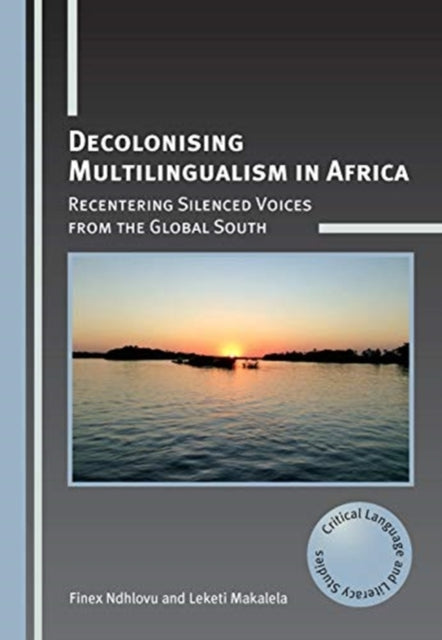
Finex Ndhlovu,Leketi Makalela
Decolonising Multilingualism in Africa: Recentering Silenced Voices from the Global South
Decolonising Multilingualism in Africa: Recentering Silenced Voices from the Global South
💎 Earn 115 Points (£1.15) on this item.
YOU SAVE £4.87
- Condition: Brand new
- UK Delivery times: Usually arrives within 2 - 3 working days
- UK Shipping: Fee starts at £2.39. Subject to product weight & dimension
Bulk ordering. Want 15 or more copies? Get a personalised quote and bigger discounts. Learn more about bulk orders.
Couldn't load pickup availability
- More about Decolonising Multilingualism in Africa: Recentering Silenced Voices from the Global South
This book challenges the colonial matrices of power hidden within mainstream conceptions of multilingualism and introduces the notion of coloniality of language to advance scholarly conversations on decolonial epistemology. It seeks to develop a socially realistic notion of multilingualism that takes into account the voices of marginalized and ignored African communities of practice.
\n Format: Paperback / softback
\n Length: 208 pages
\n Publication date: 16 July 2021
\n Publisher: Multilingual Matters
\n
This book delves into the complexities of African multilingualism, challenging the prevailing colonial frameworks that underpin mainstream conceptions of multilingualism. It uncovers the enduring power structures embedded within these conceptions, which have been propagated in the Global North and subsequently exported to the Global South under the guise of colonial modernity and claims of universal epistemic relevance. By introducing the concept of coloniality of language, the book offers fresh perspectives and methodologies that will enrich scholarly discussions on decolonial epistemology. The authors embark on a groundbreaking exploration, mapping out what a socially inclusive and equitable notion of multilingualism would entail, considering the voices of marginalized and overlooked African communities of practice both on the African continent and in the diasporas.
The book's central argument revolves around the notion that African multilingualism cannot be fully understood or appreciated without considering the historical and political contexts in which it has developed. The authors argue that the colonial legacies of language and power continue to shape the ways in which languages are used and valued in post-colonial societies. They highlight the ways in which dominant languages and ideologies have marginalized and excluded minority languages, leading to the loss of cultural heritage and identity.
To address these issues, the book proposes a decolonial approach to multilingualism. It advocates for a recognition of the diversity and richness of African languages and cultures, and for the promotion of multilingual education that values and respects the linguistic and cultural heritage of all communities. The authors argue that a socially realistic notion of multilingualism must take into account the needs and perspectives of marginalized and ignored African communities of practice, including those who speak indigenous languages, dialects, and creoles.
The book also explores the role of technology in shaping African multilingualism. It recognizes the potential of digital technologies to facilitate the preservation and promotion of minority languages, as well as to promote intercultural communication and understanding. However, the authors also caution against the potential risks associated with the digital divide, which can further marginalize those who lack access to technology.
In conclusion, this book is a groundbreaking contribution to the field of language education and research. It challenges the colonial matrices of power that underpin mainstream conceptions of multilingualism and offers a decolonial approach to multilingualism that promotes social inclusion, equity, and cultural heritage. By considering the voices of marginalized and ignored African communities of practice, the book provides a roadmap for building a more inclusive and diverse global society.
\n Weight: 282g\n
Dimension: 148 x 211 x 15 (mm)\n
ISBN-13: 9781788923347\n \n
UK and International shipping information
UK and International shipping information
UK Delivery and returns information:
- Delivery within 2 - 3 days when ordering in the UK.
- Shipping fee for UK customers from £2.39. Fully tracked shipping service available.
- Returns policy: Return within 30 days of receipt for full refund.
International deliveries:
Shulph Ink now ships to Australia, Belgium, Canada, France, Germany, Ireland, Italy, India, Luxembourg Saudi Arabia, Singapore, Spain, Netherlands, New Zealand, United Arab Emirates, United States of America.
- Delivery times: within 5 - 10 days for international orders.
- Shipping fee: charges vary for overseas orders. Only tracked services are available for most international orders. Some countries have untracked shipping options.
- Customs charges: If ordering to addresses outside the United Kingdom, you may or may not incur additional customs and duties fees during local delivery.