Matthew Heaton
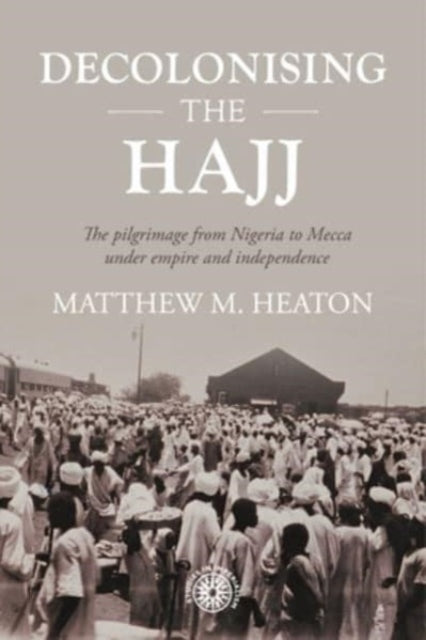
Decolonising the Hajj: The Pilgrimage from Nigeria to Mecca Under Empire and Independence
Decolonising the Hajj: The Pilgrimage from Nigeria to Mecca Under Empire and Independence
💎 Earn 376 Points (£3.76) on this item.
We can order this item for you. Delivery usually takes about 4 to 6 weeks.
This item is not held in our immediate stock. We will order it for you after checkout.
Estimated delivery: About 4 to 6 weeks
YOU SAVE £9.77
- Condition: Brand new
- UK Delivery times: Usually arrives within 2 - 3 working days
- UK Shipping: Fee starts at £2.39. Subject to product weight & dimension
Bulk ordering. Want 15 or more copies? Get a personalised quote and bigger discounts. Learn more about bulk orders.
Couldn't load pickup availability
- More about Decolonising the Hajj: The Pilgrimage from Nigeria to Mecca Under Empire and Independence
The Hajj in Nigeria underwent a significant transformation in the twentieth century, becoming more closely intertwined with Nigerian politics and governance as the country transitioned from empire to independence. State governments became heavily involved in its organization and management, resulting in a shorter, safer, and more accessible trip characterized by round-trip plane rides.
Format: Hardback
Length: 248 pages
Publication date: 23 May 2023
Publisher: Manchester University Press
For centuries, Muslims from the region that is now Nigeria have embarked on the sacred pilgrimage known as the Hajj. However, the process of completing this pilgrimage underwent a significant transformation in the twentieth century, as state governments became deeply involved in its organization and management. During British colonial rule, a minimalist approach to pilgrimage control was adopted, which facilitated the journeys of countless overland pilgrims. This era saw the Hajj as a transformative experience, undertaken slowly and incrementally over years.
However, the winds of decolonization brought about new political contexts, with nationalist politicians taking a more proactive approach to pilgrimage management for both domestic and international reasons. The Hajj, which had once been a profound journey of self-discovery and spiritual renewal, became a shorter, safer, and more convenient trip characterized by round-trip plane rides. In exploring the transformation of the Nigerian Hajj, this book sheds light on how the pilgrimage became increasingly intertwined with Nigerian politics and governance as the country transitioned from empire to independence.
The involvement of state governments in the organization and management of the Hajj has had far-reaching consequences. It has allowed for greater efficiency and coordination in the logistics and transportation of pilgrims, ensuring a smoother and safer journey. State governments have also implemented measures to promote inclusivity and diversity, ensuring that all Muslims, regardless of their socioeconomic status, have the opportunity to participate in the pilgrimage.
Furthermore, the Nigerian Hajj has become a platform for national pride and identity. Pilgrims from all over Nigeria come together to celebrate their shared religious heritage and to demonstrate their commitment to the country's development. The pilgrimage has also become a source of political and economic empowerment for many Nigerian Muslims, as they use their experiences and connections to secure opportunities for themselves and their communities.
However, the transformation of the Nigerian Hajj has also raised concerns and criticisms. Some argue that the increased commercialization and commodification of the pilgrimage has diminished its spiritual significance and moral integrity. Others have raised concerns about the impact of mass tourism on the environment and local communities, particularly in terms of overcrowding, waste management, and cultural clashes.
To address these challenges, there have been efforts to promote sustainable and responsible tourism practices in the region. State governments have implemented regulations to control the number of pilgrims and to ensure that the pilgrimage is conducted in an environmentally friendly and respectful manner. There have also been initiatives to promote cultural exchange and understanding between pilgrims and local communities, to foster a sense of harmony and mutual respect.
In conclusion, the transformation of the Nigerian Hajj has been a complex and multifaceted process. It has brought about both positive and negative consequences, but it has also demonstrated the resilience and adaptability of the Muslim community in Nigeria. As the country continues to evolve and develop, the Hajj will likely continue to play an important role in shaping its political, social, and cultural landscape.
Weight: 520g
Dimension: 164 x 241 x 21 (mm)
ISBN-13: 9781526162601
UK and International shipping information
UK and International shipping information
UK Delivery and returns information:
- Delivery within 2 - 3 days when ordering in the UK.
- Shipping fee for UK customers from £2.39. Fully tracked shipping service available.
- Returns policy: Return within 30 days of receipt for full refund.
International deliveries:
Shulph Ink now ships to Australia, Belgium, Canada, France, Germany, Ireland, Italy, India, Luxembourg Saudi Arabia, Singapore, Spain, Netherlands, New Zealand, United Arab Emirates, United States of America.
- Delivery times: within 5 - 10 days for international orders.
- Shipping fee: charges vary for overseas orders. Only tracked services are available for most international orders. Some countries have untracked shipping options.
- Customs charges: If ordering to addresses outside the United Kingdom, you may or may not incur additional customs and duties fees during local delivery.