Professor ToyinFalola
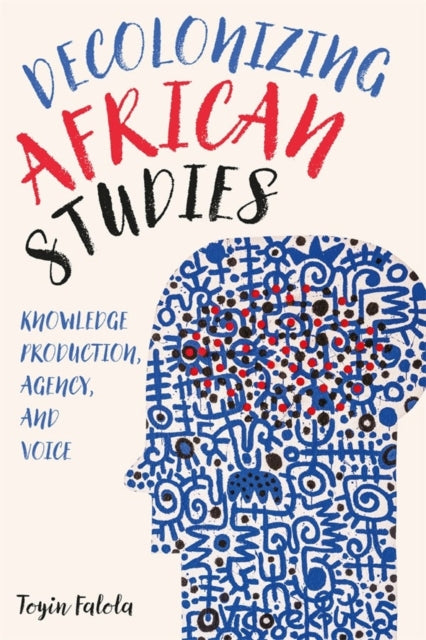
Decolonizing African Studies: Knowledge Production, Agency, and Voice
Decolonizing African Studies: Knowledge Production, Agency, and Voice
💎 Earn 541 Points (£5.41) on this item.
YOU SAVE £21.71
- Condition: Brand new
- UK Delivery times: Usually arrives within 2 - 3 working days
- UK Shipping: Fee starts at £2.39. Subject to product weight & dimension
Bulk ordering. Want 15 or more copies? Get a personalised quote and bigger discounts. Learn more about bulk orders.
Couldn't load pickup availability
- More about Decolonizing African Studies: Knowledge Production, Agency, and Voice
This book explores how decolonization and decoloniality provide liberationist knowledge to question and replace the hegemony of Western knowledge systems imposed on Africa. It critically examines the silencing and exclusion of subalterns in global knowledge production and the far-reaching implications of this for pedagogy and policy. Coloniality is seen as an ethnocentric continuum that dominates all aspects of present life, especially monopolizing human epistemology, the threshold of human existence, and even development activities. This book provides a balanced overview of what a feasible decoloniality should be and discusses African futurism, which involves the application of traditional instruments of articulation and cohesion to drive, harness, and actualize future possibilities.
Format: Hardback
Length: 690 pages
Publication date: 18 February 2022
Publisher: Boydell & Brewer Ltd
This book delves into the transformative moments and liberation movements that played a crucial role in the decolonization of inherited Western academic traditions in Africa. It explores how decolonization and decoloniality offer a liberating knowledge framework that challenges and replaces the hegemony of Western knowledge systems imposed on the African continent. The book critically examines the suppression and marginalization of subaltern voices in global knowledge production, highlighting the far-reaching consequences of this for pedagogy and policy.
Given the concentration of global power in the global north, where Eurocentrism and white supremacy reinforce the monopoly of knowledge and its centrality and universality, African perspectives continue to be marginalized or excluded in research, leading to misrepresentations of the continent. This book responds to this urgent challenge by advocating for the eradication of colonialism within the academy and research methodologies. Coloniality is understood not only as a historical phenomenon but also as an ethnocentric continuum that permeates all aspects of contemporary life, particularly monopolizing human epistemology, the very threshold of human existence, and even development activities.
This book provides a comprehensive and balanced overview of what a feasible decoloniality should entail. It encompasses a wide range of perspectives, including decolonial feminist and LGBTQ thought. It adopts a holistic approach that critiques the limitations of decoloniality, the obstacles that culminated in the failure of the late 20th-century struggle for decoloniality, and the challenges associated with current African resistance to academic decoloniality.
The book concludes with a discussion of African futurism, which is seen as the advanced stage of decoloniality. African futurism involves the application of traditional (indigenous) knowledge systems to shape the future of the African continent. It emphasizes the importance of reclaiming and revitalizing African cultural heritage, languages, and practices to build a more inclusive and sustainable future.
In conclusion, this book offers a valuable contribution to the ongoing debate about decoloniality and its implications for Africa and the world. It sheds light on the historical and ongoing struggles of African societies to liberate themselves from the oppressive forces of colonialism and imperialism. By providing a comprehensive and interdisciplinary analysis, the book offers insights into the potential for transformative change and the development of a more equitable and inclusive global knowledge system.
Dimension: 228 x 152 (mm)
ISBN-13: 9781648250279
This item can be found in:
UK and International shipping information
UK and International shipping information
UK Delivery and returns information:
- Delivery within 2 - 3 days when ordering in the UK.
- Shipping fee for UK customers from £2.39. Fully tracked shipping service available.
- Returns policy: Return within 30 days of receipt for full refund.
International deliveries:
Shulph Ink now ships to Australia, Belgium, Canada, France, Germany, Ireland, Italy, India, Luxembourg Saudi Arabia, Singapore, Spain, Netherlands, New Zealand, United Arab Emirates, United States of America.
- Delivery times: within 5 - 10 days for international orders.
- Shipping fee: charges vary for overseas orders. Only tracked services are available for most international orders. Some countries have untracked shipping options.
- Customs charges: If ordering to addresses outside the United Kingdom, you may or may not incur additional customs and duties fees during local delivery.