Shulph Ink
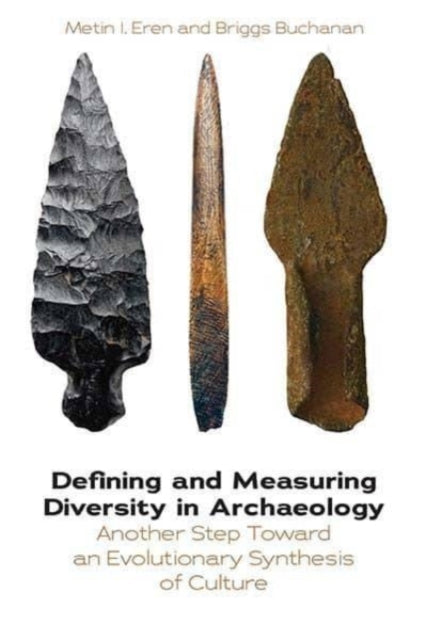
Defining and Measuring Diversity in Archaeology: Another Step Toward an Evolutionary Synthesis of Culture
Defining and Measuring Diversity in Archaeology: Another Step Toward an Evolutionary Synthesis of Culture
💎 Earn 576 Points (£5.76) on this item.
We can order this item for you. Delivery usually takes about 4 to 6 weeks.
This item is not held in our immediate stock. We will order it for you after checkout.
Estimated delivery: About 4 to 6 weeks
- Condition: Brand new
- UK Delivery times: Usually arrives within 2 - 3 working days
- UK Shipping: Fee starts at £2.39. Subject to product weight & dimension
Bulk ordering. Want 15 or more copies? Get a personalised quote and bigger discounts. Learn more about bulk orders.
Couldn't load pickup availability
- More about Defining and Measuring Diversity in Archaeology: Another Step Toward an Evolutionary Synthesis of Culture
Calculating diversity is essential for understanding the world around us, and this volume includes chapters on archaeological applications of diversity measures.
Format: Hardback
Length: 346 pages
Publication date: 18 July 2022
Publisher: Berghahn Books
Calculating the diversity of biological or cultural classes is a fundamental way of describing, analyzing, and understanding the world around us. Understanding archaeological diversity is key to understanding human culture in the past. Archaeologists have long experienced a tenuous relationship with statistics; however, the regular integration of diversity measures and concepts into archaeological practice is becoming increasingly important. This volume includes chapters that cover a wide range of archaeological applications of diversity measures. Featuring studies of archaeological diversity ranging from the data-driven to the theoretical, from the Paleolithic to the Historic periods, authors illustrate the range of data sets to which diversity measures can be applied, as well as offer new methods to examine archaeological diversity.
The study of diversity in biological or cultural classes is a crucial approach to understanding the world around us. It plays a vital role in comprehending human culture in the past, particularly through the field of archaeology. Archaeologists have historically had a somewhat strained relationship with statistics, but the integration of diversity measures and concepts into archaeological practice is becoming increasingly significant. This volume presents a diverse range of chapters that explore various archaeological applications of diversity measures. These studies encompass a spectrum of approaches, from data-driven to theoretical, spanning from the Paleolithic to the Historic periods. By showcasing a wide array of data sets and employing novel methods, the authors illustrate the potential of diversity measures to enhance our understanding of archaeological diversity.
The significance of understanding archaeological diversity cannot be overstated. It provides valuable insights into the past, enabling us to trace the evolution of human societies, their interactions, and their cultural practices. By examining the diversity of artifacts, structures, and remains, archaeologists can uncover patterns, trends, and relationships that shed light on the development of human civilization. Moreover, archaeological diversity contributes to our broader understanding of human nature and the complex interplay between culture, environment, and history.
However, the relationship between archaeologists and statistics has not always been harmonious. Historically, archaeologists may have been less familiar with statistical methods and their applications in archaeological research. This lack of familiarity can lead to challenges in data analysis, interpretation, and presentation. Nevertheless, as the importance of diversity measures in archaeology continues to grow, there is a growing recognition of the need to integrate statistical techniques into archaeological practice.
One of the key challenges in incorporating statistical methods into archaeological research is the availability and quality of data. Archaeological data can be diverse and complex, encompassing a wide range of variables such as artifact types, spatial distribution, temporal patterns, and cultural contexts. Collecting and analyzing such data can be time-consuming and resource-intensive, particularly when dealing with large datasets or complex archaeological sites. However, with advancements in technology and data management, it is becoming easier to collect, store, and analyze archaeological data, enabling researchers to extract valuable insights from even the most challenging datasets.
Another challenge in statistical analysis in archaeology is the selection of appropriate statistical models and methods. Different statistical approaches may be suitable for different types of data and research questions. For example, descriptive statistics may be used to summarize and describe the distribution of variables, while inferential statistics may be used to test hypotheses and make predictions about relationships between variables. The choice of statistical model should be based on the research objectives, the available data, and the assumptions and limitations of the research design.
In addition to statistical challenges, there are also ethical considerations to consider when integrating diversity measures and concepts into archaeological practice. Archaeological research often involves the excavation and analysis of human remains and cultural artifacts. The handling and treatment of these materials should be done with respect and sensitivity to the cultural and religious beliefs of the communities from which they originate. Additionally, the use of statistical methods in archaeological research should be transparent and accountable, ensuring that the results are interpreted and presented in a fair and unbiased manner.
Despite these challenges, the integration of diversity measures and concepts into archaeological practice is becoming increasingly important. By leveraging the power of statistics, archaeologists can gain a deeper understanding of the past, uncover new insights, and contribute to our broader understanding of human history and culture. The chapters included in this volume provide a valuable contribution to this field, showcasing a range of archaeological applications of diversity measures and offering new methods to examine archaeological diversity.
In conclusion, calculating the diversity of biological or cultural classes is a fundamental way of describing, analyzing, and understanding the world around us. Understanding archaeological diversity is crucial to understanding human culture in the past. Archaeologists have historically had a tenuous relationship with statistics, but the integration of diversity measures and concepts into archaeological practice is becoming increasingly important. This volume includes chapters that cover a wide range of archaeological applications of diversity measures, featuring studies of archaeological diversity ranging from the data-driven to the theoretical, from the Paleolithic to the Historic periods. By showcasing the range of data sets to which diversity measures can be applied and offering new methods to examine archaeological diversity, this volume contributes to our understanding of the past and our place in the world.
Dimension: 229 x 152 (mm)
ISBN-13: 9781800734296
This item can be found in:
UK and International shipping information
UK and International shipping information
UK Delivery and returns information:
- Delivery within 2 - 3 days when ordering in the UK.
- Shipping fee for UK customers from £2.39. Fully tracked shipping service available.
- Returns policy: Return within 30 days of receipt for full refund.
International deliveries:
Shulph Ink now ships to Australia, Belgium, Canada, France, Germany, Ireland, Italy, India, Luxembourg Saudi Arabia, Singapore, Spain, Netherlands, New Zealand, United Arab Emirates, United States of America.
- Delivery times: within 5 - 10 days for international orders.
- Shipping fee: charges vary for overseas orders. Only tracked services are available for most international orders. Some countries have untracked shipping options.
- Customs charges: If ordering to addresses outside the United Kingdom, you may or may not incur additional customs and duties fees during local delivery.