Shulph Ink
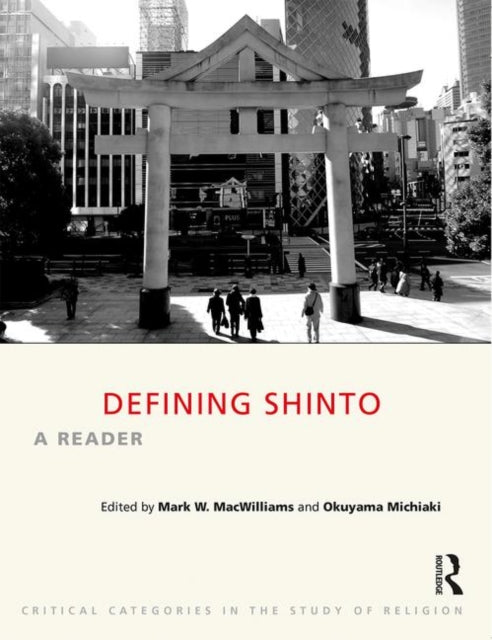
Defining Shinto: A Reader
Defining Shinto: A Reader
💎 Earn 259 Points (£2.59) on this item.
We can order this item for you. Delivery usually takes about 4 to 6 weeks.
This item is not held in our immediate stock. We will order it for you after checkout.
Estimated delivery: About 4 to 6 weeks
YOU SAVE £3.08
- Condition: Brand new
- UK Delivery times: Usually arrives within 2 - 3 working days
- UK Shipping: Fee starts at £3.89. Subject to product weight & dimension
Bulk ordering. Want 15 or more copies? Get a personalised quote and bigger discounts. Learn more about bulk orders.
Couldn't load pickup availability
- More about Defining Shinto: A Reader
This book explores the evolution of the term "Shinto" in modern Japan, including its relationship with the nation-state, intellectuals, ultra-nationalism, post-war reforms, and contemporary definitions. It provides a wealth of official documents and essays, many translated for the first time, making it an invaluable resource for scholars and students of Japanese religion.
\n Format: Paperback / softback
\n Length: 386 pages
\n Publication date: 16 October 2019
\n Publisher: Taylor & Francis Ltd
\n
This book is a comprehensive exploration of the term "Shinto," its historical development, and its various interpretations in modern Japan. It provides a rich tapestry of key official documents, political, religious, philosophical, and historical essays, which together illustrate the profound metamorphosis of the term from Japan's emergence as a modern nation-state in the late 19th century to the postmodern Japan of today.
Shinto is a highly contentious category within the realm of Japanese religious studies, and this volume specifically focuses on the evolution of the term in modern Japan. The book is structured into five distinct parts, each delving into different aspects of Shinto's significance in contemporary Japan.
Part 1: Shinto and the Modern Japanese Nation State
In this section, the book explores the intricate relationship between Shinto and the formation of the modern Japanese nation-state. It examines how Shinto was utilized by the Japanese government and intellectuals to promote a sense of national identity and unity during the early stages of nation-building. The authors also discuss how Shinto has been adapted and reinterpreted to accommodate the changing political and social landscape of modern Japan.
Part 2: Pre-war Japanese Intellectuals on Shinto
This part delves into the perspectives of pre-war Japanese intellectuals on Shinto. It includes essays by prominent figures such as Nishida Kitarō, who argued that Shinto was a natural religion that reflected the Japanese people's spiritual essence, and Inazo Nitobe, who emphasized the importance of Shinto in fostering a sense of Japanese cultural superiority. The authors also explore how these intellectuals' ideas influenced the development of Japanese nationalism and militarism during the 1930s and 1940s.
Part 3: Shinto and Ultra-Nationalism of the 1930s and 1940s
During the 1930s and 1940s, Shinto was heavily politicized and used as a tool for promoting ultra-nationalism and militarism in Japan. The book examines how Shinto was manipulated by the Japanese government and military to justify their aggressive actions and ideologies during this period. It also explores how Shinto was used to promote a sense of collective responsibility and unity among the Japanese people, particularly during times of war.
Part 4: Post-war Reforms and Reformulations
After the Second World War, Japan underwent significant social and political reforms, which included a reevaluation of Shinto's role in society. The book explores how Shinto was reformulated and reinterpreted in the post-war period, particularly in response to the challenges posed by modernity and globalization. It examines how Shinto was integrated into the Japanese educational system, how it was used to promote social harmony and stability, and how it was adapted to accommodate the growing diversity of Japanese society.
Part 5: Contemporary Ways of Defining Shinto
In the final section, the book examines contemporary ways of defining Shinto. It explores how Shinto is being understood and practiced by individuals and communities in modern Japan, including the emergence of new religious movements and the influence of popular culture on Shinto's interpretation and practice. The authors also discuss how Shinto is being used to address social and environmental issues in Japan, such as the promotion of sustainable development and the preservation of traditional culture.
This book is an invaluable resource for scholars and students of Japanese religion. It presents a wealth of documents, most of which have been translated here for the first time, providing a deep and comprehensive understanding of Shinto's historical development and its various interpretations in modern Japan. The authors' insightful analysis and thoughtful commentary make this book an essential read for anyone interested in exploring the complexities of Japanese religion and culture.
\n Weight: 810g\n
Dimension: 175 x 246 x 23 (mm)\n
ISBN-13: 9781844658381\n \n
UK and International shipping information
UK and International shipping information
We deliver throughout the United Kingdom and to 128 countries and territories worldwide, including the United States, Australia, Canada, Germany, Spain and France.