Shulph Ink
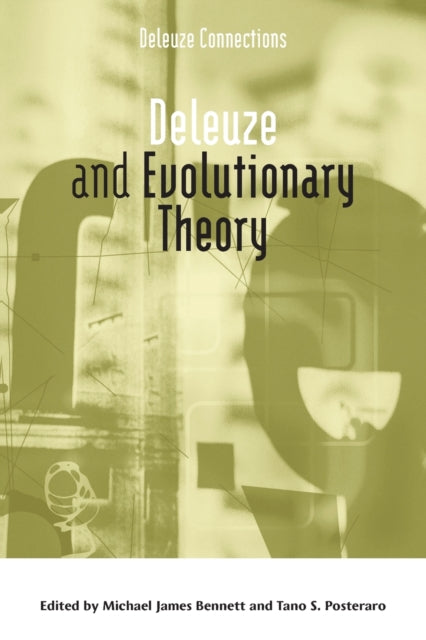
Deleuze and Evolutionary Theory
Deleuze and Evolutionary Theory
💎 Earn 115 Points (£1.15) on this item.
YOU SAVE £6.99
- Condition: Brand new
- UK Delivery times: Usually arrives within 2 - 3 working days
- UK Shipping: Fee starts at £2.39. Subject to product weight & dimension
Bulk ordering. Want 15 or more copies? Get a personalised quote and bigger discounts. Learn more about bulk orders.
Couldn't load pickup availability
- More about Deleuze and Evolutionary Theory
Deleuze and Evolutionary Theory explores the significance of Deleuze and Guattari's engagements with evolutionary theory across their work, focusing on the anthropological, social, and biopolitical implications of convergences and divergences between philosophy and evolutionary science.
Format: Paperback / softback
Length: 200 pages
Publication date: 30 November 2020
Publisher: Edinburgh University Press
Deleuze and Evolutionary Theory is a groundbreaking collection of essays that brings together the contributions of prominent Deleuze scholars who have pioneered the integration of philosophical and biological research. The book delves into the profound significance of Deleuze and Guattari's engagements with evolutionary theory throughout their extensive body of work, spanning from the interpretation of Darwin in Difference and Repetition to the symbiotic relationships between wasps and orchids in A Thousand Plateaus. By exploring the anthropological, social, and biopolitical implications of the convergences and divergences between philosophy and evolutionary science, the book offers a fresh perspective on the relationship between these fields.
One of the key themes of Deleuze and Evolutionary Theory is the notion of "becoming." Deleuze and Guattari argue that life is characterized by a constant process of becoming, which involves the transformation of matter, energy, and information. This process is driven by the forces of creativity, desire, and spontaneity, which are inherent to all living organisms. Deleuze and Guattari's understanding of becoming has profound implications for our understanding of the natural world, as it suggests that the world is not static but is constantly evolving and changing.
Another important theme of the book is the concept of "becoming-animal." Deleuze and Guattari argue that animals are not just passive objects of study but are active participants in the process of becoming. They emphasize the importance of studying animals in their own right, rather than simply as objects of study for humans. Deleuze and Guattari's approach to animal studies is characterized by a focus on the sensory-motor aspects of animal behavior, as well as the social and cultural dimensions of animal life.
Deleuze and Evolutionary Theory also explores the relationship between philosophy and evolutionary science. The book argues that philosophy and evolutionary science are not mutually exclusive but are complementary. Philosophy provides a framework for understanding the nature of life and the world, while evolutionary science provides a scientific basis for understanding the processes of evolution. Deleuze and Guattari argue that the two fields can be integrated in a way that allows for a deeper understanding of the world.
One of the challenges of integrating philosophy and evolutionary science is the fact that they are based on different epistemological foundations. Philosophy is based on rationalism, while evolutionary science is based on empiricism. Deleuze and Guattari argue that this difference can be overcome by developing a new form of philosophy that is based on the principles of immanence and creativity.
Deleuze and Guattari's approach to philosophy is characterized by a focus on the concept of "becoming." They argue that life is characterized by a constant process of becoming, which involves the transformation of matter, energy, and information. This process is driven by the forces of creativity, desire, and spontaneity, which are inherent to all living organisms. Deleuze and Guattari's understanding of becoming has profound implications for our understanding of the natural world, as it suggests that the world is not static but is constantly evolving and changing.
Deleuze and Guattari's approach to animal studies is characterized by a focus on the sensory-motor aspects of animal behavior, as well as the social and cultural dimensions of animal life. They argue that animals are not just passive objects of study but are active participants in the process of becoming. Deleuze and Guattari's approach to animal studies is characterized by a focus on the sensory-motor aspects of animal behavior, as well as the social and cultural dimensions of animal life.
Deleuze and Evolutionary Theory also explores the relationship between philosophy and evolutionary science. The book argues that philosophy and evolutionary science are not mutually exclusive but are complementary. Philosophy provides a framework for understanding the nature of life and the world, while evolutionary science provides a scientific basis for understanding the processes of evolution. Deleuze and Guattari argue that the two fields can be integrated in a way that allows for a deeper understanding of the world.
One of the challenges of integrating philosophy and evolutionary science is the fact that they are based on different epistemological foundations. Philosophy is based on rationalism, while evolutionary science is based on empiricism. Deleuze and Guattari argue that this difference can be overcome by developing a new form of philosophy that is based on the principles of immanence and creativity.
In conclusion, Deleuze and Evolutionary Theory is a groundbreaking collection of essays that brings together the contributions of prominent Deleuze scholars who have pioneered the integration of philosophical and biological research. The book delves into the profound significance of Deleuze and Guattari's engagements with evolutionary theory throughout their extensive body of work, spanning from the interpretation of Darwin in Difference and Repetition to the symbiotic relationships between wasps and orchids in A Thousand Plateaus. By exploring the anthropological, social, and biopolitical implications of the convergences and divergences between philosophy and evolutionary science, the book offers a fresh perspective on the relationship between these fields.
Weight: 312g
Dimension: 164 x 233 x 15 (mm)
ISBN-13: 9781474430500
UK and International shipping information
UK and International shipping information
UK Delivery and returns information:
- Delivery within 2 - 3 days when ordering in the UK.
- Shipping fee for UK customers from £2.39. Fully tracked shipping service available.
- Returns policy: Return within 30 days of receipt for full refund.
International deliveries:
Shulph Ink now ships to Australia, Belgium, Canada, France, Germany, Ireland, Italy, India, Luxembourg Saudi Arabia, Singapore, Spain, Netherlands, New Zealand, United Arab Emirates, United States of America.
- Delivery times: within 5 - 10 days for international orders.
- Shipping fee: charges vary for overseas orders. Only tracked services are available for most international orders. Some countries have untracked shipping options.
- Customs charges: If ordering to addresses outside the United Kingdom, you may or may not incur additional customs and duties fees during local delivery.